
Carmen Colabella

When sex education is absent or fragmented, silence becomes fertile ground for stereotypes and unequal relationships. LoveAct was created to respond to this gap by placing the voices of adolescents, families and educators at the centre, across seven European countries. Through a participatory approach, the project addresses issues such as consent, relationships and emotional wellbeing, transforming questions often delegated to Artificial Intelligence into opportunities for informed and human dialogue.
«At school we do not receive information about sex. We learn about the human body, anatomy, pregnancies. But sex, sexual health, relationships remain outside the classroom. It is as if it was a taboo». This is how an adolescent from Cyprus describes their experience within the European project LoveAct – Living positive and intersectional sexuality education for gender-based violence prevention, but the same words could come from a young person in any European country. This is not an exception.
When sex and relationships are treated as embarrassing or marginal topics, even fundamental concepts such as consent, boundaries and mutual respect struggle to find space. Silence contributes to the normalisation of misunderstandings, stereotypes and power dynamics that are reflected in everyday relationships, starting as early as adolescence. It is therefore unsurprising that, according to research conducted in 2024 by Eurostat in cooperation with the European Institute for Gender Equality (EIGE) and the EU Fundamental Rights Agency (FRA), one woman in three has experienced violence in her lifetime, starting from the age of fifteen. In this context, sexual and affective education increasingly emerges as a key tool for prevention.
LoveAct, coordinated by the European centre CESIE ETS and active between 2023 and 2025 in seven European countries (Italy, France, Greece, Lithuania, Belgium, Cyprus and Spain), stems from this need. It promotes Comprehensive Sexuality Education (CSE) not as the simple transmission of information, but as a process that weaves together multiple dimensions and encourages, at every level (social, emotional and bodily), the values of respect, inclusion, responsibility and reciprocity.

The Roadmap as a participatory artistic practice
The symbolic and methodological heart of LoveAct is the Roadmap, conceived as a tool to support youth organisations, schools, activists and education professionals by opening up an intergenerational dialogue on sexual and affective education. On the CESIE website, it is no coincidence that one reads: «How to deconstruct the taboo around sex? By kicking off a conversation about sex and affective education»1. The LoveAct Roadmap responds through the Memories and Voices collected from adolescents and adults — parents, caregivers, siblings. The former are texts in which experiences related to sexual and affective education, relationships, identities, taboos, needs and desires at different stages of life are shared. The latter are audio recordings created through semi-structured interviews, often conducted by adolescents with someone close to them. Together, these collections function as fragments of a collective affective imaginary. The chosen words, the images evoked, the hesitations and silences offer a living material that demonstrates how, regardless of socio-cultural differences, there are countless similarities in the ways we build and interpret relationships, romantic and otherwise. The Roadmap thus approaches a participatory artistic practice and takes shape as a narrative archive, both personal and communal, which does not seek univocal answers but deliberately opens up questions, with the aim of creating connections and new possibilities for recognition.
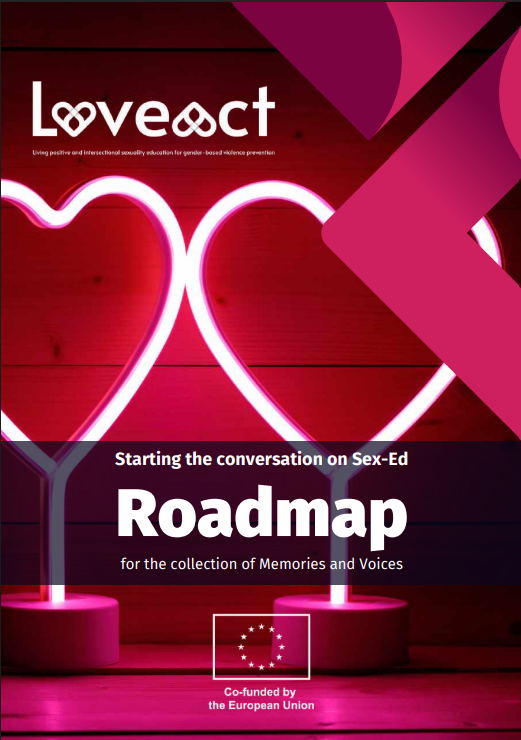
Click on the image to open the PDF
«A nurse came to show us (contraceptive methods), maybe in eighth grade, but here at school it is not a very comfortable topic: everyone laughed, even though it is something completely natural. But if you talked about it in the gym… everyone laughed because it is an embarrassing topic», explains an adolescent from Lithuania. And then, in Spain, a mother recounts a conversation with her daughter: «Do you remember when you were little (3–4 years old) and I did not know how to explain consent to you, so I started telling you that there were parts of the body that could not be touched without your consent? And the first time I explained it to you, since you were very young, I told you: “your bottom cannot be touched, no one can touch your bottom unless you want them to…”, and you looked at me with a face like “what are you talking about?”. The next time I started adding other body parts to mask it a bit… then I said “your bottom and your feet”. That was therefore the first phase of consent, so that you could make decisions about who could touch you and which parts of your body».
It is no coincidence that each training module of the digital guide on sexual and affective education opens with one of the collected Memories or Voices, rooting theoretical content in lived experience. This is because the Roadmap aims to create the conditions for the conversation to begin.
From Palermo to Athens, a bottom-up project that connects
In Palermo, where CESIE has been working on sexual and affective education for years, LoveAct fits into an already established trajectory of collaboration with schools, associations and educational communities. The goal is not to “bring” a model into local contexts, but to allow it to emerge through dialogue with those who inhabit these contexts on a daily basis. The approach is explicitly participatory. Young people, educators, parents and professionals are co-builders of tools and languages. As Cloé Saint-Nom, co-coordinator together with Rūta Grigaliūnaitė of the Rights and Justice Unit at CESIE, explains:
«For many years now, at least since 2019 if not earlier, we have been working on sexual and affective education, talking about healthy relationships and psychological wellbeing with a bottom-up approach. This means building with young people, not for them».
Cloé Saint-Nom
Cloé Saint-Nom is coordinator of the SexSense network and of the Rights and Justice Unit at CESIE ETS. She holds three specialisations in development, gender studies, and sexual and affective education. For over 15 years, she has worked to promote gender equality, respect for diversity, and the prevention of gender-based violence and violence against minors in Europe and Latin America. Cloé has spoken at several international conferences and is co-author of five scientific publications in the fields of justice, sexual and affective education, child protection, and the prevention of hate speech.
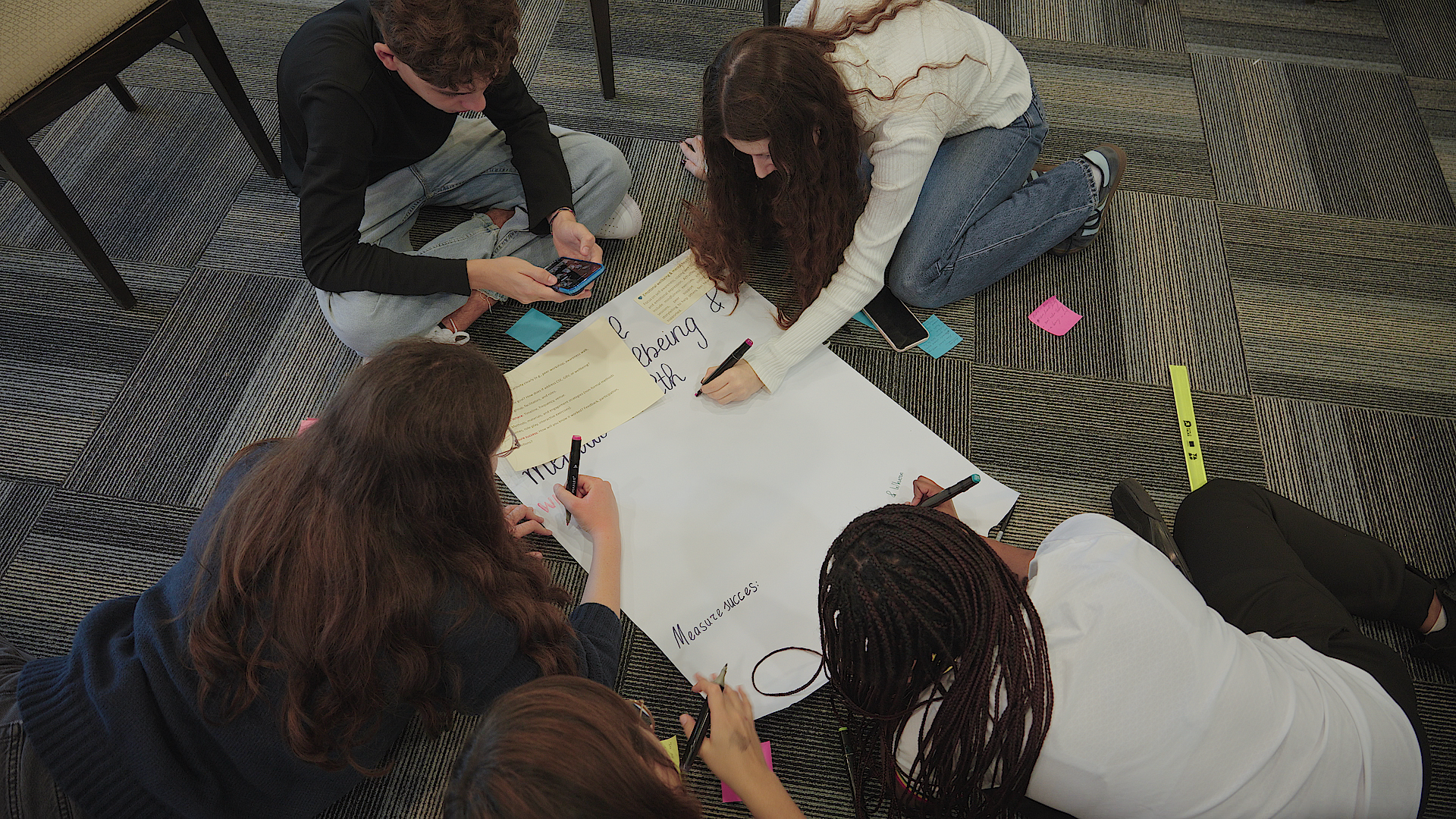
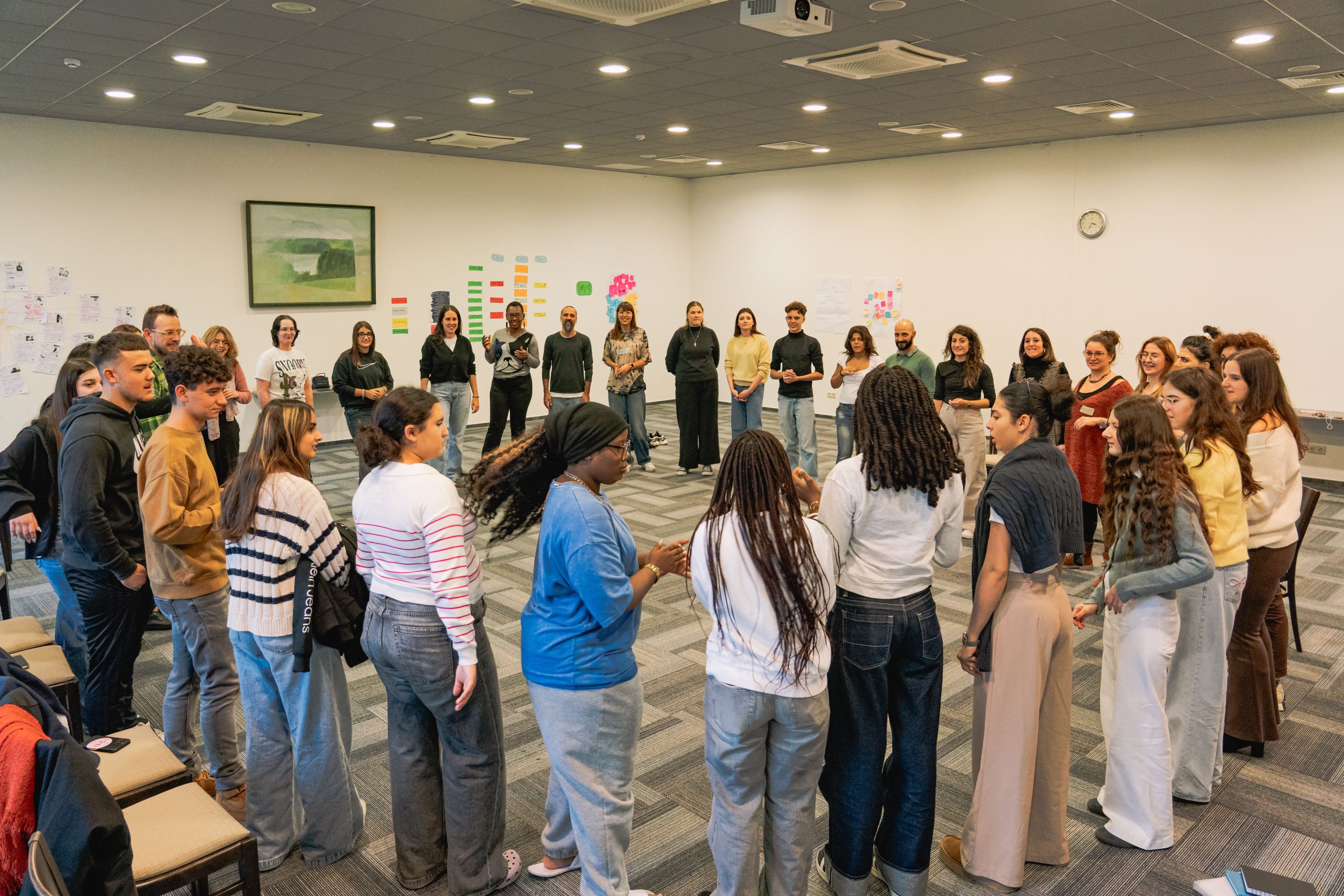
Cloé adds: «Everything you see is not work done from above, but something created with and for young people, which for us is extremely important» This deliberately bottom-up method has made it possible to avoid top-down solutions and ready-made answers, instead prioritising constant dialogue between generations, professional backgrounds and lived experiences.It is precisely through engagement with adolescents that needs and priorities often absent from public debate emerge, challenging the idea that young people are merely passive recipients of educational interventions.
Rūta Grigaliūnaitė
Rūta Grigaliūnaitė is a Project Manager at CESIE ETS and coordinator of the SexSense network, with over ten years of experience in promoting sexual and affective education, violence prevention, gender issues, and more inclusive societies. She has collaborated with NGOs in Europe and worldwide (Italy, Portugal, Lithuania, Georgia, Cambodia, Brazil), managing complex projects both technically and administratively. She coordinated the LoveAct project and currently leads Bottom-Up Talks, contributing to the creation of safer and more inclusive spaces for young people and communities. Rūta is also Child Protection and Gender and Diversity Officer at CESIE ETS.
These same gaps and urgencies also emerge in other European contexts. In Greece, for example, both feedback from educators and the Greek Manifesto for Sexual and Affective Education developed within the project «explicitly links the need for inclusive sex education to recent alarming incidents and to practitioners’ field experience, noting that students even at the end of their teenage years may be unaware of core ideas such as consent and forms of sexual harassment», explains Thanos Theofilopoulos of Symplexis.
Even today, «in my country the current situation can be described as uneven, fragmented and often insufficiently comprehensive—with clear signs that many adolescents reach late adolescence without mastering basic, protective concepts linked to healthy relationships and gender-based violence (GBV) prevention».
Thanos Theofilopoulos
Thanos Theofilopoulos is a sociologist specialising in gender equality, GBV prevention, LGBTQI+ rights, anti-discrimination, and the prevention of hate crime and extremism. He has extensive experience in managing and delivering research projects in these fields in collaboration with universities and civil society organisations. He works at the Research Center for Gender Equality (KETHI) as scientific supervisor of national support structures for GBV survivors and as a researcher at the NGO Symplexis on EU-funded projects.
«These gaps», he adds, «affect young people’s wellbeing in predictable (and preventable) ways». Sharing methodologies, data and tools at European level has made it possible to overcome the isolation of individual initiatives and to build greater public legitimacy for sexual and affective education as a shared responsibility between schools, families and communities. «In short: the European dimension multiplies learning, legitimacy, and reach—while still allowing Greece-specific needs (language, institutional pathways like IEP approval, local partnerships) to be foregrounded».
Adolescence, affectivity and Artificial Intelligence
The most striking finding of the LoveAct project concerns the urgency with which adolescents seek answers to their questions about emotions, relationships and life choices. This trend is also captured by an unpublished survey cited in the sixteenth edition of Save the Children’s Atlas of Childhood at Risk2, according to which 41.8% of young people aged between 15 and 19 have turned to Artificial Intelligence tools for emotional support during moments of sadness, loneliness or anxiety. More than 42% have used them to ask for advice about relationships, feelings, school or work. Almost one in three uses Artificial Intelligence on a daily or near-daily basis. As LoveAct partners underline:
«These figures do not speak only about technology, but about the absence of safe and non-judgemental spaces in the adult world».
While on the one hand Artificial Intelligence offers adolescents immediate, anonymous and shame-free access to information and advice, on the other it exposes them to evident risks: misinformation, bias, the normalisation of stereotypes and privacy issues Above all, it reveals an urgency: the need to find answers to intimate questions that are often not welcomed elsewhere. These are the same questions that emerge forcefully in LoveAct’s work and that speak of bodies, desire, boundaries, relationships and identities.
«Can one be in love with two people at the same time?», «Can masturbating cause health problems?», «Can swallowing sperm cause health problems?», «How do I know if I am ready to have sex?», «Can I ask a disabled person what they like in bed?». These are among the questions now hosted on the archive-platform The Gender Talk, in the F#%Q Book section: «We call it like this because it is a space where adolescents can ask questions and look for answers», explain the project partners. «We collect them during initiatives, in different contexts and across several countries, and we constantly update the section with verified content and answers developed by professionals» As LoveAct partners argue, Artificial Intelligence can be an informational support, but it cannot replace a CSE grounded in real relationships, trained adults and collective responsibility, in dialogue between bodies, memories and voices.
«We will continue working with and for young people, through initiatives such as Bottom-Up Talks and school-based support desks, to address issues such as consent, boundaries and mental wellbeing», says Rūta from CESIE. Because LoveAct’s legacy is measured not only in the outputs produced — digital guides, national manifestos, Sex-Ed Councils active in several countries — but above all in the processes set in motion: transnational networks, replicable practices and spaces for dialogue that continue beyond the duration of the funding.

- CESIE. (2024, 14 May). Starting a conversation on Sex-Ed: the LoveAct Roadmap for the collection of Memories & Voices CESIE. https://cesie.org/en/news/loveact-conversation-sexed-memories-voices/ ↩︎
- Save the Children. (2025, 14 Novembre). Il 41,8% degli adolescenti si è rivolto all’Intelligenza Artificiale per chiedere aiuto quando era triste, solo/a o ansioso/a. Save the Children. https://www.savethechildren.it/press/il-418-degli-adolescenti-si-e-rivolto-ailintelligenza-artificiale-chiedere-aiuto-quando-era ↩︎