Marta Abbà
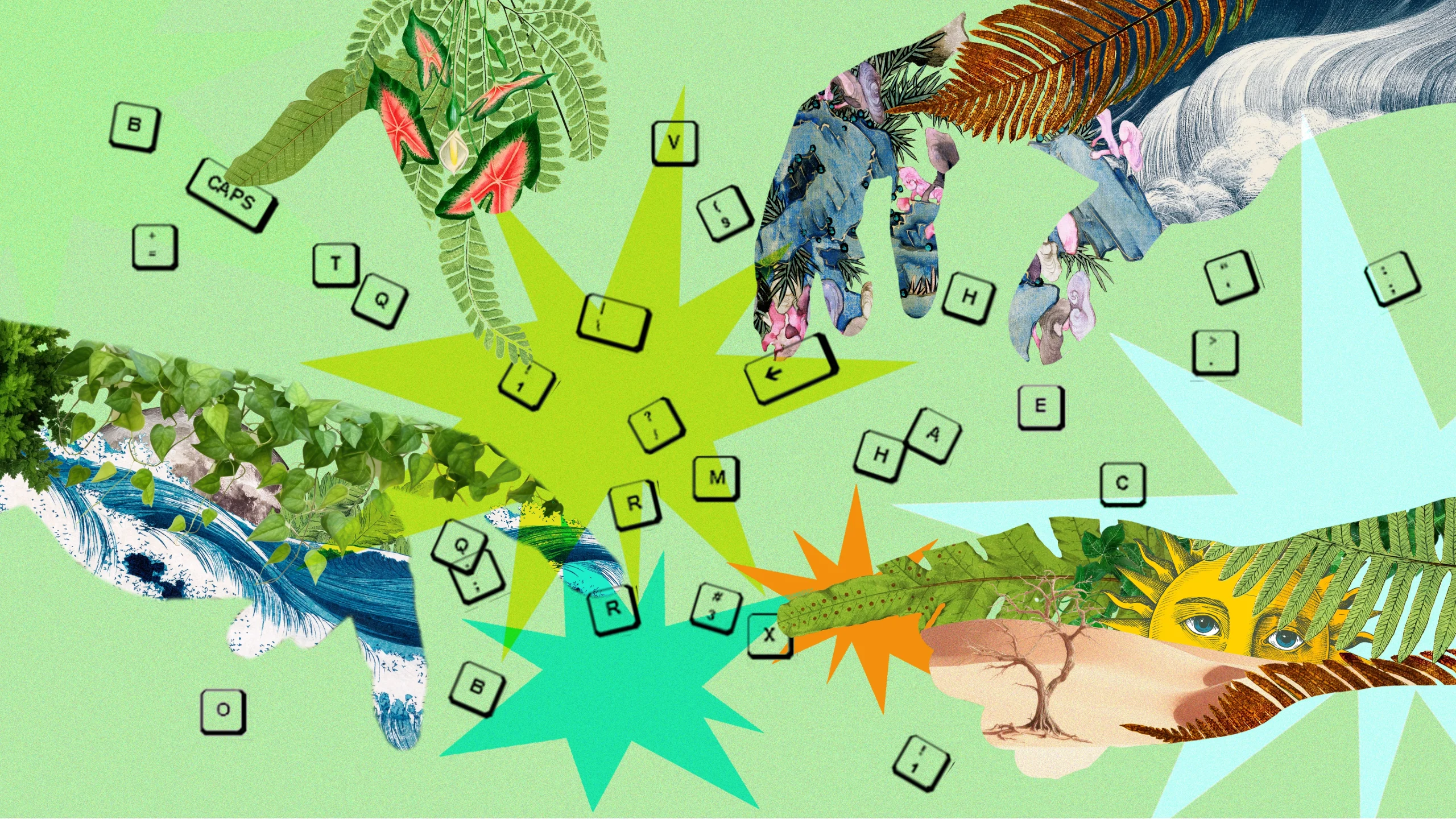
From conversational bots to public deliberation platforms, from creative toolkits to field experiments – how do social tipping points emerge? The European project, coordinated by the Politecnico di Milano and supported by fifteen European partners, weaves together social sciences, technology and participation to understand how and when communities decide to change course in the face of the climate crisis.
There are moments when society abruptly changes direction. It happens when a series of small individual gestures reaches critical mass and turns into a collective movement. Scholars call them “social tipping points”1– the very phenomenon the European project NEUROCLIMA2 aims to understand and trigger to accelerate the climate transition. It is no simple task. The climate crisis is now in plain sight, yet translating awareness into daily action remains a challenge. This is where NEUROCLIMA comes in, a project that unites fifteen partners from across Europe in an ambitious attempt to understand what truly drives people to change their behaviour, and how this change can be supported, amplified and replicated.
A platform that speaks many languages
At the technological core of NEUROCLIMA lies a digital platform, currently under development, structured in several interconnected modules. Not a single tool, but an ecosystem that reshapes itself according to users’ needs, balancing technology and social sensitivity, algorithms and listening. Within the future platform will coexist a conversational bot capable of exploring qualified sources in real time – from European policies to scientific papers, news and multimedia content – and a digital learning space offering educational pathways on climate, behaviour and civic participation. Alongside these, the platform will include areas for public deliberation, where citizens, experts and decision-makers can meet to co-design solutions, and a playful component that uses game mechanics to foster learning and emotional engagement.
All these tools – such as Lens, which collects and analyses behavioural data, or Dialogues, an interactive space for participatory discussions, together with Learn and Play, which turn learning into a creative experience, and Repository, which stores knowledge and resources according to the FAIR principles (Findable, Accessible, Interoperable, Reusable)3 – share a common goal: to make climate knowledge more accessible, experiential and reusable.

When design meets psychology
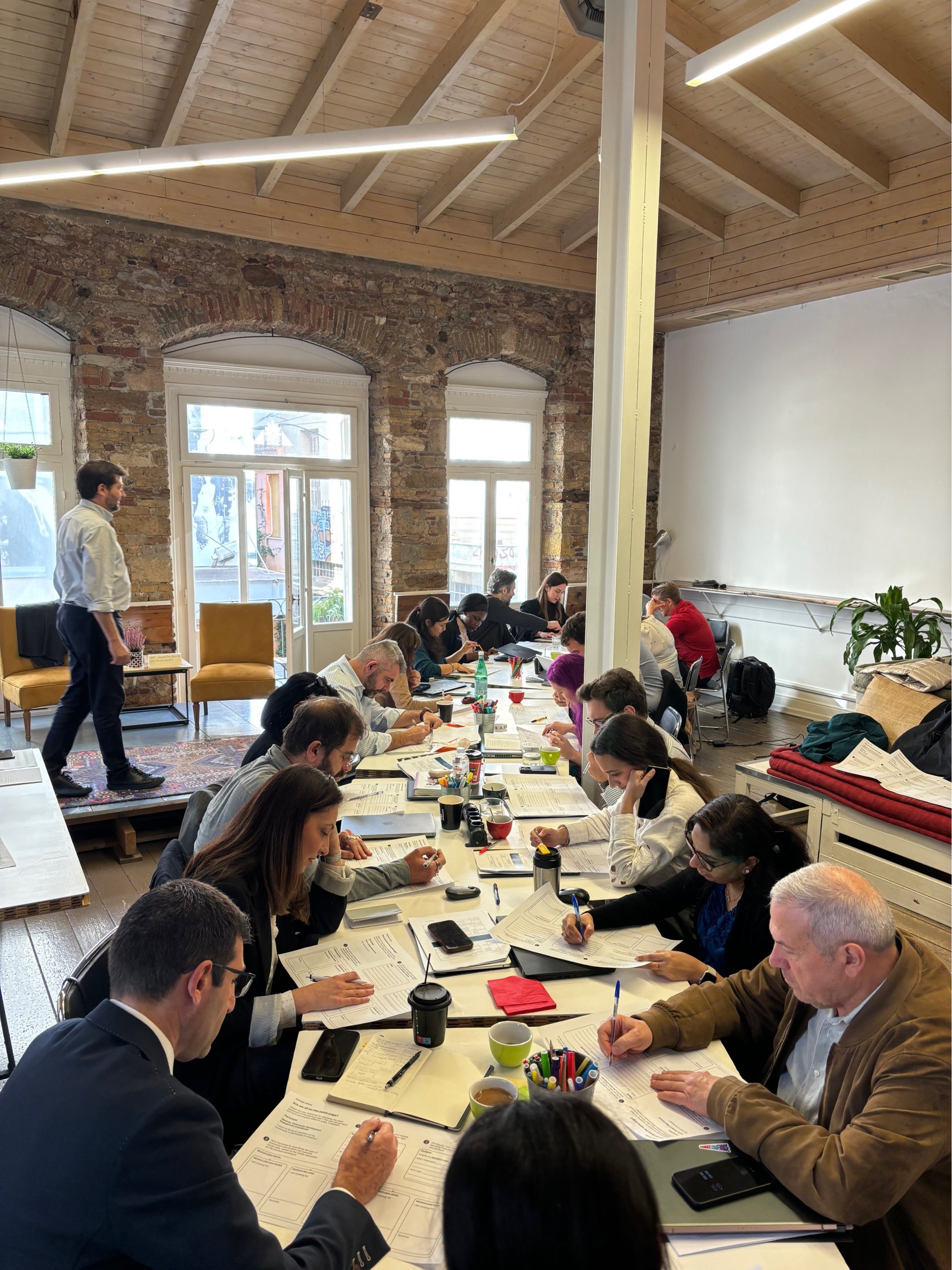
What sets NEUROCLIMA apart is not so much its technological diversity as its intention to connect people, transforming data and platforms into opportunities for dialogue. It is not about replacing human interaction, but amplifying and supporting it, creating bridges between research, education and public policy. The project is therefore also developing toolkits based on participatory design – the design approach that directly involves end users in the development process – as well as creative arts and film-making. These tools aim to explore the cultural and emotional dimensions of the climate transition. Because the climate crisis is not only a matter of data and charts, but also of fears, hopes and shared identities.
All of these tools are co-designed, «to ensure they are accessible, useful and grounded in real contexts», explains Beatrice Gobbo, Design researcher at the Department of Design of the Politecnico di Milano, who leads the scientific, strategic and operational direction of the entire consortium – a role that goes far beyond administrative management:
«Together with other partners, we contribute to analysing scaling processes, that is, how social and technological innovations can be adapted and replicated across different contexts».
It is a crucial question, because a solution that works in Milan may not have the same impact in Athens or Stockholm. Understanding the mechanisms that enable these innovations to be transferred and adapted is an integral part of the project.
The experiments planned by NEUROCLIMA involve two very different target groups. The first pilot is aimed at policy makers and journalists – key figures in translating scientific knowledge into public policies and media narratives.

Beatrice Gobbo, design researcher at the Department of Design of the Politecnico di Milano, where she is part of the coordination team of the European project NEUROCLIMA. She also teaches at the Politecnico di Milano. She earned her PhD in Design at the same department, where she was part of the DensityDesign Lab. Her research lies at the intersection of information design, science and technology studies, and computer science, with a particular focus on the role of data and visual representations in collective knowledge and decision-making processes.
The goal is to test how the platform and research tools can support more informed and participatory communication on climate issues.
The second pilot instead involves students, teachers, citizens and educators. Here, the aim is to test the platform, toolkits and creative activities within educational and community contexts. It is not just about testing the technical performance of the tools, but about understanding whether they can truly stimulate awareness, dialogue and collaboration. These are essential aspects if the climate transition is to be something shared, not imposed from above.
People at the centre: the role of IASIS
While the Politecnico oversees the technological and strategic dimension, the Greek organisation IASIS focuses on the more human side of the project. As coordinator of Work Package 34, IASIS is responsible for connecting behavioural science, participation and creativity.
Stefanos Alevizos explains that «we explore what motivates people to act, how social norms and emotions shape adaptation, and how learning spaces can support more inclusive climate decisions».
It is an approach that starts from a simple observation: providing accurate information alone is not enough to make people change their behaviour. Emotional, social and cultural factors come into play. The way a community perceives climate risk depends on its lived experiences, the stories that circulate and its reference figures. IASIS works precisely on these aspects, testing the methods developed in real local contexts and sharing what proves effective.
«At IASIS, we see our role as a bridge between science and everyday practice», Alevizos continues.
«We ensure that what is learned through research becomes useful to citizens, educators and policy-makers». This spirit of cooperation runs through the entire project: each partner contributes their expertise, building together something that none could achieve alone.

Tools for understanding and taking action
NEUROCLIMA’s tools «help connect research, education and policy in a practical and inclusive way», Alevizos explains.

Stefanos Alevizos, psychologist and postdoctoral researcher at Panteion University, with nearly twenty years of experience in mental health, child protection and human rights. He has coordinated national and European initiatives against child abuse and domestic violence, and for social inclusion. As scientific advisor at the NGO IASIS, he contributes to European research and innovation projects that connect behavioural science, education and community participation. His academic work focuses on the psychological impact of child removal due to abuse and on the application of forensic psychology to child protection.
«They transform complex information into something people can actually use – to learn, decide and act collectively, for a more adaptable and resilient society». Their main strength lies in making climate action practical, inclusive and rooted in real behaviours. Communities gain tools and spaces to discuss local issues and design their own responses. Educators receive materials that make climate learning more interactive and relevant. Policy-makers access behavioural data showing what truly motivates people to act and how policies can sustain this change.
But how can we tell if all this really works?
NEUROCLIMA applies a science-of-scaling framework4: every tool or method is tested in real contexts, monitored through behavioural indicators and refined based on collected feedback. IASIS and other partners gather both quantitative and qualitative data from surveys, workshops and local pilot projects to understand what actually changes in people’s knowledge, emotions and actions over time. «This continuous learning process ensures that the project’s outcomes are not only promising on paper, but demonstrably capable of creating measurable and lasting impact within communities and institutions», concludes Alevizos. Because ultimately, the real challenge is not just to understand social tipping points, but to make them happen.

- Social tipping points: Kopp, R. E., Gilmore, E. A., Shwom, R. L., Adams, H., Adler, C., Oppenheimer, M., Patwardhan, A., Russill, C., Schmidt, D. N., & York, R. (2024). ‘Tipping points’ confuse and can distract from urgent climate action. Nature Climate Change, 15(1), 29–36. https://www.nature.com/articles/s41558-024-02196-8 ↩︎
- Neuroclima. The official website of the project https://neuroclima.eu/ ↩︎
- FAIR principles: https://www.go-fair.org/fair-principles/ ↩︎
- Work Package 3: Organisational structure of Horizon European projects, which divides activities into thematic packages. Horizon Europe. (2025, October 22). Research and Innovation. https://research-and-innovation.ec.europa.eu/funding/funding-opportunities/funding-programmes-and-open-calls/horizon-europe_en ↩︎
- Science-of-scaling: Methodological framework for studying how innovations can be transferred and adapted on a large scale. ↩︎