

Marta Abbà
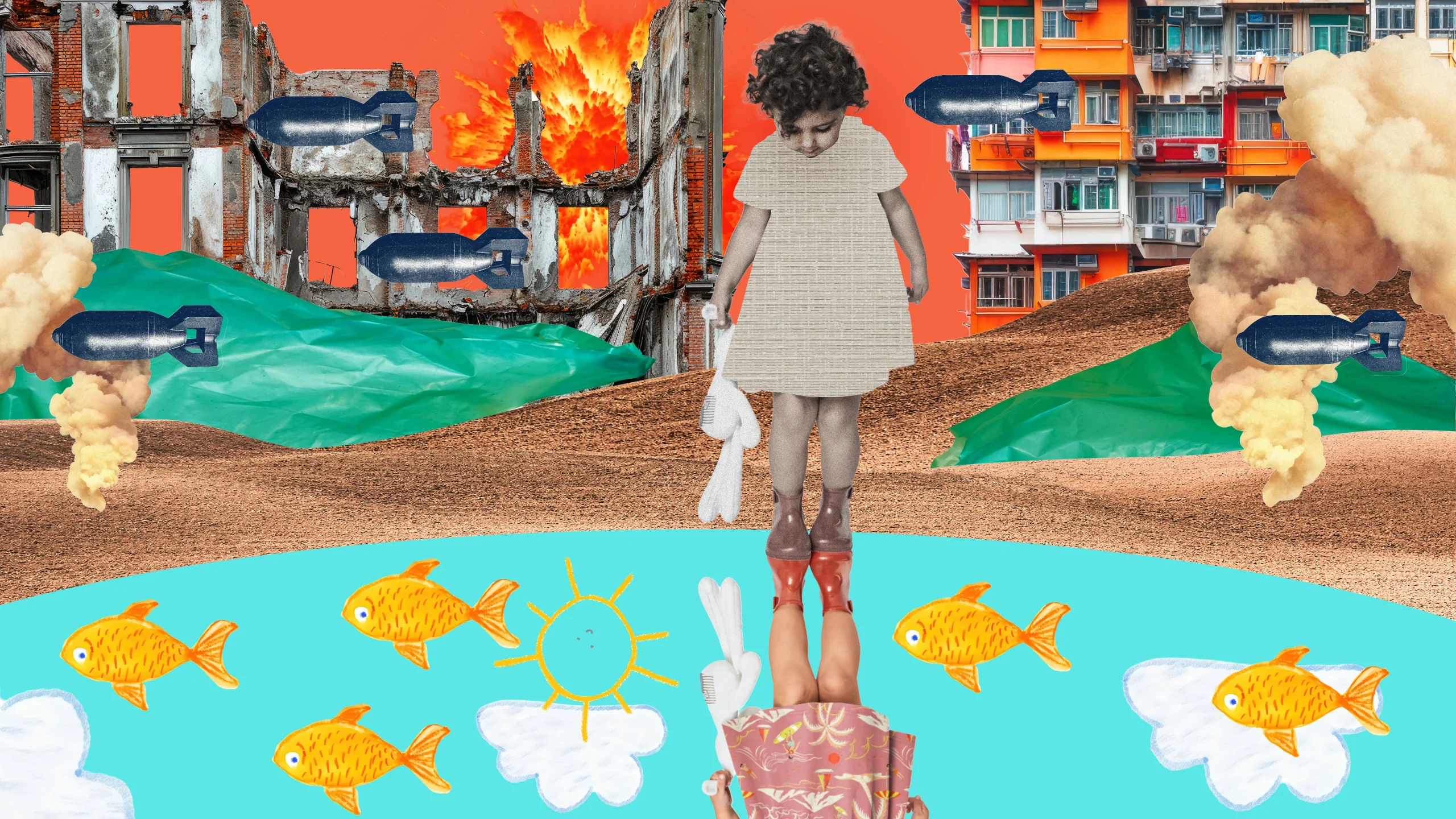
A shared reportage born from the encounter between a Palestinian photographer and a Neapolitan artist, who, through children, families and small everyday gestures, try to restore humanity to images too often reduced to rubble, statistics and headlines.
«I would like the images to reach people’s hearts quietly. To let the human emerge before the war, childhood before the wound, hope before despair».
In the words of Palestinian photographer and film-maker Mahmoud Abu Qaraya lies the emotional core of Between Gaza and Naples, the photographic and documentary project created together with Neapolitan creative director Raffaele Annunziata, aka tylerdurdan*. Rather than recounting the war itself, the work sets out to capture what stubbornly continues to survive within it: everyday life, childhood, families, the basic need for normality.
In her book Regarding the pain of other1, Susan Sontag wrote that «we should not take the “we” for granted when it comes to the suffering of others». Between Gaza and Naples seems to move precisely against this anaesthesia of the gaze: an attempt to slow down looking and restore human complexity to what the media flow consumes in a matter of seconds. Whether it truly manages to reach “the heart in silence” inevitably depends on the viewer. In the meantime, though, the project continues to grow and change shape: it moves through exhibitions, installations, screenings, independent spaces and international settings. Born as a photographic dialogue between Gaza and Naples, Between Gaza and Naples is today also becoming a documentary in the making and is already a concrete network of solidarity and reflection on the role images play in telling the story of the present.
On the website that hosts the project, this line appears: «This is not a comparison. It is a recognition». Two cities and two little girls: Soso in Gaza and Dede in Naples, and the same suspended question: what does it mean to grow up today?
Raffaele Annunziata
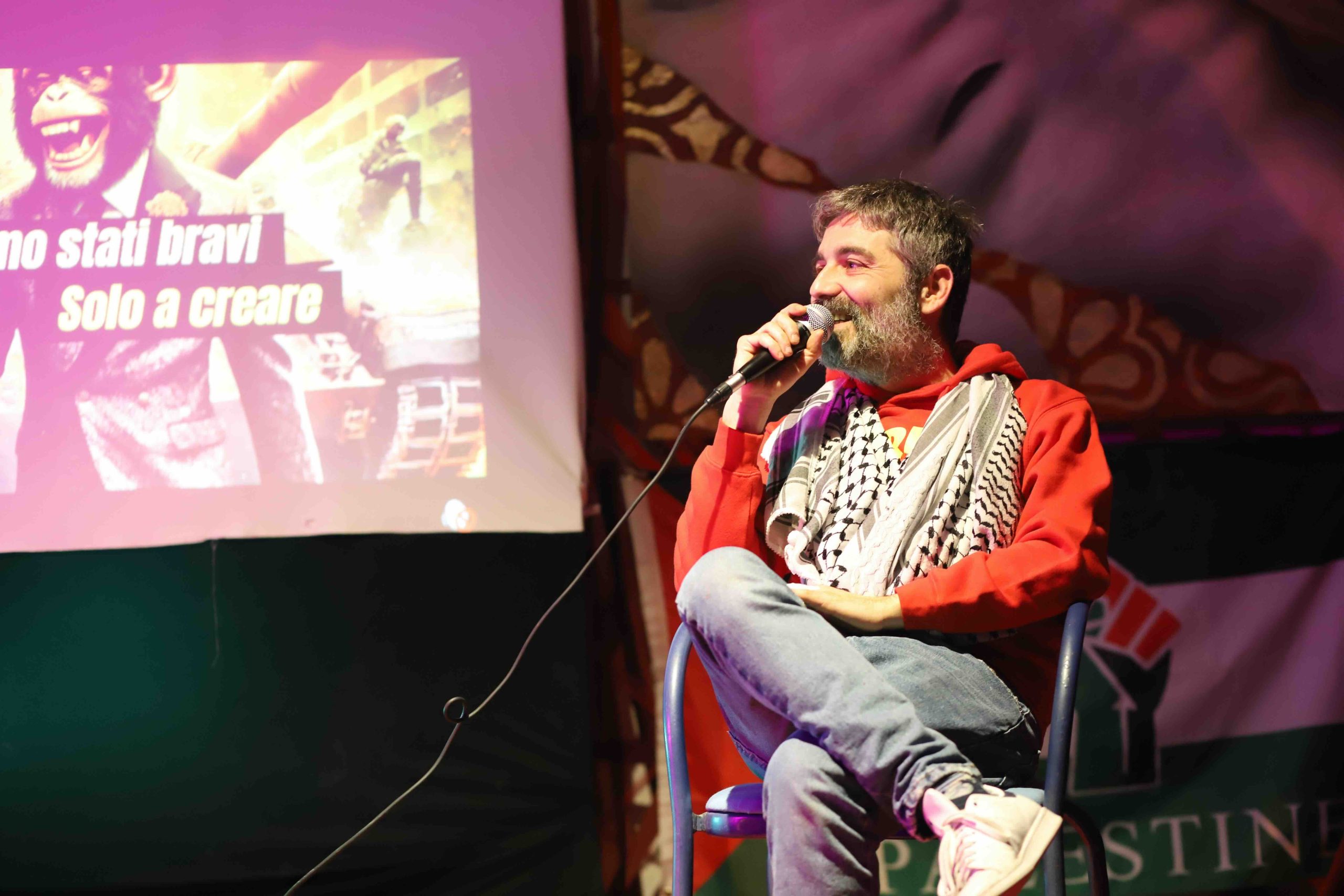
Raffaele Annunziata, an Italian creative director and experimental music artist working at the intersection of artificial intelligence, culture and rap music. Under the name tylerdurdan* he develops AI-driven music projects, exploring ideas of authorship, identity and the transformation of creativity in the age of generative technologies. His work combines traditional songwriting, AI-generated voices and hybrid productions, examining how technology is redefining artistic expression.
Read moreVisit his official website
From social media, a genuine alliance
It all began between August and September 2025, when Annunziata discovered Mahmoud’s work on Instagram. «I was struck by the strength and delicacy of his images», he says. «I texted him because, in my eyes, he was doing something enormous: telling the story of a devastating period for the Palestinian people without giving up sensitivity and beauty. After days of conversation, we realised we could build a shared project together, something that would let his art step beyond the boundaries of the Middle East and speak elsewhere».
Mahmoud remembers that invitation as something immediately natural: «I felt straight away that this project belonged to my way of looking at the world. I photograph the life that resists: children, the smallest details, the human being in the midst of the harshest circumstances».
This is how Between Gaza and Naples came about: Mahmoud photographs Gaza, Raffaele photographs Naples. Two parallel gazes searching for an emotional continuity. «We each observed life from our own place», Mahmoud explains, «and then we brought the images together to create a visual dialogue between two apparently distant cities».
On the project’s website, this same intuition keeps returning: «The project unfolds through parallel lives, where distance does not separate but reveals structure». Distance makes the similarities visible. And it is perhaps precisely here that the project sets itself apart from much contemporary documentary photography: the images work through mirrored, minimal gestures — brushing teeth, waiting, playing, looking at the sea, being together. «We chose Gaza and Naples because they share something deeply human», says Mahmoud. «You feel it in the families, in the streets, in the relationship with the sea, in the way people search for warmth even amid hardship».

Mahmoud Abu Qraya
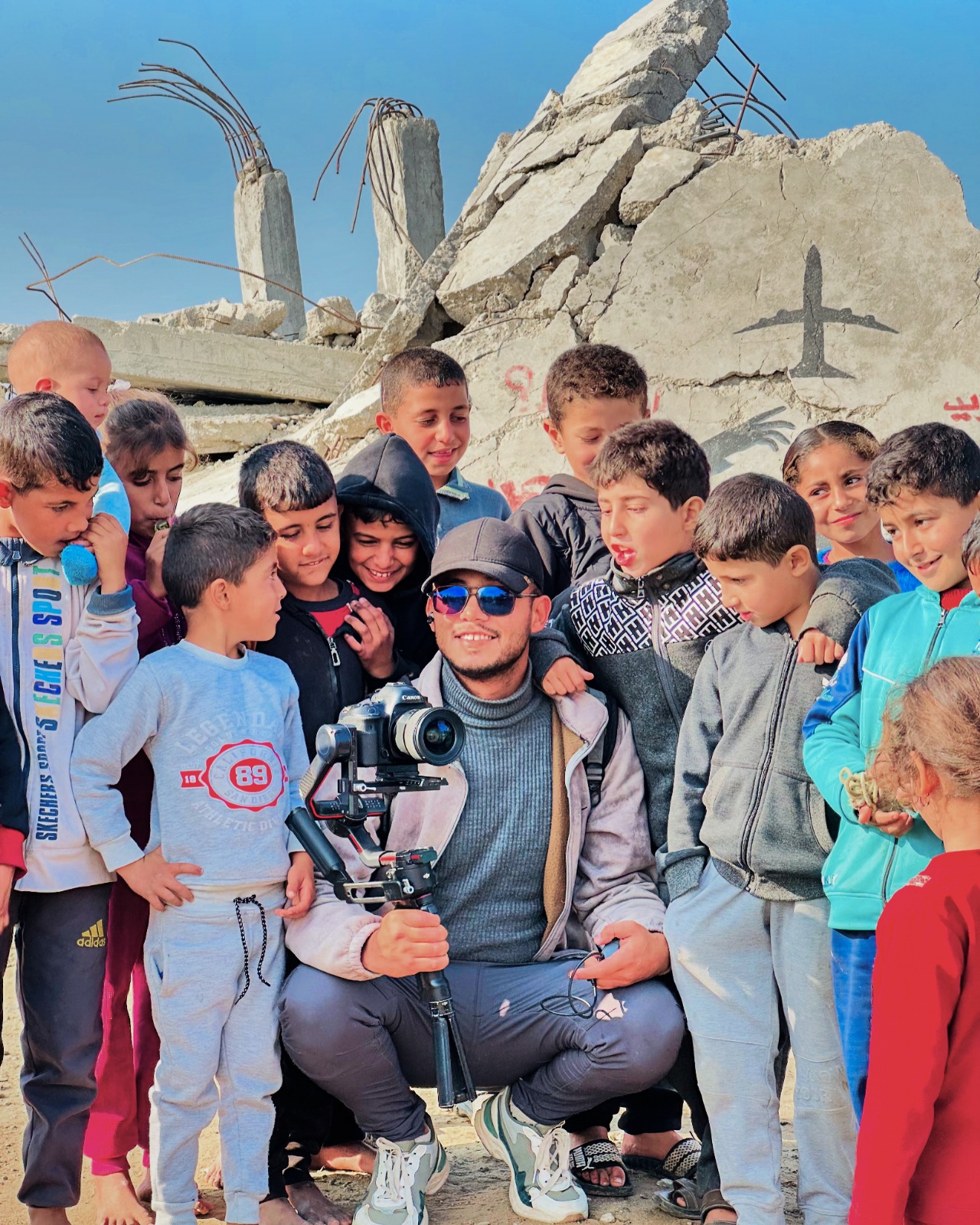
A Palestinian photographer and filmmaker from Gaza who began taking photographs in 2014 and, before the war, worked in his studio capturing children and families in images full of warmth and memory. After the war, his perspective changed, yet he continued to focus on humanity, dignity and hope, even amidst destruction and fear. Through photography and film, he tells the stories of children and families, seeking to preserve their dignity and to show Gaza as a place of life, childhood and human resilience.
Childhood as a universal language
The choice to focus on children is probably the strongest element of the whole project. For both of them, childhood is an ethical stance. «We decided that the heart of the reportage had to be childhood as a universal right», says Raffaele. «A right that today, for a great many Palestinian children, is systematically denied». The idea also indirectly recalls the thinking of Judith Butler, according to whom some lives are considered “more grievable” than others, and Between Gaza and Naples works precisely against this invisible hierarchy of representation, restoring visibility, dignity and emotional closeness.
«Childhood is a universal human language. When you look at a child simply trying to live their day», says Mahmoud, «you immediately understand something about life, and also about loss».
«In Gaza, children live through experiences far bigger than their age», he continues, «but I don’t want to reduce them to victims. I want to show them first and foremost as children: with dreams, fears, games, dignity».
Even the relationship with the subjects springs from a deeply personal place. «I photographed my daughter, and Mahmoud his niece», Raffaele explains. «This allowed us to work within a genuine relationship, without artificially constructing empathy», distancing themselves from the kind of photography that seeks out shock and the pornography of pain. Mahmoud, too, is unequivocal about this: «I don’t want to exploit pain, and I’m not chasing shocking images. For me, photography has to remain a space of understanding, respect and empathy. I don’t hide the harshness of reality, but I don’t want to strip children of their image as living, strong people either».
UOne of the most interesting aspects of Between Gaza and Naples is precisely its refusal of the logic of permanent shock. In a visual ecosystem dominated by images of war consumed compulsively on social media, the project tries to slow the gaze down. Scholar Ariella Azoulay 2, in her work on civil photography, argues, not by chance, that every image contains an ethical relationship between the person photographing, the person photographed and the person looking. «I don’t want to leave the viewer with just sadness», Mahmoud explains. «I’d like them to feel a real closeness to the people I photograph. That for a moment they’d think: these people are like us. They have memories, families, desires, things they love».
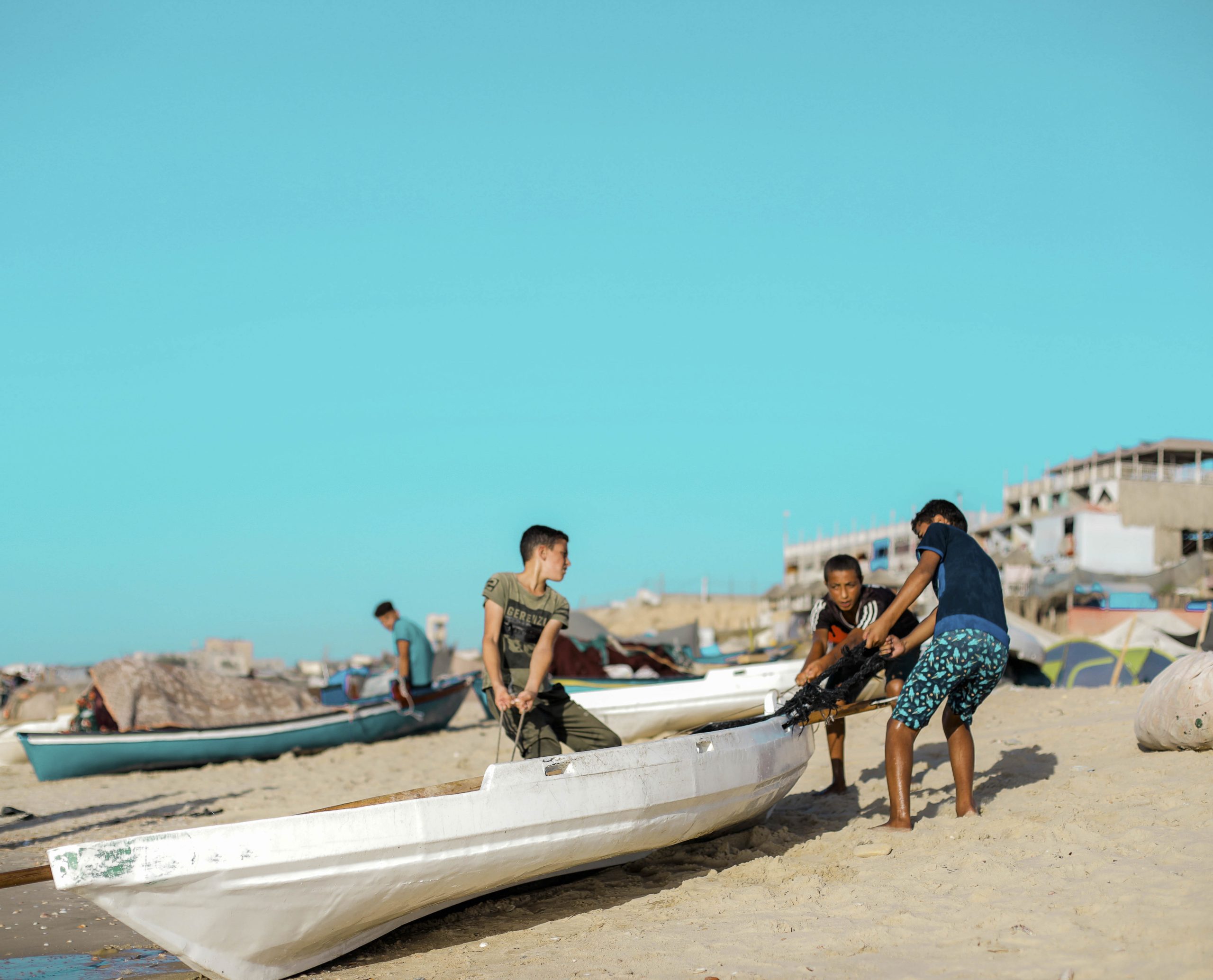
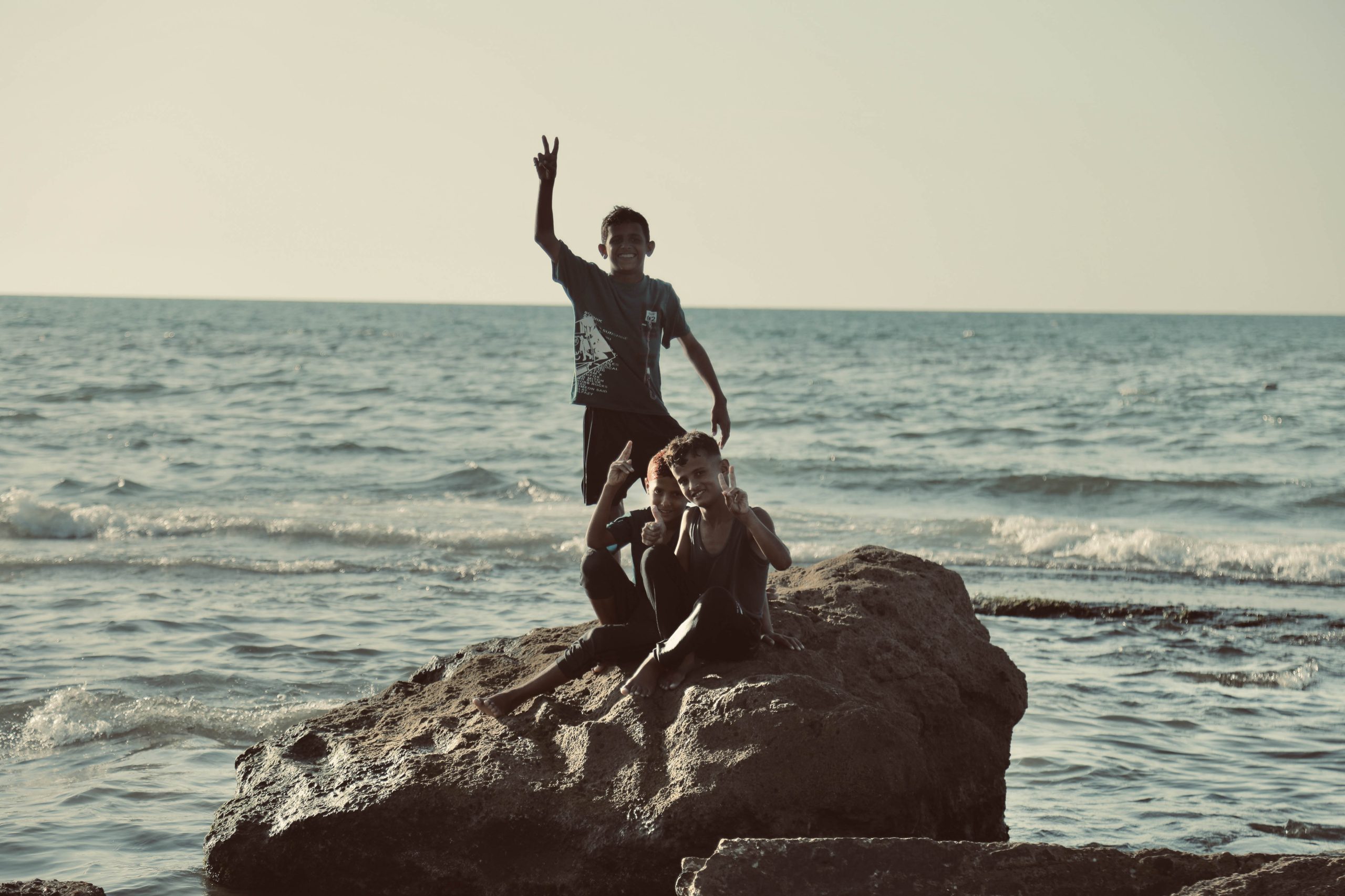
Raffaele describes witnessing opposite reactions during the exhibitions. «There are people who look at a photograph and start crying. And there are people who walk past the images without stopping even for a second». A swing that reflects the contemporary relationship with images of Palestine: on one side, a very deep empathy; on the other, a gradual numbing, precisely where the project is trying to build permanence.
«I hope a genuine empathy grows», says Mahmoud, «not a momentary emotion destined to vanish as soon as the photograph is out of sight».
Symbiosis at a distance
Over time, Between Gaza and Naples has also transformed the lives of its two authors. What began as an artistic collaboration has become a daily relationship.
«Since August 2025, Mahmoud, our families and I have been living in a kind of multimedia symbiosis», Raffaele says.
«We talk to each other every day, sharing projects, technical problems, ideas, fears». For Mahmoud, the project has meant above all the chance to tell Gaza’s story beyond the dominant narrative. «During the war you often feel that your voice stays trapped, and that images of Gaza are read only through destruction and death. This project has given me the chance to also show that life goes on».
«The distance between us was geographical», he continues, «the images turned it into a human dialogue». Raffaele, for his part, dwells on the political dimension of the experience: «It’s impossible to go through this reality without asking yourself how an entire people can be denied the fundamental right to freedom». There is then one crucial detail: the project is entirely independent. And it is perhaps precisely this production fragility that makes it consistent with what it tells. The exhibitions take place mostly in independent spaces, festivals linked to Palestinian culture, social centres and grassroots cultural venues, from Naples to Barcelona, steadily avoiding propagandistic rigidity. Even in its most explicitly political moments, the focus always remains human.
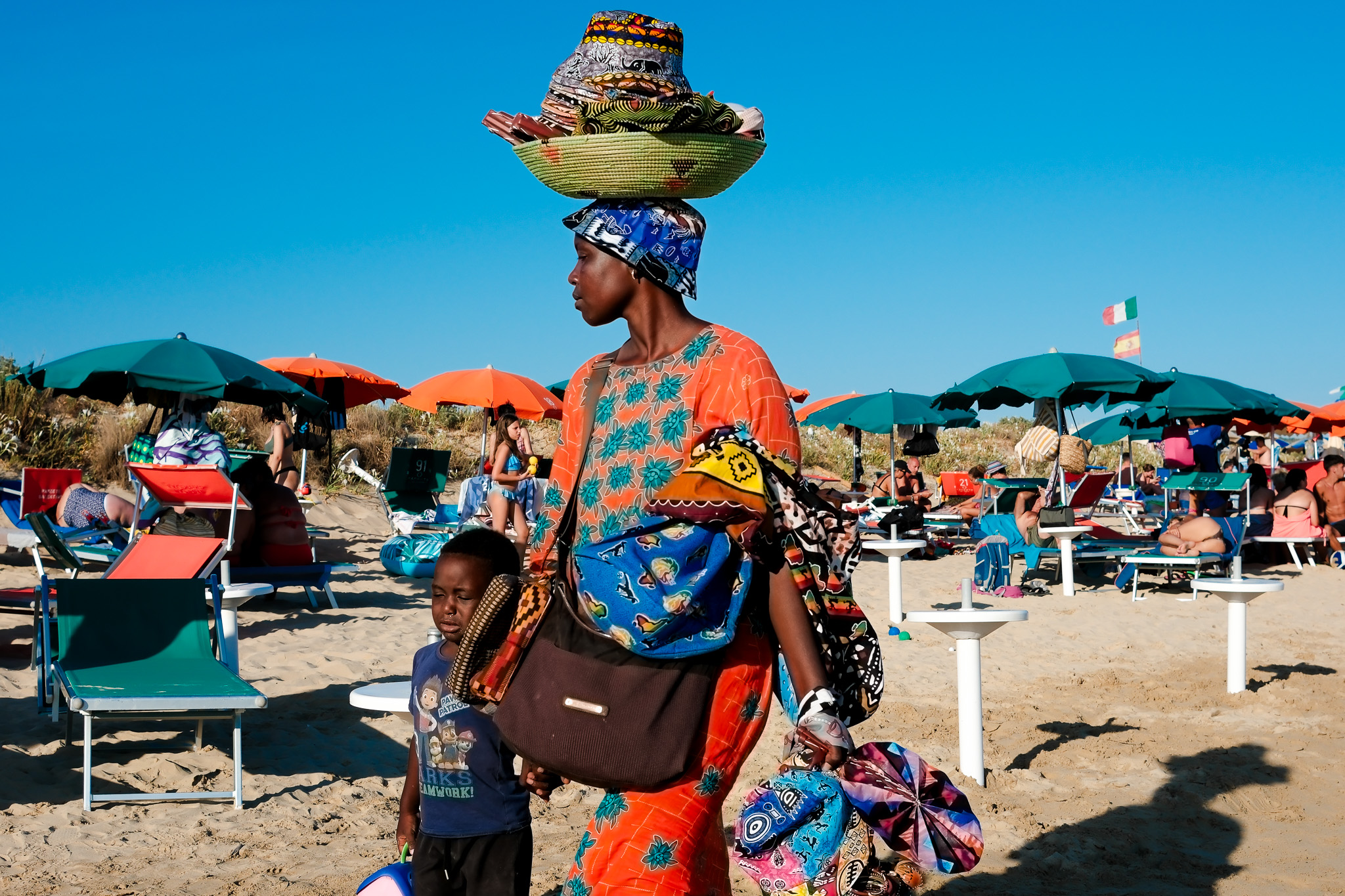
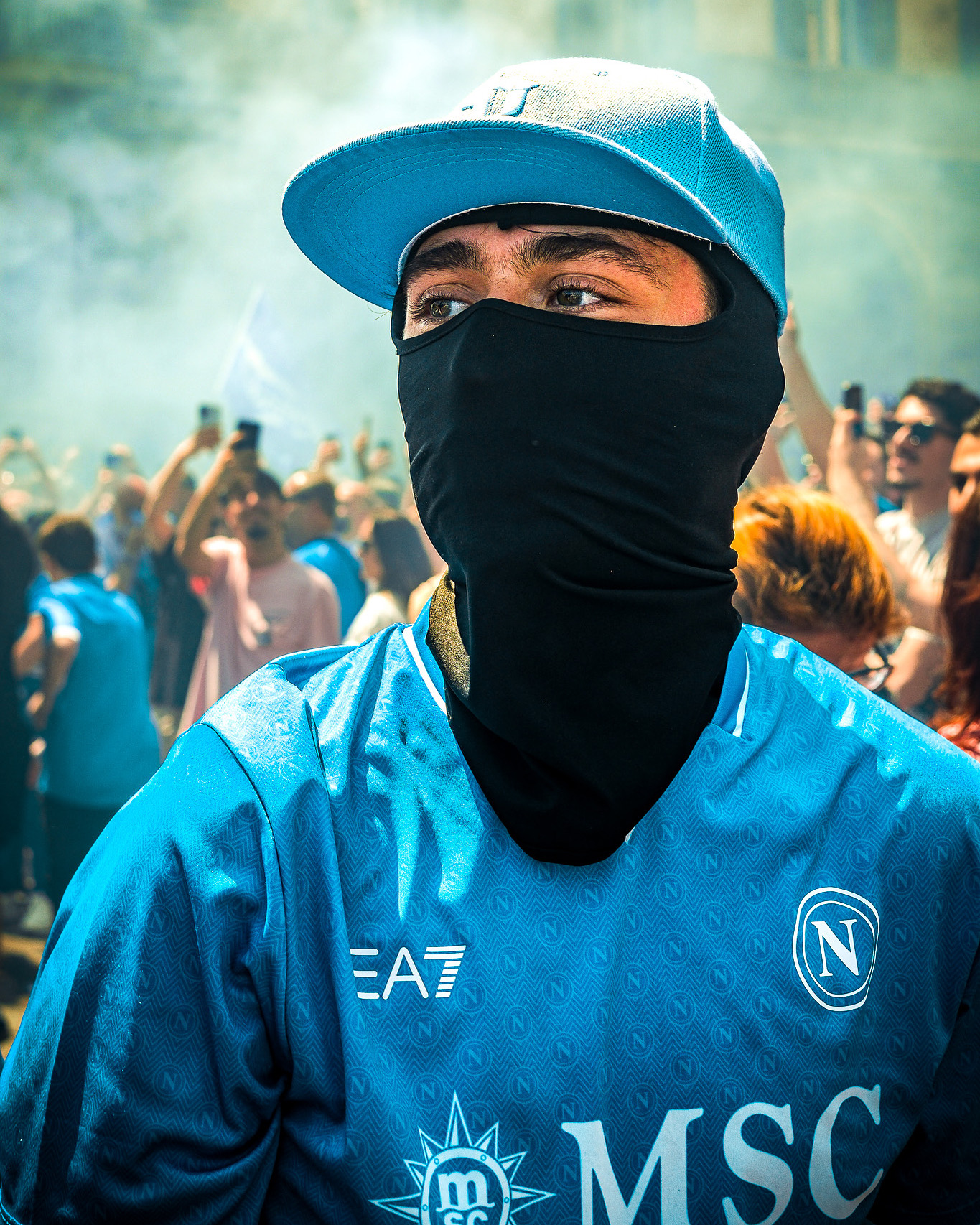
Today, Between Gaza and Naples has become an emotional and political archive in constant evolution, made up of exhibitions, talks, installations, international screenings and editorial collaborations. «We are working on a proper feature film», Raffaele says. «It’s an extremely complicated process: unstable connections, files impossible to transfer, distance and the timescales of war».
The website states that the documentary was born «under extraordinary circumstances», while Mahmoud and his family are forced to keep moving south across Gaza. Mahmoud talks about the project as something that needs to mature slowly:
«Every image needs sincerity and the right moment. We don’t want to create just a visual resemblance, but a human dialogue between two places, two childhoods and two lives».
In the end, Mahmoud’s wish remains disarming in its simplicity: «I don’t want this to become just something visually beautiful. I’d like it to be a space capable of making people feel, think and grow closer to Gaza and the children who live there».


