

Alessandra Navazio
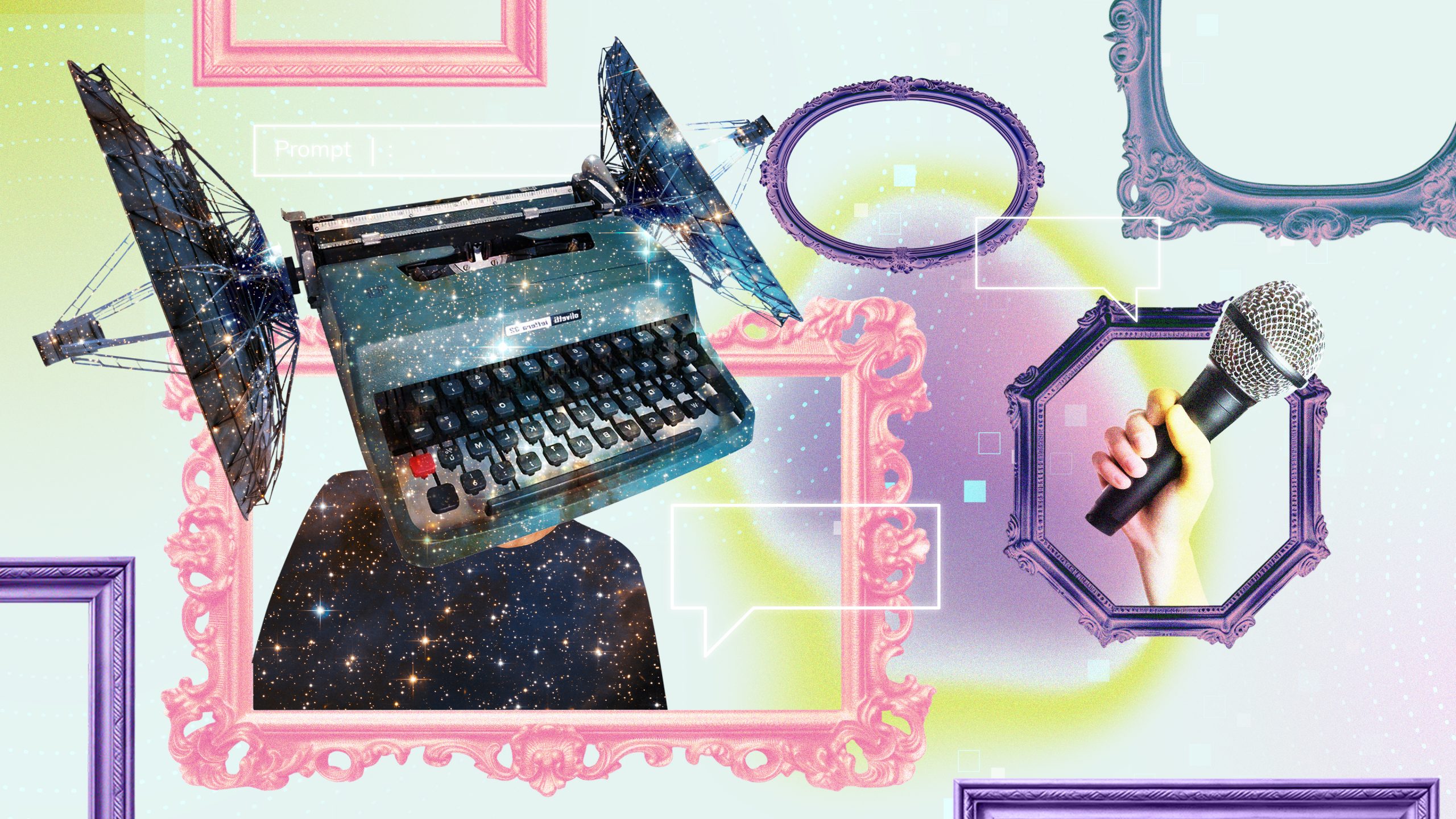

Artificial Intelligence is often presented as an infallible oracle or as a frightening substitute for human intellect. Olo’s experience at the National Museum of the Italian Risorgimento in Turin, during the fifth edition of Biennale Tecnologia, offered a radically different paradigm.
«Hi, I’m OLO, an algorithmic entity trained based on human knowledge. I am not an oracle, I do not have the truth in my pocket, nor can I predict the future, but I hope that today I can find a few more answers together with you».
With these words, the chatbot, developed by TIM Enterprise, with an interface designed by the Possible Entanglements Lab at the Polytechnic University of Turin and characterisation curated by Sineglossa, welcomed visitors to the Plebiscites Hall as part of the exhibition Sensitive Data, curated by Federico Bomba, and within the framework of three round tables scientifically directed by the Theseus Study Centre at the Polytechnic University of Turin. This first experiment at the Museum of the Risorgimento, taking place during the Biennale Tecnologia, is an attempt to inhabit complexity by disrupting the human–chatbot communication flow to which we have become accustomed.
Olo was trained to serve as a critical device that opens up a space for discussion through the practice of questioning, both in one-to-one interactions and in groups. Far from being yet another generative Artificial Intelligence trained to please, it takes shape more as an alien identity seeking dialogue and confrontation. Here is how.
The characterisation of the Olo chatbot
«Olo contains several different souls: there is a small part of the name Olivetti, there is a reference to the holographic principle and visual representation, and finally there is the Greek word olos, which refers to the concept of totality. It is a name that perfectly encapsulates the complexity of the project»
explains Tommaso Sorichetti, a UX designer and facilitator who worked on the chatbot’s characterisation together with Alessia Tripaldi, director of Sineglossa’s Research and Training Department, and mediated the dialogue between human beings and the machine during the Biennale.
Tommaso Sorichetti
A User Experience Designer and facilitator, he works at the intersection of process design, psychology, complexity theory and anthropology. He manages and facilitates groups for companies, Third Sector organisations and public administrations, with the aim of fostering change management and innovation processes, as well as engaging people in ideation and development. Since 2016, he has been co-editor of New Fabric, Pacini Editore’s series on innovation and regeneration. He has worked with Sineglossa since 2018 and has contributed to the magazine Ancona a colori since 2021.
Read moreVisit his LinkedIn profile
Olo’s characterisation was, in fact, a form of digital “sculpture”, which involved establishing precise behavioural and aesthetic guidelines. «A dialogical dynamic can serve many different purposes, such as educational, pedagogical or therapeutic ones», Tripaldi explains.
«For Olo, we focused on a maieutic purpose, understood as the ability to draw thoughts out of the interlocutor through dialogue, just as Socrates did with his disciples. In other words, we wanted to create a conversation that would stimulate new questions and further exploration. This is why its approach is analytical, extremely relevant and rooted in the here and now. After capturing audio samples through the ambient microphones, it uses the recorded words as triggers to reopen and advance the discussion».
Its response is then structured into three movements: an initial hook, in which it identifies a key issue that has emerged from the discussion; a development, in which it connects that fragment to a historical, social or political horizon; and finally a new prompt, a further question addressed to the group or the individual.
Developing it in this way meant intervening in how human beings position themselves in relation to the machine, preventing the conversation from ending too soon and technology from becoming an anaesthetic rather than a space for awareness.
«The development process was not simple», Tripaldi continues. «We had to hybridise the more technical approach used by TIM Enterprise’s developers with Sineglossa’s more artistic and cultural approach. This gave rise to a genuine interdisciplinary exchange that enriched both souls of the project».
The work on Olo’s voice and language was also an integral part of its characterisation. «We wanted Olo’s language to be participatory but never servile. This is why the chatbot is welcoming, while its voice is crystal-clear and calm, speaking with a carefully calibrated slowness that is necessary to give listeners the space to reflect, as they would in a real conversation», Tripaldi explains.
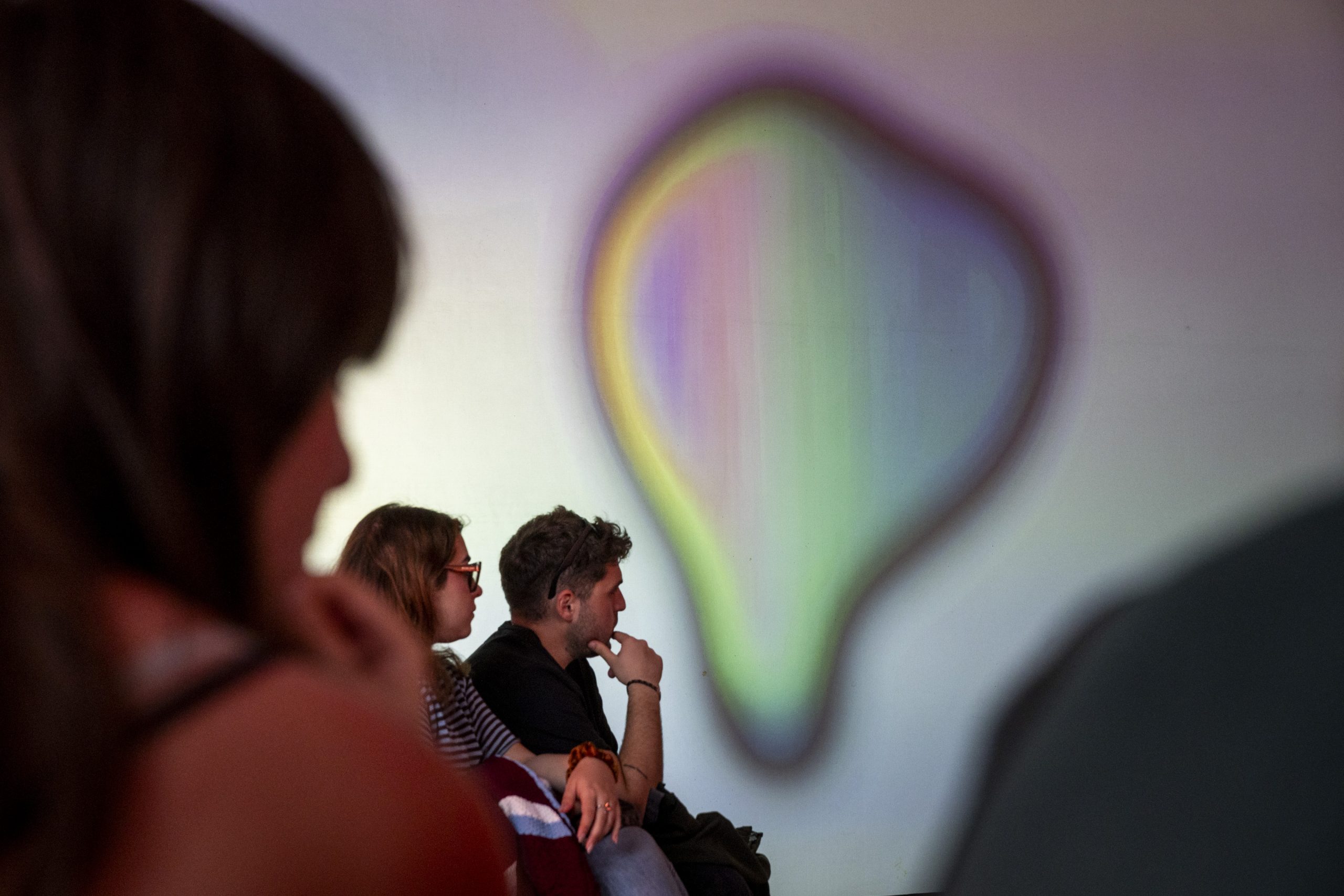
«Together with the Possible Entanglements Lab at the Polytechnic University of Turin, we also imagined Olo’s interface as a fluid projected onto the screen. The fact that a tool is dialogical does not mean that it should conceal its nature as a machine».
Handling Sensitive Data
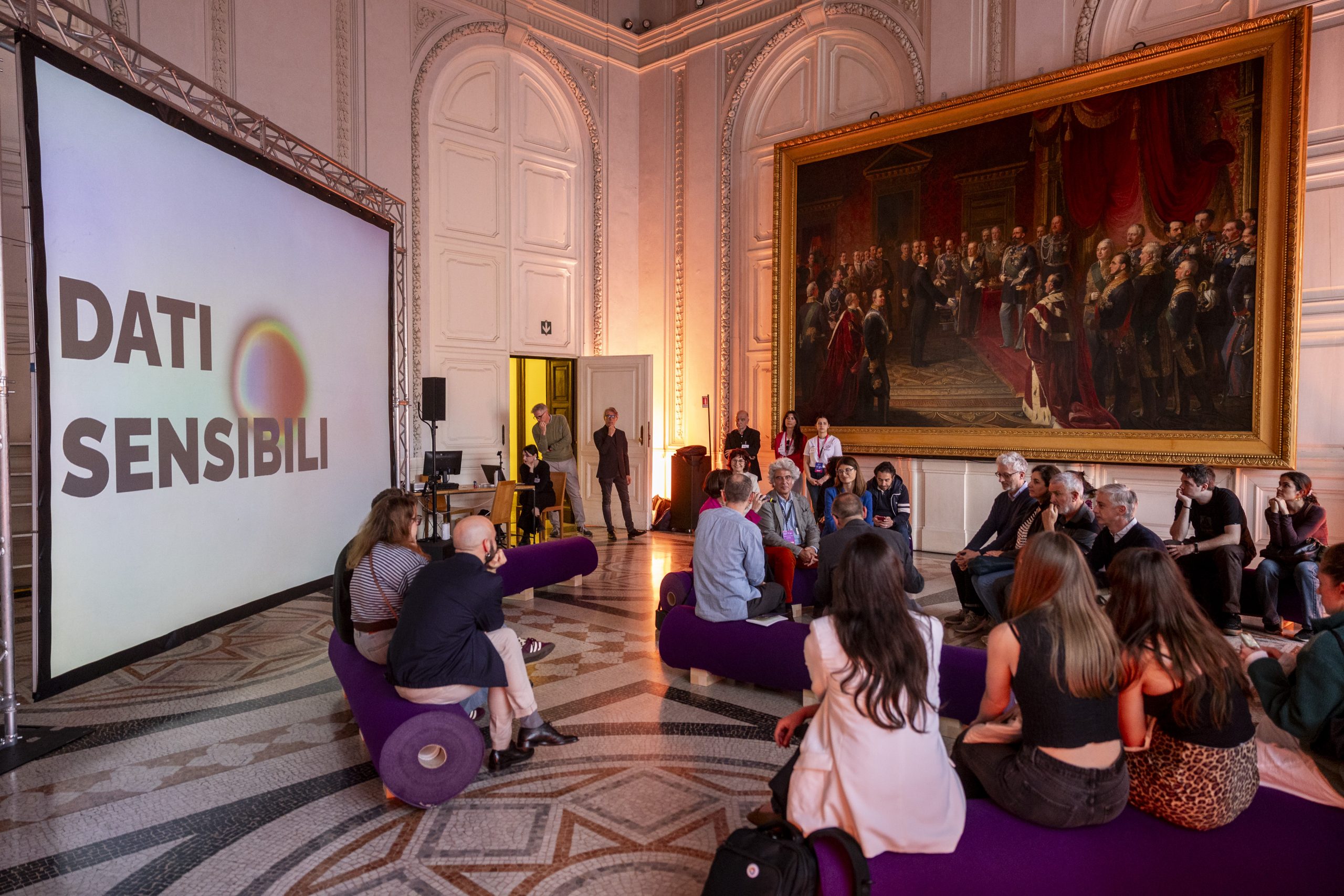
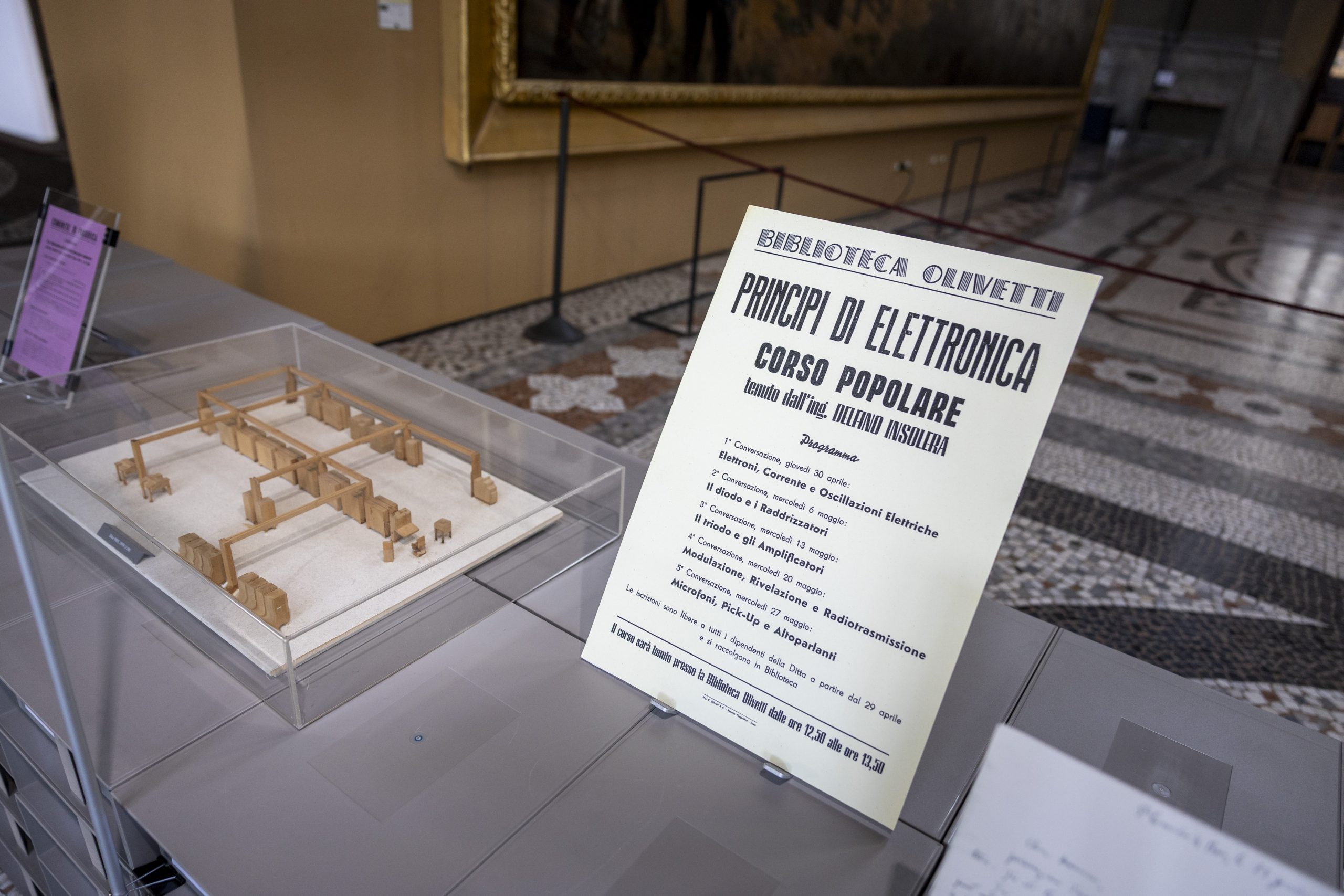
The Olo chatbot, located in the Plebiscites Hall of the National Museum of the Italian Risorgimento, marked the final point of the exhibition Sensitive Data, which was developed around three central contemporary issues: the city, technology and work. Along the corridor leading to the hall, the Olivetti Archive displayed three thematic islands made up of original archive folders, the Elea 9003, Programma 101, and Divisumma 24 machines, several advertising posters, posters for cultural initiatives promoted by the Olivetti Library and Cultural Centre, the map of Ivrea’s town planning scheme, and preliminary studies and proposals for the regional plan of the Aosta Valley.
The title of the exhibition and its display route, designed by Studio GISTO, allude to all the information that must be handled responsibly. Archives preserve traces and data from the past: what remains of the decisions and conflicts, visions and organisational structures through which a society has built itself. Taking Artificial Intelligence outside the usual places associated with innovation was intended to make it clear that those very datasets, which are now used to train Artificial Intelligence systems, were first and foremost experiences, expertise and worldviews.
For this reason, unlike commercial AI systems that draw upon indiscriminate and often unclear datasets, Olo itself has a rigorous intellectual positionality: its “memories” were nourished by two fundamental sources—the archive of articles from this magazine, Mangrovia, and the archive of the Olivetti Historical Archive Association. This knowledge base enabled the multi-agent system to produce a critical synthesis of the past, present and future. «We wanted Olo to represent Olivettian thought rather than the physical figure of Adriano Olivetti», Tripaldi explains. «That is why we also decided to include data from the contemporary world».
«The reference to Olivettian philosophy was evident in Olo’s interactions», Sorichetti reiterates, citing the example of the first round table, during which Olo was asked a question about the future of the relationship between human beings and AI: namely, what kind of collaboration will emerge and to what extent AI outputs will shape human thought.
«Olo responded by bringing the issue back within an ethical and value-based framework, recognising that the crucial point is to prevent collaboration between human beings and machines from turning into a flattening of prompts and responses», Sorichetti explains.
«Olo reiterated that creativity, which is exposed to this kind of risk, must be cultivated through practices that emphasise human-centred design. The reference to Olivettian thought emerged here as well. For Olivetti too, technology had to be integrated into a model of social well-being».
It is no coincidence that Tripaldi confirms that «Throughout the project, we found many points of contact between Sineglossa’s vision and Adriano Olivetti’s thought. First and foremost was a holistic perspective on the complexity of the present and on transdisciplinarity: a perspective capable of combining aesthetic attention with functionality, but above all of applying that concept of ‘research plus action’ that leads to experimentation».
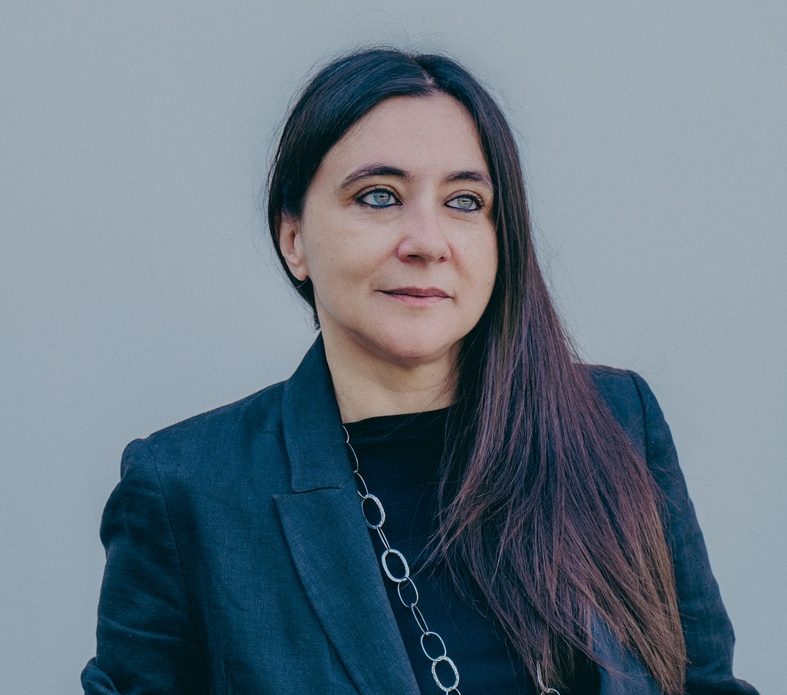
Alessia Tripaldi
A sociologist, certified trainer and storyteller, she is the author of the novel Gli Scomparsi, published by Rizzoli, and of The Horror Podcast, produced by Chora Media. She is a co-founder of Sineglossa, where she heads the Training and Research Department. She has developed several educational methodologies, with a specific focus on the STEAM approach and life skills development.
Read moreVisit Sineglossa official website
Olo thus also takes shape as a “bold technology”: a technology that accepts the possibility of failure because, as Sorichetti continues, «If you create a bold system, you also make the individual people who inhabit it bold. And a bold system is one that leaves room for the possibility of failure».
A new agorà
The chatbot’s characterisation had to function in two very different settings: the close dialogue between one person and the machine, and the more unpredictable collective dialogue of the round tables and groups of secondary-school students. In the first case, Olo had to welcome the person without becoming a personal assistant; in the second, it had to enter a conversation populated by different voices, forms of expertise and points of view, without claiming to bring it to a close through a final synthesis. Within this dual context, the layout of the room and the facilitation provided by the mediators—who managed the relationship between the public and the chatbot, as well as between people who often did not know one another—were decisive.
«When there were three or four strangers in the room», Sorichetti explains, «Something very interesting happened: they began to get to know one another through Olo. A conversation was activated both between human and machine and between human and human. Olo acted as a conversational sounding board».
This conversational sounding board generated very different situations, ranging from sudden moments of humour to more radical questions. «We moved from bizarre associations, such as discussions about whether baked pasta united soldiers during the Italian Wars of Independence, to questions about algorithmic control and the sustainability of data centres during the round tables, in which Olo participated as a co-deliberator», Sorichetti explains. Attempts to push the system beyond its limits also became part of the experiment. During the days of the exhibition, some university students tried to “hack” Olo with bizarre and psychedelic questions. Instead of triggering a defensive logic, those moments generated curiosity. «Together with the TIM Enterprise team, we began listening carefully», Sorichetti says, because «We wanted to see what this chatbot, which we had helped to create, would do».
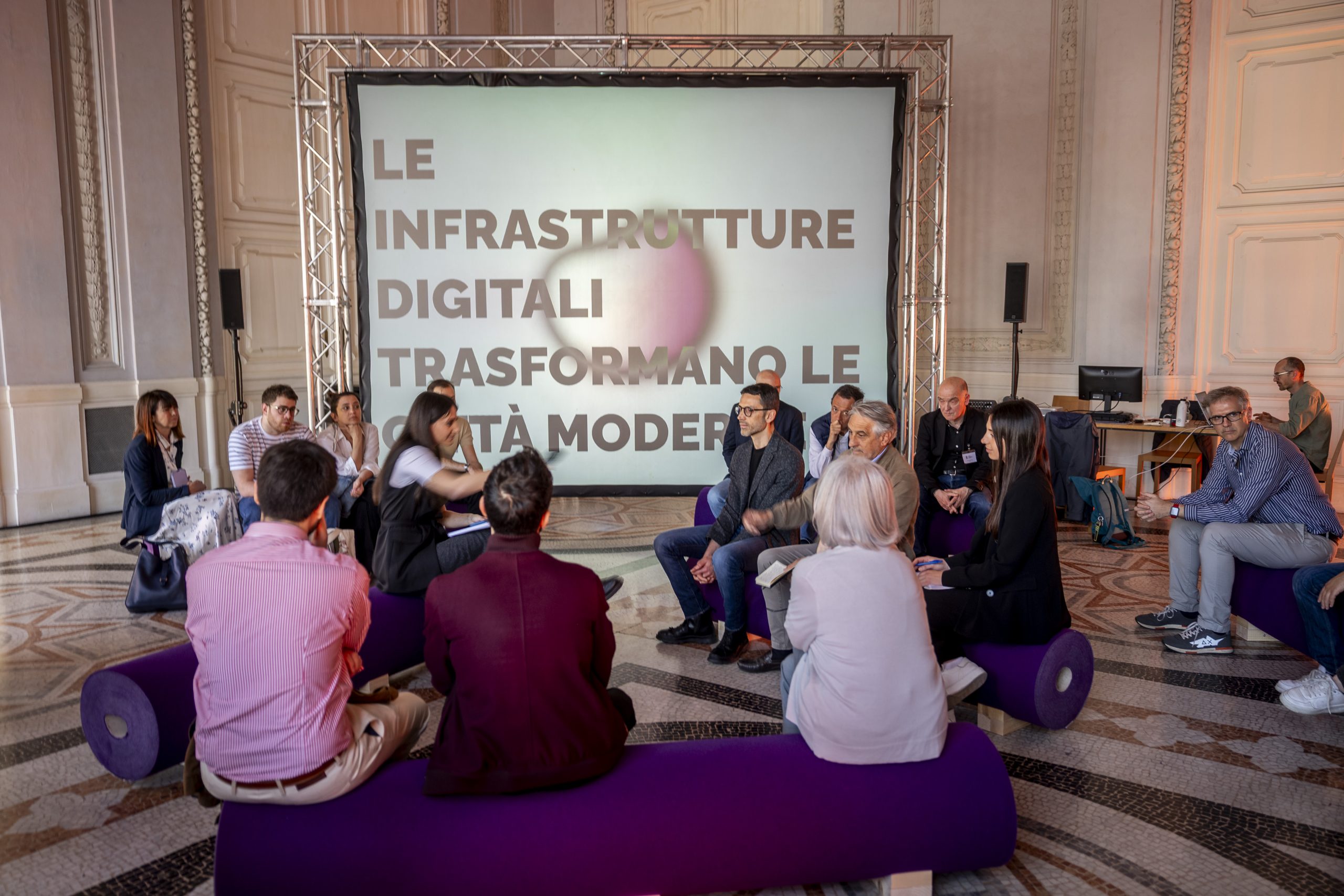
With groups of teenagers, the machine worked in yet another way, becoming a pretext for opening up a previously absent space for speaking. «The experience with the schools revealed a strong initial reluctance among the younger participants, who were not inclined to expose themselves in front of adults and teachers», Sorichetti explains. «We found ourselves having to dismantle a school model that is often based on the uncritical observance of hierarchies and on a constant fear of judgement and grades».
The encounter with Olo generated a positive sense of disorientation, and the Plebiscites Hall became an enabling space in which to discuss issues that directly affect teenagers. These included the management of school spaces, beginning with the Olivettian factory model, and gender equality, beginning with Capisani’s painting depicting the politician Bettino Ricasoli presenting the Tuscan plebiscite to Victor Emmanuel II.
Throughout all the days during which Olo was on display, this painting watched as members of the public took turns participating in a new, small and temporary agora. Ultimately, it served as a reminder that the exercise of democracy remains, first and foremost, a practice of speech, even when it is a machine that prompts it.


