
The geographies of agroecological resistance
Participatory art and the politics of sustainability in Europe
Carmen Colabella
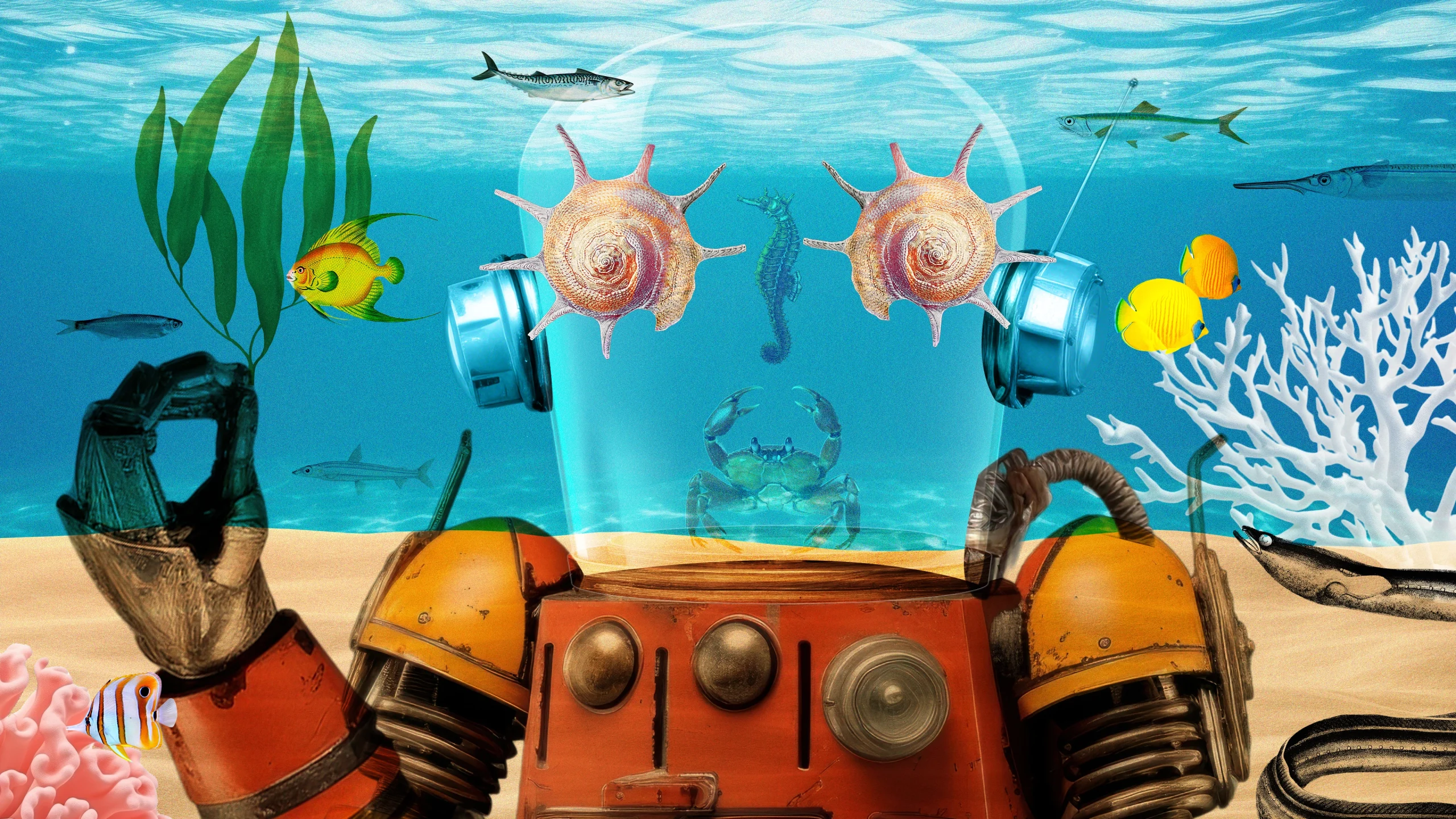
From the Isle of Skye in Scotland, where the artistic duo Cooking Sections launched CLIMAVORE: ON TIDAL ZONES in 2017, to Sicily and Apulia, regions marked by the collapse of monocultures and increasing drought, the CLIMAVORE project demonstrates how food can become a political, ecological and cultural tool
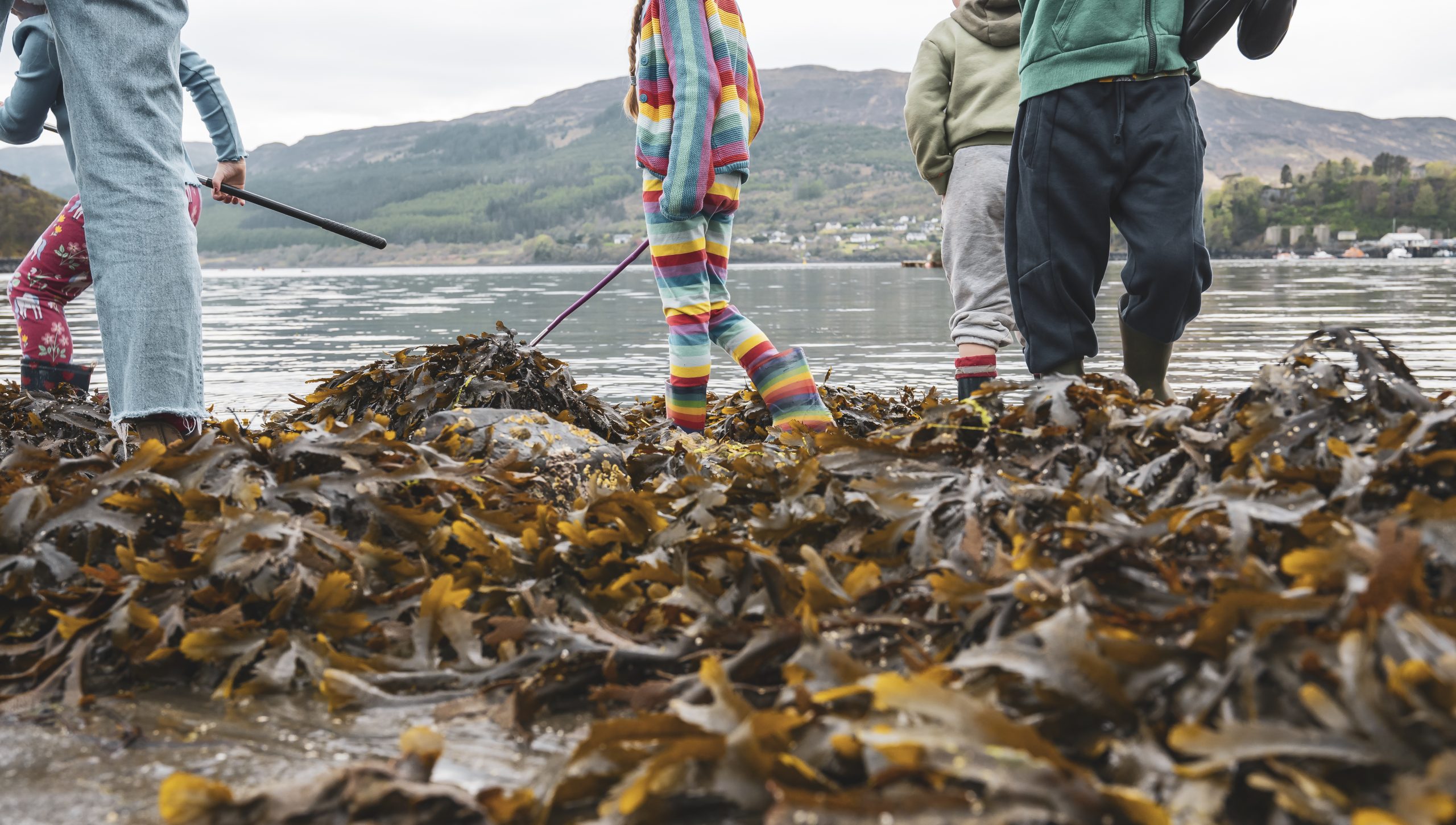
As the tide recedes in Bayfield Bay, near Portree, the largest town on the Isle of Skye in Scotland, the air fills with the scent of salt and your feet sink into the mud. You have to take off your shoes, or pull on a pair of wellington boots, to reach the unusual table emerging from the water. It is 2017 and, commissioned by ATLAS Arts, the artist duo Cooking Sections, formed by Daniel Fernández Pascual and Alon Schwabe, has created an intertidal structure capable of hosting a thousand oysters at high tide and transforming into a refectory for people when the tide goes out. Here, during windows of just three hours, local residents, scientists and politicians gathered to enjoy dulse soup and kelp lasagne. The aim? To confront the climate emergency by exposing the pollution caused by intensive salmon farming, while also encouraging reflection on food, the environmental impact of our diets, and how they might be reshaped in response to the changing ecological conditions of a place. Alongside this, ten restaurants, including Michelin-starred establishments, food trucks and cafés, removed farmed salmon from their menus, replacing it with dishes based on seaweed and bivalves.
That first commission gave rise to the long-term installation-performance CLIMAVORE: ON TIDAL ZONES (2017–present) and to Climavore CIC, a community interest company that demonstrates how art can open up spaces for dialogue while also intervening in food supply chains, restaurant menus and new forms of coexistence between people and marine environments. Here’s how.
Cooking Sections
Cooking Sections is an artist duo founded in London in 2013 by Daniel Fernández Pascual and Alon Schwabe. Their practice spans art, architecture, performance, research and video, using food not simply as a cultural object but as a lens through which to examine the systems that organise the world: agricultural economies, transformed landscapes, infrastructures, ecological crises and relationships between species. Since 2015, they have been developing CLIMAVORE, a long-term research project that invites us to rethink the way we eat as the climate changes.
Read moreVisit their official website
The Tidal Orchards project on the Isle of Skye
Loch Eishort, on the Isle of Skye in Scotland, is a place where the relationship between local communities and the sea has been profoundly transformed over recent decades. Industrial aquaculture has altered ecological balances, bringing to the ocean what Donna Haraway has described as the “Plantationocene“: the ecological simplification of living environments at the expense of non-commercial organisms, and the conversion of landscapes into zones of profit and sacrifice1, with resulting problems including pollution, the spread of parasites and competition with native species. At the same time, tourism has driven increasing demand for locally sourced seafood. This growing pressure has gradually led many traditional sea-related practices to be abandoned in favour of more intensive and profitable ones. Environmental degradation has therefore been accompanied by a cultural rupture, with the loss of situated knowledge passed down orally and rooted in a daily relationship with the sea, one detached from the dynamics of capitalist exploitation.
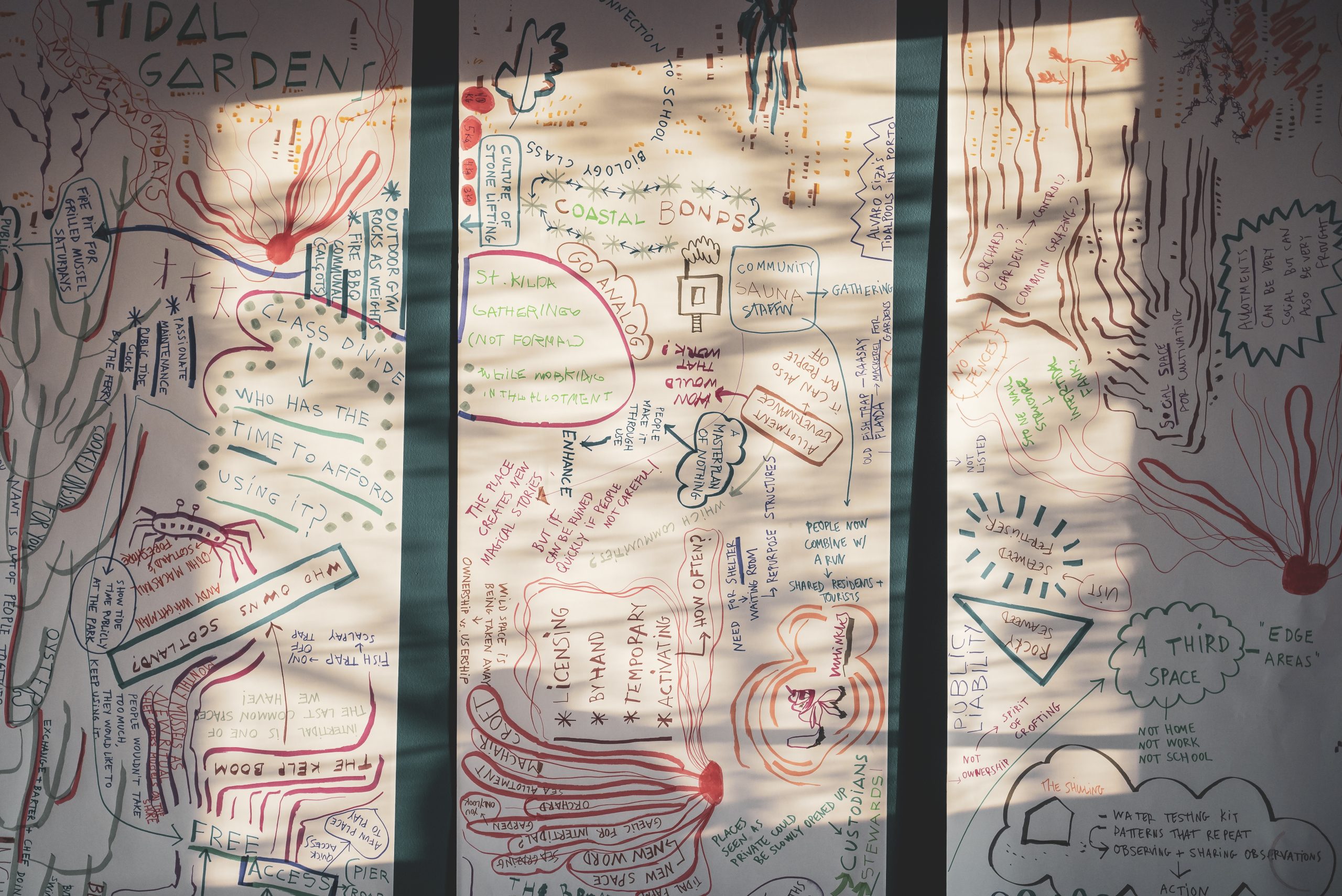
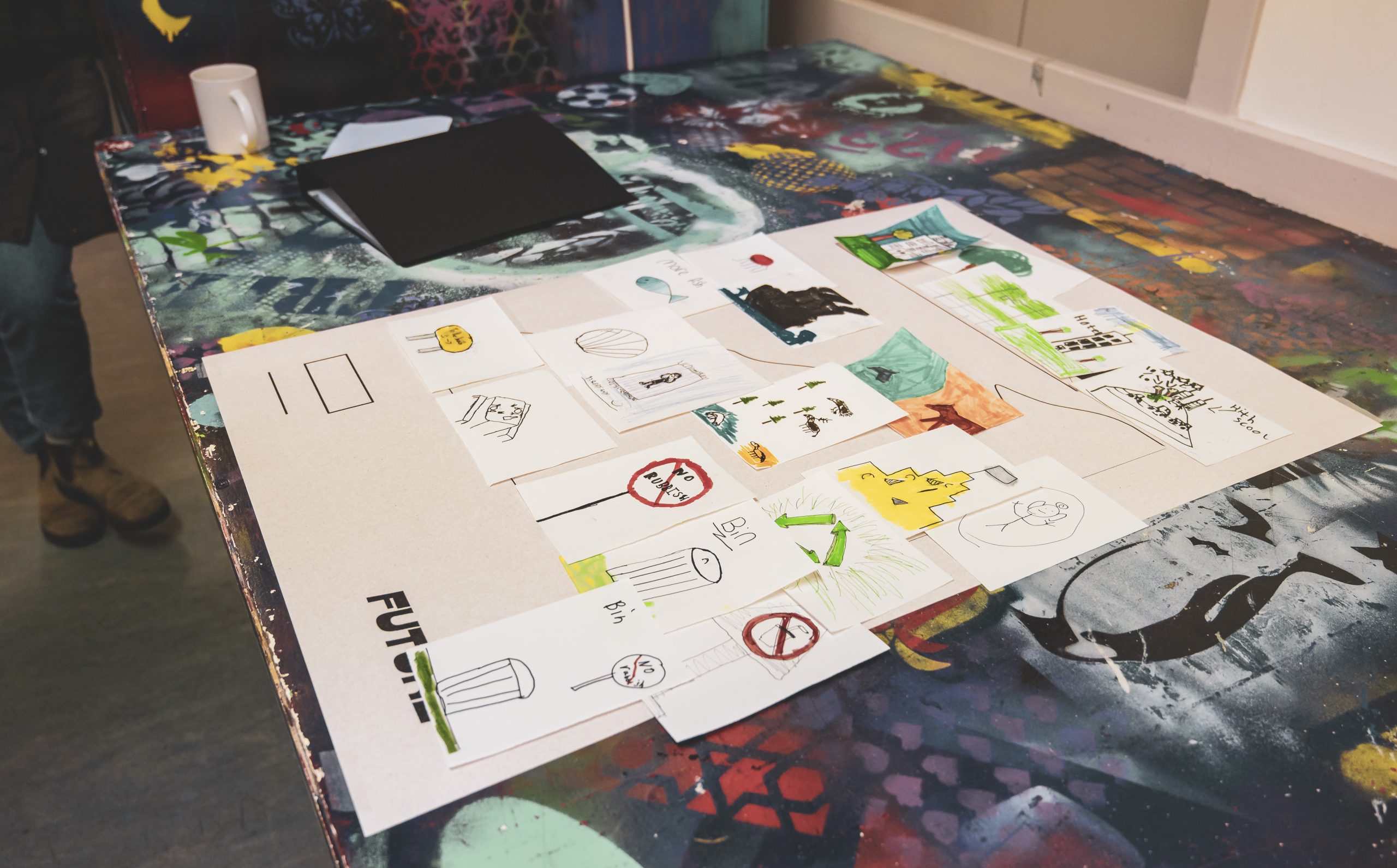
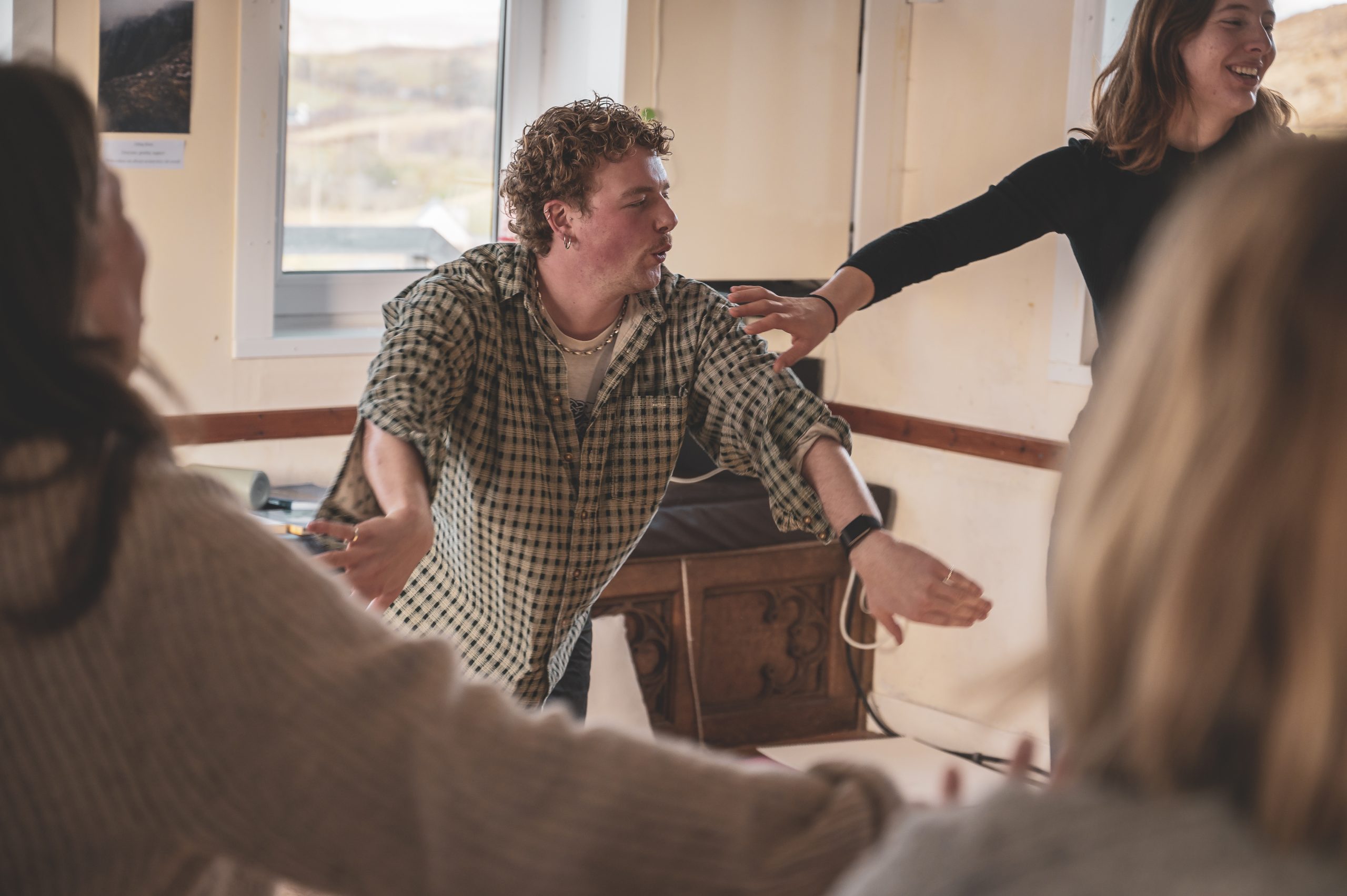
Ten years after the creation of CLIMAVORE: ON TIDAL ZONES, “re-commoning” remains the guiding principle here: reclaiming, through both physical and imaginative processes, spaces and resources that have been privatised so they can once again serve the collective good. It is no coincidence that, in September 2025, Climavore CIC secured funding for Tidal Orchards, an intertidal garden located between the high and low tide lines, designed as a space for co-design involving a wide range of participants: fishers, students, artists, researchers and local residents. Over six months, the site hosted debates and conversations, communal gatherings, and collective food preparation and shared meals, all intended to strengthen community ties around a project that, one might say, follows the message of Ken Loach’s film The Old Oak (2023):
«When you eat together, you stick together».
The reflective dimension of the project was paired with direct engagement with the coastline. Science, too, became participatory thanks to the workshops led by Hayley Wolcott, a marine biologist based on the island, who shared techniques and expertise that could benefit the local community, including practical skills (such as water sampling). In this way, the intertidal garden became a landscape shaped as much by the tides and the species inhabiting it as by the people who cared for it. Art, on the other hand, became a means of representation and connection, bringing together areas that would otherwise have remained separate: food production, ecology and community.
Agroecological resistance in southern Italy
To fully grasp the significance of Tidal Orchards, it is necessary to place it within the broader CLIMAVORE, programme, which seeks to overturn conventional ways of thinking about food systems. It does so through the CLIMAVORE Stations, research and action platforms developed across different geographical contexts, including Scotland, Türkiye and Italy, that operate as nodes within a wider network, where interdisciplinary experimentation takes place in dialogue with the specific needs of each territory.
In Sicily and Apulia2, for example, the situation differs markedly from that of Scotland. Here, the collapse of monocultures, such as vast expanses of olive groves, and the advance of drought have led to two major consequences: the disappearance of drought-resistant seed varieties considered less productive, and the depletion of soils weakened by chronic water scarcity. As Daniel Fernández Pascual, Alon Schwabe, Enrico Milazzo and Gabriella Patera argue, the ecological and social relationships between farming communities and drought-adapted crop varieties represent a form of “coevolutionary mutualism”: long-term process in which seeds and those who care for them evolve together through reciprocal selection and continuous adaptation to their environment3. Preserving these seeds, whose connection to the land runs deep, therefore becomes an inherently political act. Their potential disappearance reveals the risks posed by a capitalist economic model that regards diversity as an obstacle to productivity.
This is the context in which Monoculture Meltdown, emerged, a long-term project that promotes the recognition of low-water seed varieties as a cornerstone of future agriculture, cultural continuity and intergenerational rights4. By bringing together agroecology, legal advocacy and contemporary art, the project seeks to resist standardisation and uniformity. As stated in the Declaration on the Rights of Peasant Seeds5, presented at the Museum of Civilisations (MUCIV) in May 2026 following a two-year collaborative research process:
«Peasant Seeds have the right to co-evolve with peoples, climates and ecosystems, maintaining and strengthening their adaptive resilience […]. They have the right to remain a commons, free from exclusive control, commercial appropriation or technological interventions that compromise their integrity, accessibility or natural co-evolution […]».
«They must be recognised as agents of multispecies communities, in which people, plants, soils and other living beings depend upon one another, and where relations of multispecies solidarity ensure mutual care, resilience, adaptation and ecological continuity».
One hundred and twenty-five seed varieties are currently preserved in terracotta vessels at the Museum of Civilisations in Rome (MUCIV). In collaboration with legal scholars from several Italian universities (including Bologna, Florence and Trieste) work is also underway to develop legal frameworks that support both the circulation of these seeds and the farming communities committed to safeguarding them. In this sense, the museum functions as a temporary civic and legal infrastructure: unregistered seeds, that is, seed varieties excluded from official commercial catalogues, can be recognised as living intangible heritage, protected within a cultural framework that enables them to continue circulating.
Food production is care, or at least it should be
Tidal Orchards forms part of PartArt4OW – Participatory Art for Society Engagement with Ocean and Water, a project funded by the Horizon Europe programme under the Mission Restore our Ocean and Waters by 2030. Its aim is to strengthen the emotional and cultural relationship between communities and aquatic ecosystems by supporting participatory artistic initiatives. The European Union’s decision to dedicate one of its major strategic missions to restoring aquatic ecosystems by 2030 highlights the urgency of addressing a systemic challenge: the progressive degradation of seas and oceans. It is therefore no coincidence that PartArt4OW has recently been included in the EU Mission Ocean & Waters Solution Library6, a platform showcasing effective and replicable initiatives for tackling Europe’s most pressing environmental challenges.
This recognition signals that what might once have been regarded as an isolated artistic experiment is now being promoted as a strategic model. It also demonstrates that creative practice, as a catalyst for collective action, can—and should—become an integral part of European scientific and economic policies for sustainability.
Within industrial models, environmental conservation and food production are generally presented as fundamentally incompatible: producing food means exploiting natural resources, while conservation is seen as limiting productivity. Projects such as Tidal Orchards and the CLIMAVORE Stations dismantle this apparent opposition. Food production can instead become an act of care—a way of engaging with ecosystems without severing our relationship with them. The radical nature of these initiatives lies in their rejection of universal solutions in favour of adaptable practices: approaches rooted in a specific place, developed alongside those who inhabit it, and connected to other forms of situated knowledge.
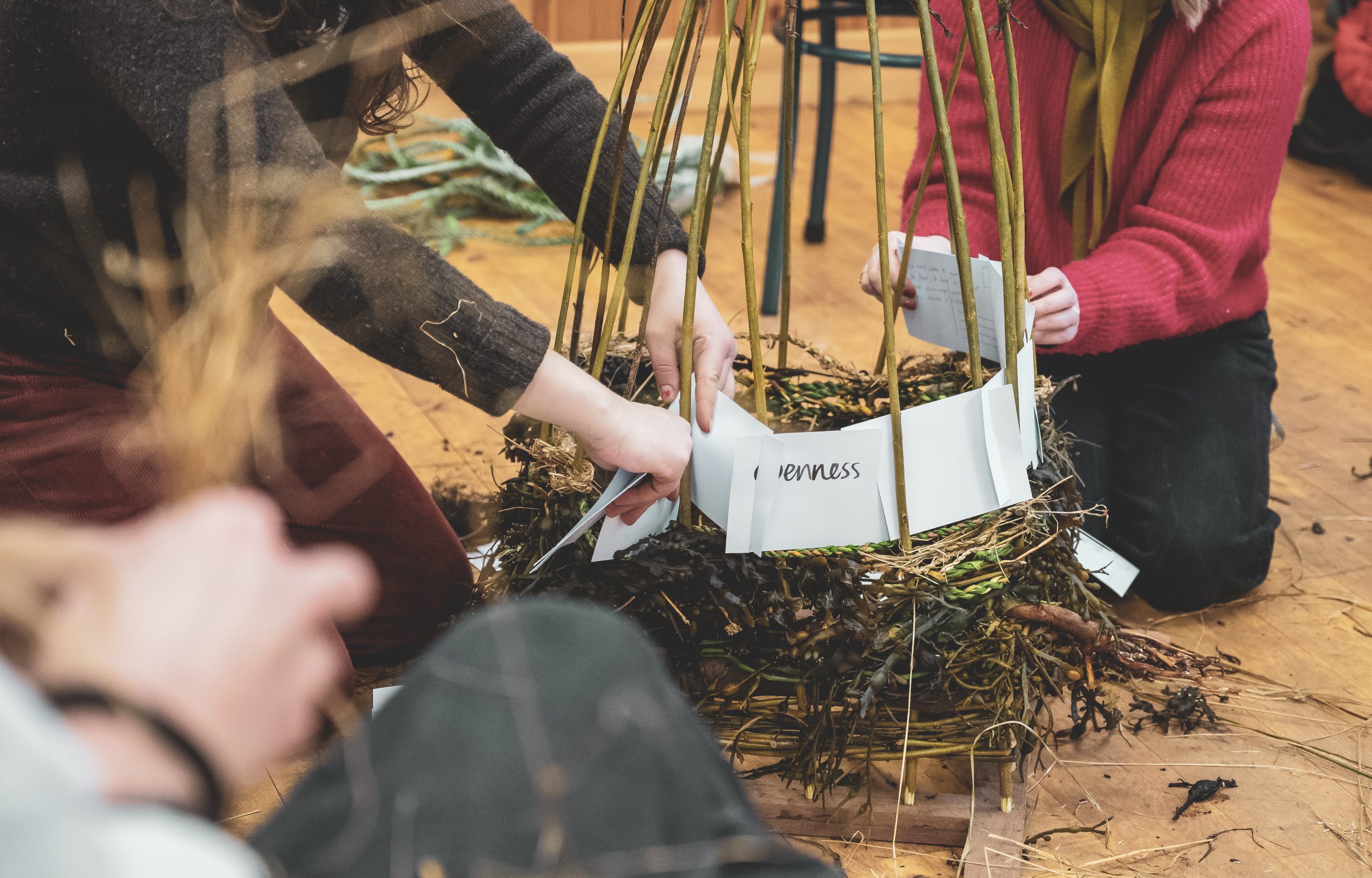
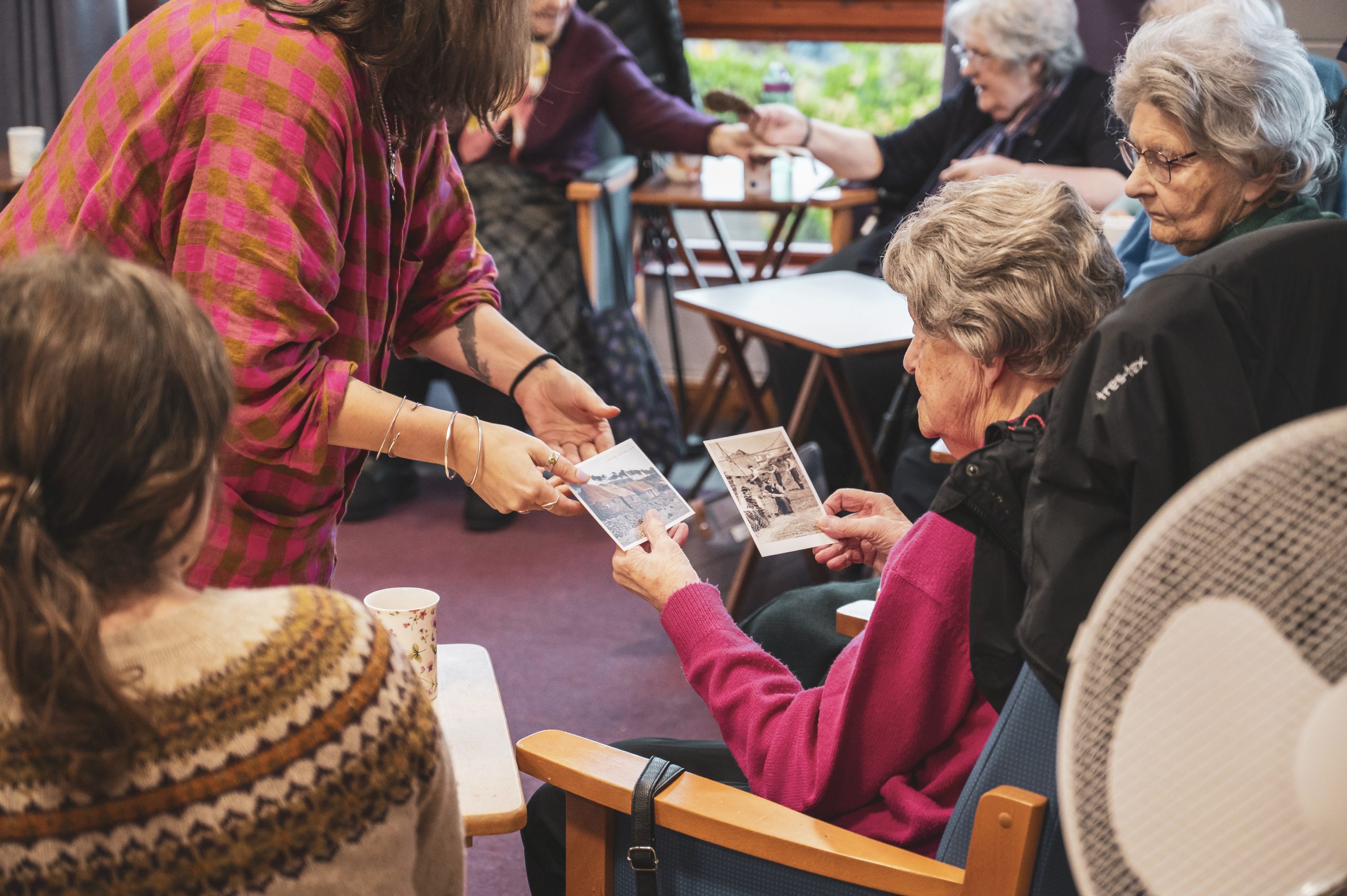
Today, the ecological crisis is often addressed through technocratic models and interpreted as a flaw in the system that can simply be corrected by technical expertise. CLIMAVORE and PartArt4OW, by contrast, demonstrate that it is possible to intervene in ecosystems by working with the very elements that constitute them and with the communities that inhabit them. No coastline, no landscape and no sea will ever return to an idealised original state. What matters, instead, is deciding who should hold the power to shape how these places continue to evolve over time.

- Tsing, A. (2019). Climavore: On Tidal Zones. Visible Project. https://www.visibleproject.org/text-4/climavore-on-tidal-zones/ ↩︎
- For further information: https://www.climavore.org/stations/sicilia-puglia ↩︎
- Read more: Daniel, F. P., Schwabe, A., Milazzo, E., & Patera, G. (2025). Avanzare le finzioni giuridiche: diritti dei semi e resistenza alla siccità in Puglia e Sicilia. OpenstarTs (Univeristy of Trieste https://www.units.it/). https://www.openstarts.units.it/server/api/core/bitstreams/08aff855-b15d-47eb-ba02-459ec208dad4/content ↩︎
- A concrete example is the work on rain-fed farming, such as that of the ‘Siccagno’ tomato in Sicily, which grows without any artificial irrigation, relying solely on night-time moisture. ↩︎
- Read the DECLARATION ON THE RIGHTS OF PEASANT SEEDS: https://www.climavore.org/rights-of-seeds ↩︎
- PartArt4OW selected as a leading solution for the EU Mission Ocean & Waters Solution Library. (n.d.). PartArt4ow. https://partart4ow.eu/news/partart4ow-selected-leading-solution-eu-mission-ocean-waters-solution-library ↩︎


