Marta Abbà
Neuroscience confirms it: soundscapes shape our identity and our relationship with the environment. Composer Giadar uses them as tools of memory, care and ecological resistance
It is neither rhetoric nor greenwashing. It is neuroscience combined with acoustic ecology and a cultural wager: that sound can achieve what data and campaigns can no longer obtain. Namely, reconnecting human beings to the biosphere as a lived, sensory experience capable of leaving a trace in memory and behaviour. This is the view of Dario Giardi, composer and researcher who, under his artistic alias Giadar, has developed a project that brings together ecology, individual wellbeing and planetary health — dimensions that intersect scientifically, creatively and existentially.
His latest work, the musical album Memoryscape, paired with the essay E se fosse la musica a salvarci? La memoria dei suoni e la sfida climatica (Mimesis, 2025), starts from an intuition as simple as it is radical: the sounds that shaped us — such as the wind moving through the trees of childhood, the chime of bells or the lapping of stream water — are emotional architectures, cognitive maps and identity roots. When they disappear, overwhelmed by noise pollution or by the extinction of the ecosystems that generated them, we lose the very capacity to belong to a place, to remember it and to protect it.
«We will truly protect only what we are able to listen to and remember». It is a statement that overturns the logic of performative environmentalism, where informing, raising awareness or warn is not enough: the senses must be reactivated.

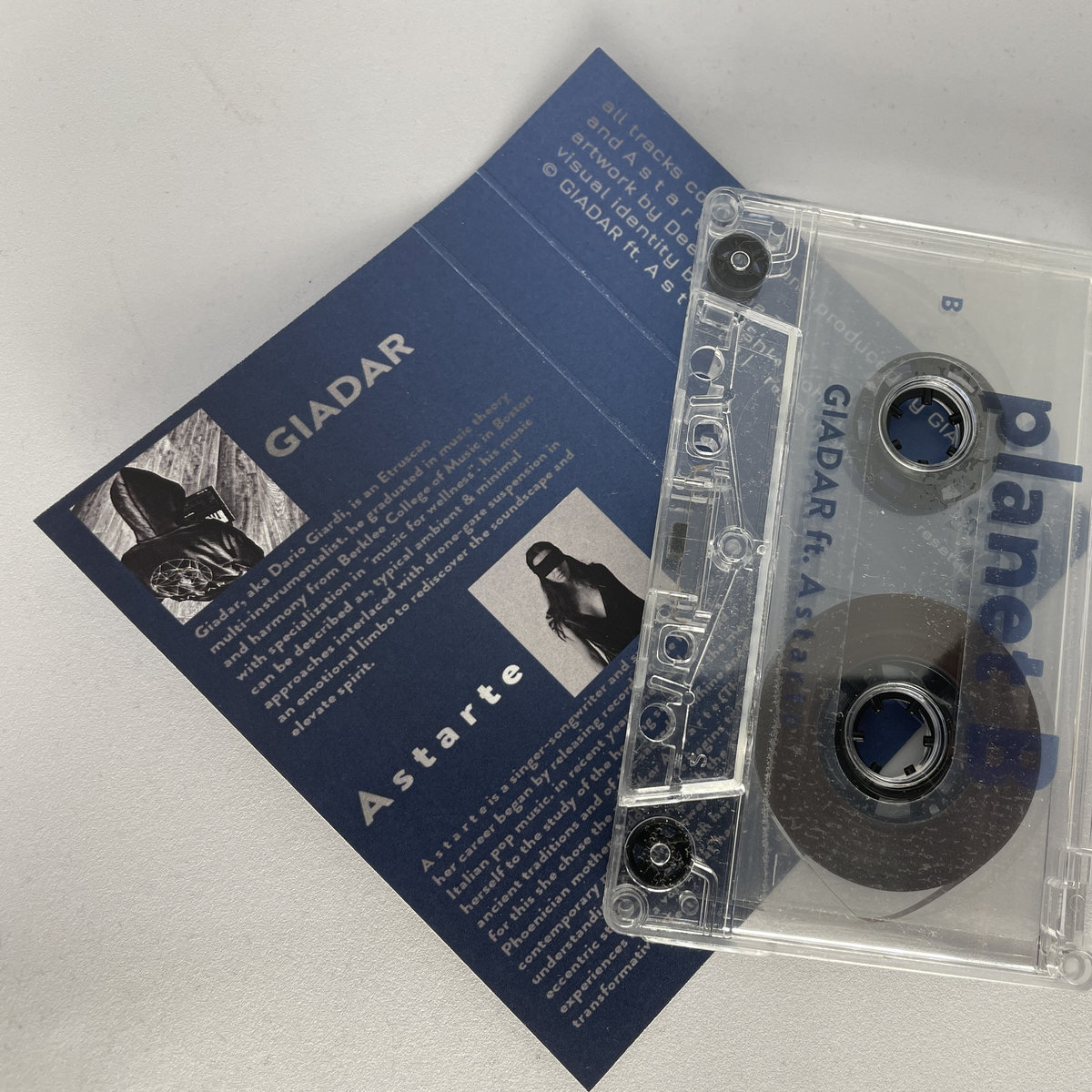
Dario Giardi is a researcher in the field of energy and the environment. After graduating in international law, he obtained a master’s degree in environmental management and a doctorate in energy geopolitics. He has been working in the field of sustainability and the circular economy for over twenty years, gaining experience in institutions, research bodies and business associations. He holds a diploma in music theory and harmony from Berklee College of Music in Boston, specialising in musicology and “music for wellness”. Under the alias Giadar, he composes ambient and electronic music for international labels.
See moreVisit his Instagram profile
The soundscape as a cognitive device
«Memoryscape is the landscape of sonic memory: the set of sounds that have built our emotional and cultural identity. It concerns not only what we remember, but how the sounds of the past shape our present and our relationship with the environment», Giardi explains. The term, which he coined, is a genuine operational tool that makes it possible to transform ecology from an abstract concept — often paralysing in its vastness — into a concrete, personal experience rooted in the body and in each individual’s biography.
Science supports him. Soundscape ecology is an established discipline that studies how acoustic environments influence perception and behaviour. Environmental neuroscience shows that natural sounds activate brain areas linked to empathy, autobiographical memory and emotional regulation. A study published in Scientific Reports in 20251 demonstrated that exposure to forest soundscapes significantly improves mood, cognitive restoration and cognitive performance compared with industrial soundscapes, while noise pollution is associated with chronic stress, sleep disorders and reduced attention capacity.
But there is more. When an ecosystem loses its characteristic sounds — the song of a vanished bird species, the noise of a melting glacier — not only does a sensory element disappear, but our channel of relationship with the environment is also interrupted. The soundscape acts, in fact, as a mediator between the nervous system and the biosphere, building what scholars call a “sense of place”, the feeling of belonging to a territory. Without this perceptual and emotional bond, the climate crisis risks becoming something we know but do not feel, sliding further into abstract data about someone else’s future.

How to reactivate listening
Giardi’s work, developed during his training at the Berklee College of Music in Boston where he specialised in music for wellness, intertwines planetary health and human health. It starts from the conviction — supported by decades of music therapy research — that sound has a real, measurable healing power that can be used as a complementary tool alongside traditional medicine.
«I firmly believe in the healing power of sound, especially as a valid tool to complement traditional medicine in alleviating many psychosomatic disorders; I am thinking of insomnia, anxiety, panic attacks», he states.
Research on the autonomic nervous syste2 has documented how certain sound frequencies influence heart rate and induce states of deep relaxation through stimulation of the vagus nerve. A meta-analysis published in eClinicalMedicine3 has highlighted the effectiveness of music therapy in significantly reducing anxiety symptoms across different clinical populations, with particularly marked effects after more than 12 sessions.
But Giardi goes beyond the passive administration of “relaxing music”. His approach requires participation, active listening and awareness. In the deep listening workshops he leads in natural environments — parks, woods, countryside — the goal is precisely to train ecological sensitivity and rebuild a culture of listening, in a context where «we live in an age of visual and informational saturation», Giardi explains, «but of great perceptual poverty».
«Reactivating listening means reactivating attention, empathy and a sense of belonging».
Specifically, Giardi identifies three ways to move beyond the idea of nature as mere romantic inspiration and allow it to become co-author of the creative process. First: composition through field recording — the practice of capturing sounds directly in the places where they occur rather than recreating them in the studio. The real sounds of ecosystems — forests, seas, countryside — become primary musical material. This gives voice back to places, bringing them into the sonic narrative with their complexity, biological rhythms and fragilities. The result is something alive, layered and capable of conveying information that no purely verbal discourse could transmit.

Second: performances in natural environments, where the acoustics of the site and surrounding sounds enter the composition. One does not play on a landscape but with a landscape. The audience simultaneously hears the written music and the ecosystem that hosts it, creating a relational experience outside the logic of consumption.
Third: sound installations that react to real-time environmental data — air quality, wind, biodiversity — transforming them into sound. These devices make perceptible what would otherwise remain invisible: pollution, climate change, species loss. Technology becomes an interface between human and non-human spheres, a translator of otherwise incommunicable languages.

The role of technology
Technology — understood here broadly as a set of tools and infrastructures — represents the most delicate node. Giardi recognises its ambivalence: it can bring us closer to activating listening, conserving and protecting ecosystems, or distance us from them. The first case includes using technology to archive endangered soundscapes, creating compositions based on environmental data, globally disseminating ecological projects and developing immersive educational experiences. The Macaulay Library at Cornell University4 for example, has recorded over 3.2 million hours of natural sounds, documenting 96% of the world’s bird species, many of which are at risk of extinction.
The second case, by contrast, includes uses that increase noise pollution, encourage distracted and continuous listening that reduces perceptual quality, and risk replacing direct experience of nature with artificial simulations. The energy required for servers, the water used for cooling, rare materials for devices and electronic waste also have a real environmental impact. According to a study published in Nature Communications Sustainability in 20255, the total embodied emissions of digital industries in 2021 accounted for 4.1% of global emissions, with 77–87% occurring upstream in the supply chain. Hardware represents the largest share, while growing demand for IT services has driven emissions growth over the past decade.
«But the challenge is to use technology as a tool of awareness and not as a substitute for natural experience», Giardi explains. Because the climate crisis is not only technological or economic but sensory and cultural. It concerns what we are still capable of perceiving, what we choose to listen to and what we want to remember. Music — if it stops being passive entertainment or decoration — can become a language of reconnection, a device of collective memory and a simultaneous practice of care for both people and ecosystems. An approach that might seem wishful thinking if it were not supported by decades of scientific research, rigorous artistic practice and an existential urgency that those who truly listen — to the world, to themselves, to others — can no longer ignore.
«If music can do something today, it is remind us that we are part of a living landscape».
And perhaps this is precisely the necessary revolution: to stop thinking of ourselves as spectators of a crisis and recognise ourselves as an integral part of a larger, sensitive and fragile organism.
An organism that also speaks through sound. If only we were willing to listen.

- Soundscapes and cognitive functions: Longman, D. P., Van Hedger, S. C., McEwan, K., Griffin, E., Hannon, C., Harvey, I., Kikuta, T., Nickels, M., O’Donnell, E., Pham, V. A., Robinson, J., Slater, R., Szazvai, M., Williams, J., & Shaw, C. N. (2025). Forest soundscapes improve mood, restoration and cognition, but not physiological stress or immunity, relative to industrial soundscapes. Scientific Reports, 15(1), 33967. https://doi.org/10.1038/s41598-025-11469-x ↩︎
- Sound and autonomic nervous system: Kim, D., Kim, N., Lee, Y., Kim, S., & Kwon, J. (2023). Sound stimulation using the individual’s heart rate to improve the stability and homeostasis of the autonomic nervous system. Physiological Reports, 11(18), e15816. https://pmc.ncbi.nlm.nih.gov/articles/PMC10509153/;
Music and Autonomic Nervous System review: Ellis, R. J., & Thayer, J. F. (2010). Music and Autonomic Nervous system (DYS)Function. Music Perception an Interdisciplinary Journal, 27(4), 317–326. https://pmc.ncbi.nlm.nih.gov/articles/PMC3011183/ ↩︎ - Music therapy for anxiety and depression: De Witte, M., Aalbers, S., Vink, A., Friederichs, S., Knapen, A., Pelgrim, T., Lampit, A., Baker, F. A., & Van Hooren, S. (2025). Music therapy for the treatment of anxiety: a systematic review with multilevel meta-analyses. EClinicalMedicine, 84, 103293. https://www.thelancet.com/journals/eclinm/article/PIIS2589-5370(25)00225-1/fulltext ↩︎
- Natural sound archives: Macaulay Library (Cornell Lab of Ornithology): https://www.macaulaylibrary.org;
Leonard, P. (2013, 17 gennaio). World’s largest natural sound archive now online. Cornell Chronicle. https://news.cornell.edu/stories/2013/01/worlds-largest-natural-sound-archive-now-online ↩︎ - Digital emissions: Axenbeck, J., Kunkel, S., Blain, J., & Charpentier, F. (2026). Between 2010 and 2021, global emissions from digital technologies were largely obscured in greenhouse gas emission accounting standards. Communications Sustainability, 1(1). https://www.nature.com/articles/s44458-025-00022-6 ↩︎