Artificial Intelligence steps in the museum
The Ethical Manifesto of the Risorgimento Museum

Alessandra Navazio
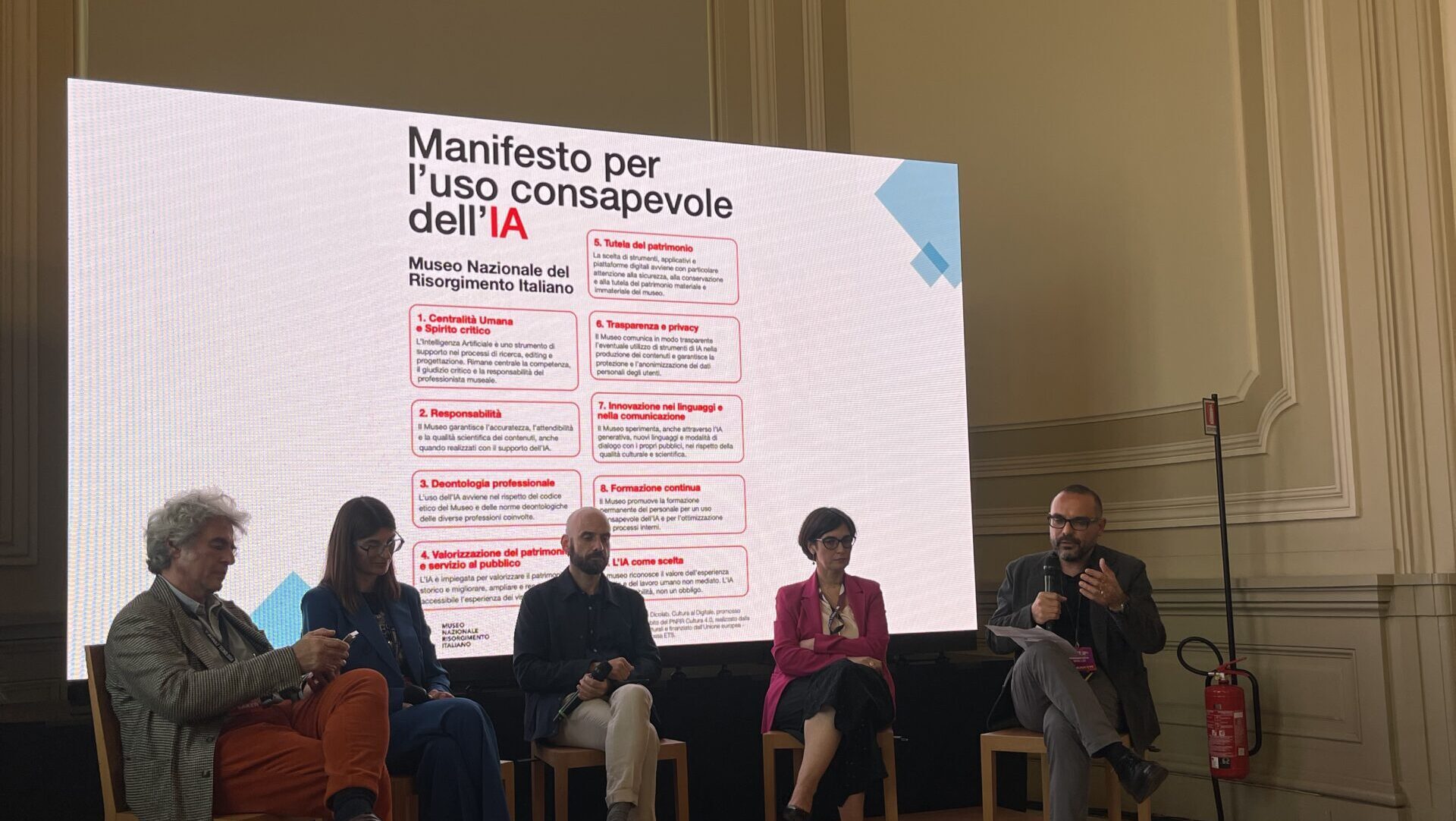
The National Museum of the Risorgimento in Turin is the first Italian museum to adopt a Manifesto dedicated to the conscious use of Artificial Intelligence. Born from a training and co-writing process involving different professional roles and perspectives, the document reaffirms the identity and public function of the institution: to be a hub for active citizenship and to make heritage more accessible, whilst maintaining a commitment to source verification, plurality of interpretations, and human expertise.
In museums, Artificial Intelligence is increasingly being tested to improve collection accessibility, facilitate archive searches, and develop new forms of cultural mediation. At the same time, questions are growing around how to adopt these technologies without compromising the public role of cultural institutions, the authority of sources, and the transparency of processes, as highlighted by the research project AI Compass for Cultural Heritage, dedicated to exploring the opportunities and implications of Artificial Intelligence for cultural heritage. In this context that the Manifesto for the Conscious Use of Artificial Intelligence fits, developed by the National Museum of the Italian Risorgimento as part of the TAP call by the Scuola Nazionale del Patrimonio e delle Attività Culturali (National School for Cultural Heritage and Activities). The process was designed and facilitated by Sineglossa, a research and cultural production centre that supports cultural institutions, organisations, and professionals in exploring the opportunities and implications of Artificial Intelligence, building shared frameworks within which to experiment with its use starting from each institution’s identity. The document concludes a training programme on the ethical use of AI that involved personnel from across the museum: archivists, librarians, communicators, curators, administration, logistics, design, and marketing. It is the first Italian museum to equip itself with a policy document specifically dedicated to Artificial Intelligence- Its necessity matured progressively during the training process, when discussions on the potential applications of the technology raised questions about identity, responsibilities, and public function of the cultural institution.
«We realised that generative Artificial Intelligence will touch upon many organisational and functional dimensions of the museum in the coming years. We therefore needed to clarify our values-driven orientation, both internally and externally, and translate it into concrete behaviours», explains Alessandro Bollo, director of the museum.
Alessandro Bollo
Director of the National Museum of the Italian Risorgimento in Turin, he has two decades of experience in cultural management and planning. Professor at the Catholic University of Milan, he has led major international projects for the European Commission and co-authored UNESCO’s “Global Handbook for Measuring Cultural Participation”. He is the author of numerous scholarly publications and co-author of UNESCO’s “Global Handbook for Measuring Cultural Participation”. Since 2017, he has been a member of the Technical-Scientific Committee of Biennale Democrazia and of the journal “Economia della Cultura” published by Il Mulino, where he contributes in-depth analyses on the future of cultural policies.
The co-writing process
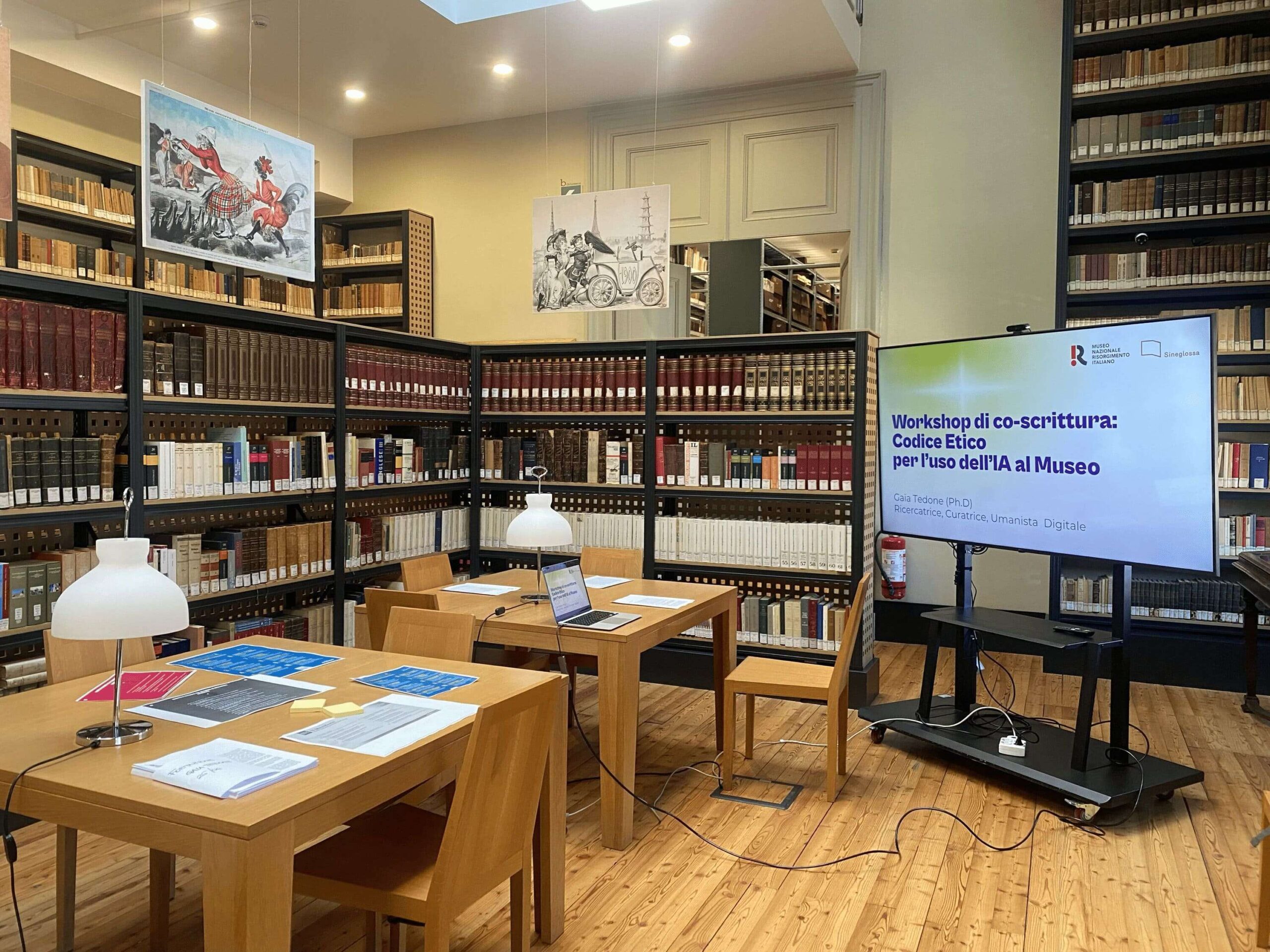
The co-writing process of the Ethical Manifesto on Artificial Intelligence started from the Code of Ethics already adopted by the National Risorgimento Museum: an internal document that the group revised to recognise which values already belonged to the institution, and to understand how they could be translated in the face of the transformations introduced by AI. Leading the process for Sineglossa was Gaia Tedone, a curator and researcher active in the field of critical AI literacy. She was initially involved in two training sessions dedicated to available tools, potential use cases, and AI applications for archives, collections, and cultural heritage, and subsequently in the final workshop. Eight people from various sectors of the museum sat around the table: «There were those who looked at Artificial Intelligence with enthusiasm and those who maintained a more cautious, if not openly hesitant, stance», Tedone shares. «This difference made the discussion worthwhile because, despite starting from different perspectives, a shared interest emerged around the need to establish guidelines to prevent individuals from using these tools without a common framework».
The Code of Ethics was printed, distributed, and read collectively; key words were extracted from that reading, subsequently matched by affinity with the themes that emerged during the training sessions, and organised into clusters.
«Revising the Code of Ethics was also important because many people had not consulted it for a long time. It allowed us to start from something that already belonged to the museum, to its identity, and to the professional ethics of the people working there».
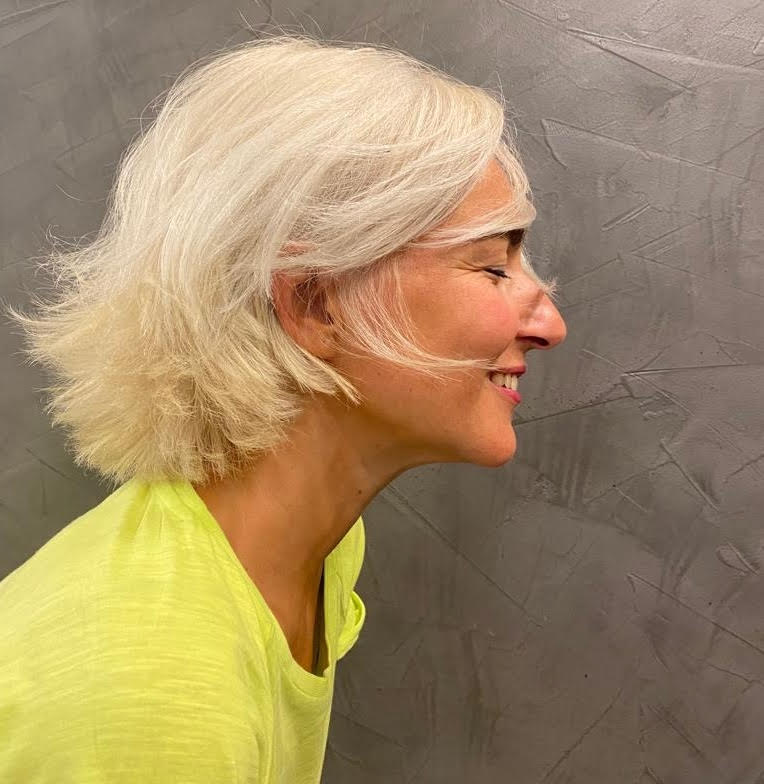
Gaia Tedone
Researcher, curator, and digital humanist. She explores the impact of AI on processes of co-creation and co-curation, both within and beyond the boundaries of art. She teaches at the Catholic University, the Polytechnic School of Design, and the IED in Milan, and runs training programs on generative AI in schools. She is co-author, with Marialaura Ghidini, of “The Hybrid Nature of Digital Curation: From the Web to AI” (Mimesis, 2026). She coordinated the educational program for the GENERATIVA academy, for Sineglossa. Her latest project, “The Humanist at The Tech Table”, explores the intersection of food, AI, and language.
«We identified the words emerging from the text and previous discussions, linked them together, and gradually built the architecture of the Manifesto». Documents produced in other sectors also provided terms of comparison. Among those recalled by Tedone are the Manifesto dell’Orientamento Generativo (Manifesto on Generative Guidance) by Asnor, itself the result of a collaborative process; the Manifesto della comunicazione non ostile per e con l’IA (Manifesto of non-hostile communication for and with AI), promoted by Parole O_Stili; the Manifesto umanista per un cinema in intelligenza artificiale (Humanist manifesto for AI cinema) by the collective Hariel; and resources dedicated to Responsible AI by All Tech Is Human.
The concepts were uploaded to an online platform (Padlet) for sharing, and refined until a formulation was reached that everyone agreed upon. «It was an organic process, in which writing one principle led to editing the previous one and laying the groundwork for the next», Tedone explains. «The final text was ultimately read aloud. Collectively, we decided to use Artificial Intelligence exclusively in the final step to receive feedback on the drafted manifesto». The entire process was an exercise in mutual recognition, capable of bringing shared responsibilities to light. It is no coincidence that Tedone herself states:
«The value of the Manifesto lies precisely in having prompted people to question together the role of the museum, the strength of their expertise, and the limits within which to experiment with new languages. A team-building activity that ultimately led everyone involved to feel represented».
The words the museum needs
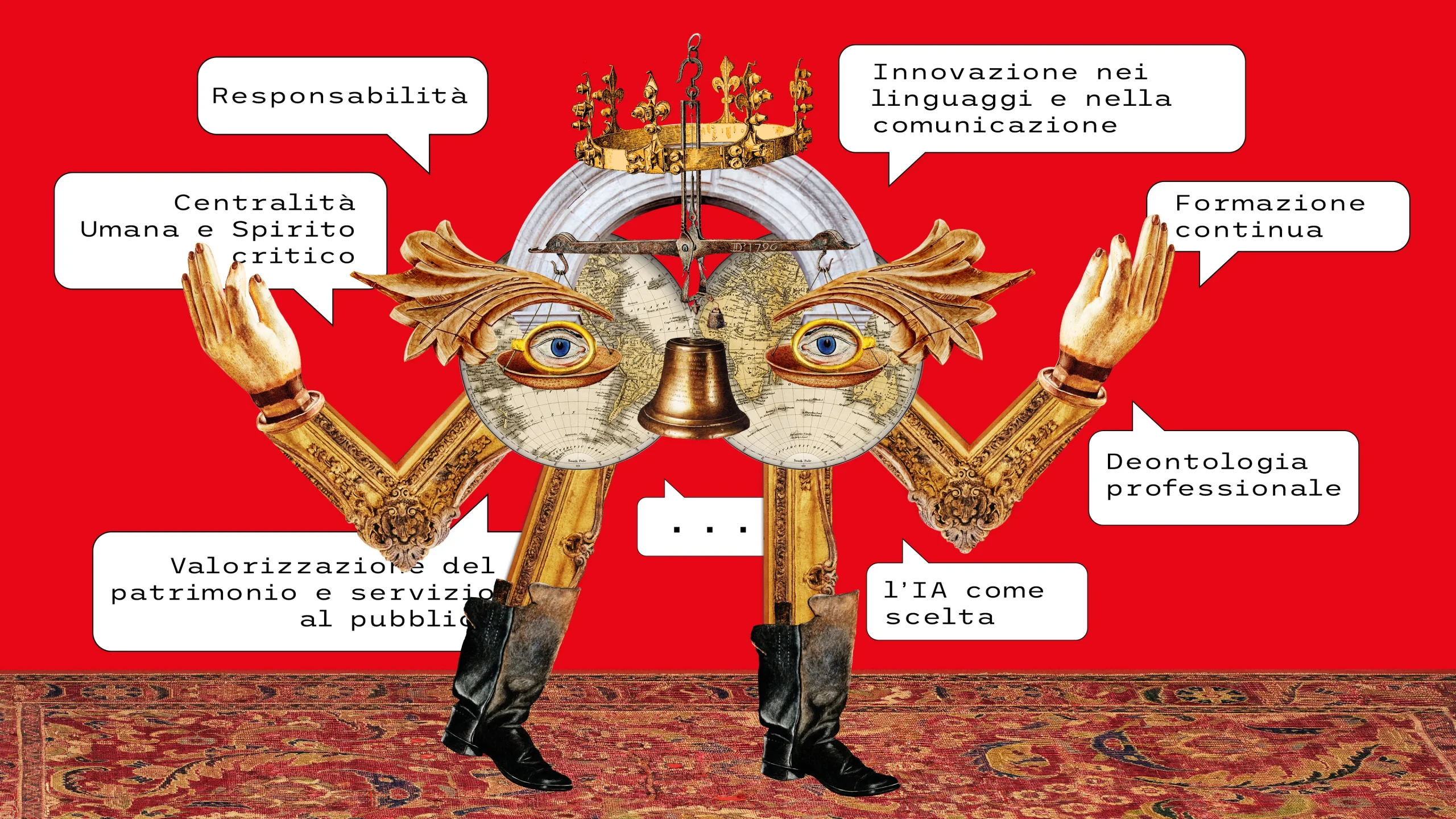
“Human centrality and critical thinking”, “Safeguarding heritage”, “Professional ethics”, “Continuous learning”, “Innovation in language and communication”: the principles of the Manifesto shift focus from Artificial Intelligence to the people who use it, the skills needed to govern it, and the consequences it can produce. «The AI journey is part of a broader transformation of the Risorgimento Museum, which includes the new website, the CRM, cataloguing systems, social media communication, and an overall reshaping of its visual identity», explains Bollo, who took part in drafting the Manifesto and who, tellingly, chooses the word «responsibility, to represent the future of the institution. For a museum, being responsible means paying attention to validating what is being said, checking sources, and preserving the recognisability of the institutional voice». A responsibility, therefore, that begins with establishing a precise hierarchy: people, sources, and the museum’s public function come first; tools come only after. Bollo reinforces this when stating:
«Another principle of the Manifesto I like to recall is the last one: AI as a choice. The people who work in the museum remain at the centre, their direct experience, and the expertise built over time. Artificial Intelligence can be a useful tool, yes, but it must not become an obligation».
«We must ensure, even during this transition phase, the possibility of continuing to work without necessarily using it, and without feeling inadequate or excluded as a result».
With the principle of “Transparency and Privacy”, the manifesto brings to light that the authority of a cultural institution relies on the ability to trace the process through which content was produced, distinguishing the contribution of the tool from scientific, curatorial, and educational work. Not only that: «The word transparency is also closely tied to responsibility, preventing a single source or interpretation from being presented as definitive. A museum should never present itself as a place where there is only one answer, delivered by an authority», Bollo explains. «There can be many viewpoints that conflict with one another or seek mediation».
«Museums must continue to be arenas of complexity, spaces where people can engage with this plurality, both internally and in public-facing activities. In short, to be the antithesis of the “oracle effect”. Technology can help expand this role».
We recommend reading

The Manifesto remains a starting point for reflection on the use of AI. Bollo speaks of «internal check-ups», namely moments when staff will revisit the document to verify whether the principles have actually translated into organizational and dissemination practices, what difficulties have emerged, and which guidelines need modifying.
From theory to action
The principles outlined in the Manifesto are finding their first application in activities aimed at strengthening the museum as a hub for active citizenship, on one hand through data literacy, and on the other through improving museum accessibility.
On the accessibility front, through the Risorgimento 2.0 project supported by the SWITCH call of the Fondazione Compagnia di San Paolo, the museum is working on integrating AI into cataloguing and search systems. «Today, to query an archive», Alessandro Bollo explains, «one must use precise categories and keywords: “Garibaldi”, “Mazzini”, “women”, “freedom”, “statute”. This is an effective method mainly for those who already know the heritage and the terminology used to organise it. The project, instead, involves integrating Artificial Intelligence into both the back end, supporting internal work, and the front end, the user interface. The most interesting aspect will be the ability to perform descriptive searches: users will be able to explain what they are looking for using natural language. It may seem like a minor change, but in terms of heuristics and result quality, it could profoundly transform how an archive is queried. Researchers will benefit, but above all, visitors from the outside who do not already possess the museum’s specialized categories. This is where search functionality also becomes a matter of accessibility». The same focus guides experimentation with smart labels, conducted in collaboration with the University of Turin. Panels and audio guides will be able to adjust language and depth of detail according to the visitor’s needs.
On data literacy, Bollo notes that «We can benefit from Artificial Intelligence without necessarily needing to develop these systems ourselves. Through educational activities, we can foster data literacy and help young people understand that to conduct scientifically reliable research, TikTok alone is not enough as a source». The example brought to the table is La nostra proposta di legge (Our Legislative Proposal), an educational project created with Fondazione TRG for high school students. Inside the historic Subalpine Parliament, students draft actual legislative proposals using AI both as a writing aid and as the subject of debate and regulation. The initiative forms part of the Network dei Musei dei Futuri (Museums of the Futures Network), promoted by ICOM Italia and ASviS, aimed at training communities to imagine possible scenarios and gain critical awareness of emerging technologies.
«Many aspects of Risorgimento thought remain deeply relevant today», Bollo concludes.
«The Risorgimento coincided with the process of Italian unification and independence, progressing alongside a broader movement towards emancipation and the attainment of rights. The 19th century was also a political laboratory where the first forms of democratic participation were trialled and fundamental freedoms were established, such as those of the press, information, and expression».
«If today we return to discussing these same rights, interpreting them in light of contemporary challenges, we are revisiting issues that reached crucial milestones precisely in the 19th century».

Topics in this article
Artificial Intelligence Communication Data Digital transformation Education Europa Sineglossa