

Marta Abbà
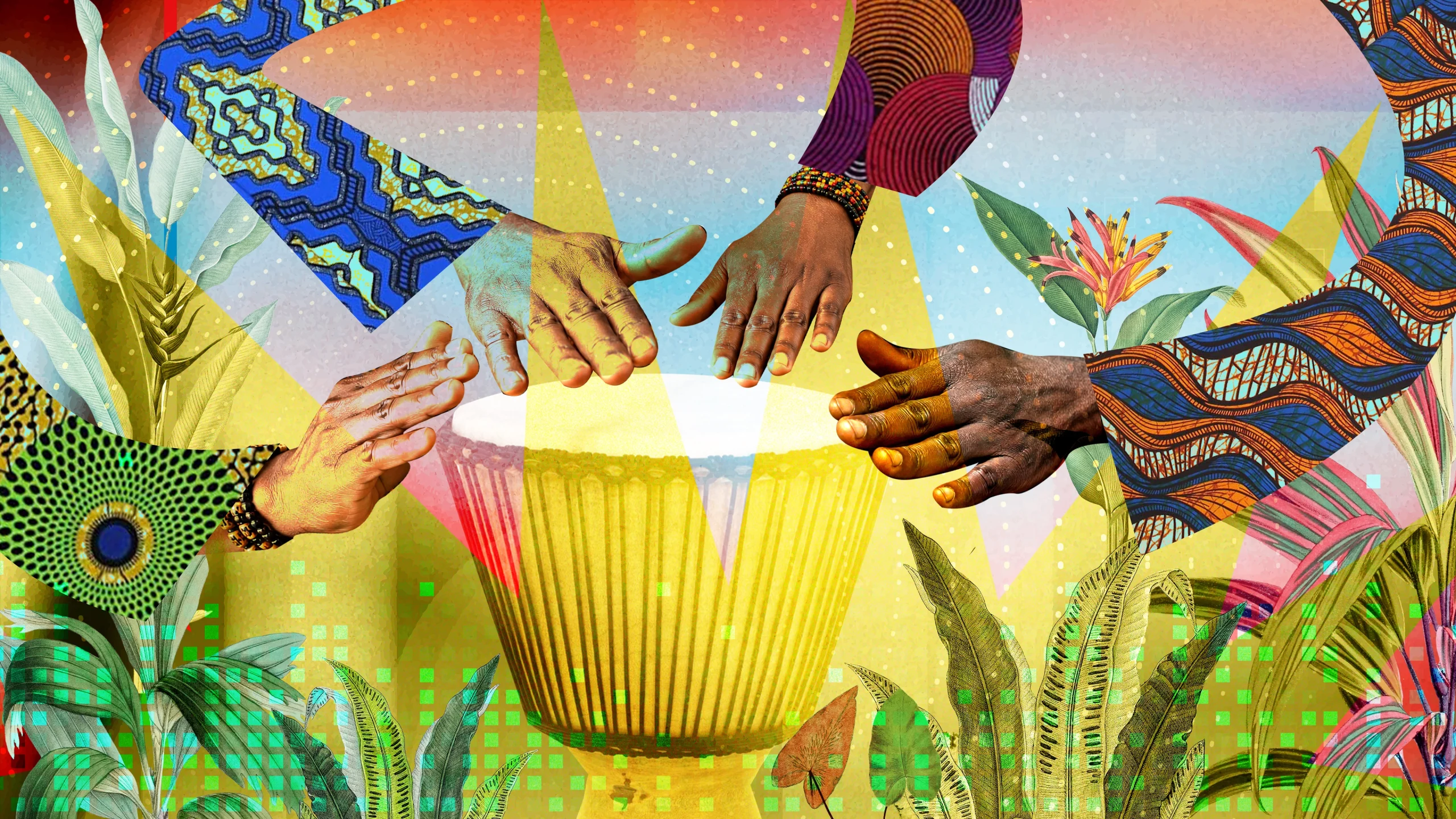
How can a heritage of songs, instruments, and oral memories be preserved without being lost or reduced to a rigid folkloric postcard? The Bugungu Cultural Troupe in Uganda sings in Lugungu and uses music as a living tool to address contemporary challenges, from the oil industry to environmental conflicts.
On the shores of Lake Albert, in north-western Uganda, music is a form of knowledge, a collective archive, and a practical way of inhabiting the world. On those same shores, the development of the oil industry1 has led to the construction of wells and road networks that are triggering an ecological domino effect and causing a dramatic increase in human-wildlife conflict. Animals fleeing drilling operations are entering villages and devastating crops. How can a culture be safeguarded in a territory being reshaped by infrastructure, extraction, and new forms of conflict? The Bugungu Cultural Troupe, a group made up of 18 women and girls and 7 men, rooted in the Bagungu communities2 of the Buliisa region, was established as a musical ensemble working at the threshold between tradition and contemporaneity, helping communities navigate present-day challenges. Here is how.
Culture as a living language
«The idea of creating the BHIC Troupe arose from the desire to preserve our cultural heritage, as well as to entertain and educate through music and theatre».
«The group includes women, children, and men, and its composition is specifically designed to promote intercultural learning. Compared to the past, the group now also performs in settings that are not strictly cultural», explains Kiiza Willson, Executive Director of BHIC.
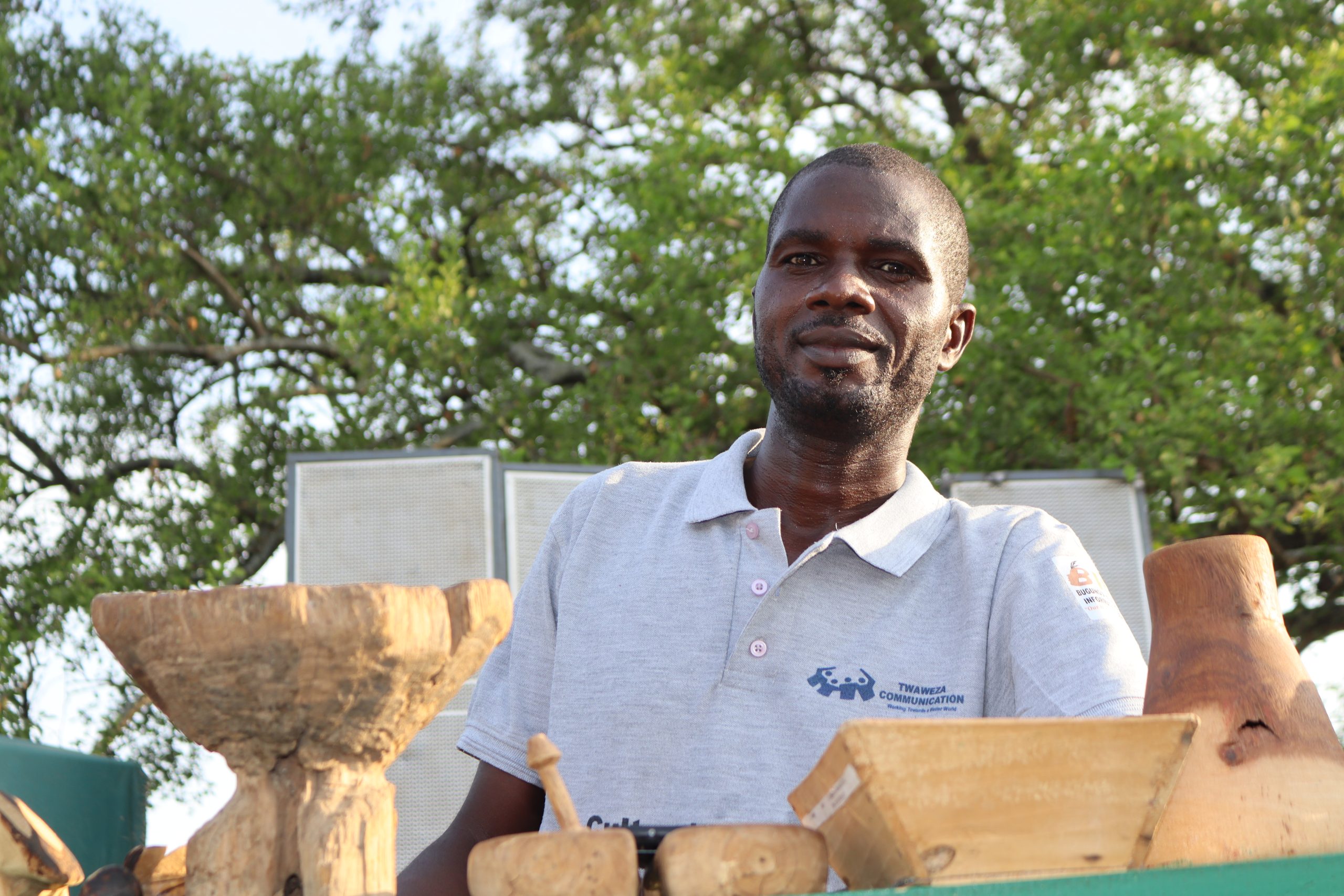
Kiiza Wilson is the founder and Executive Director of the Bugungu Heritage and Information Centre (BHIC) in Uganda. A native of the Bagungu community in Buliisa, he is dedicated to safeguarding the cultural heritage, history and traditional music of his people. Through the BHIC, he promotes the documentation of intangible heritage, the rights of indigenous communities and environmental conservation in the Albertine Graben region. He is also a researcher, photographer and fellow of TheMuseumsLab 2023.
The nature of the project is far removed from preserving heritage as static conservation and much closer to an ongoing process of transformation, through which the past is continually reinterpreted to inhabit the present.
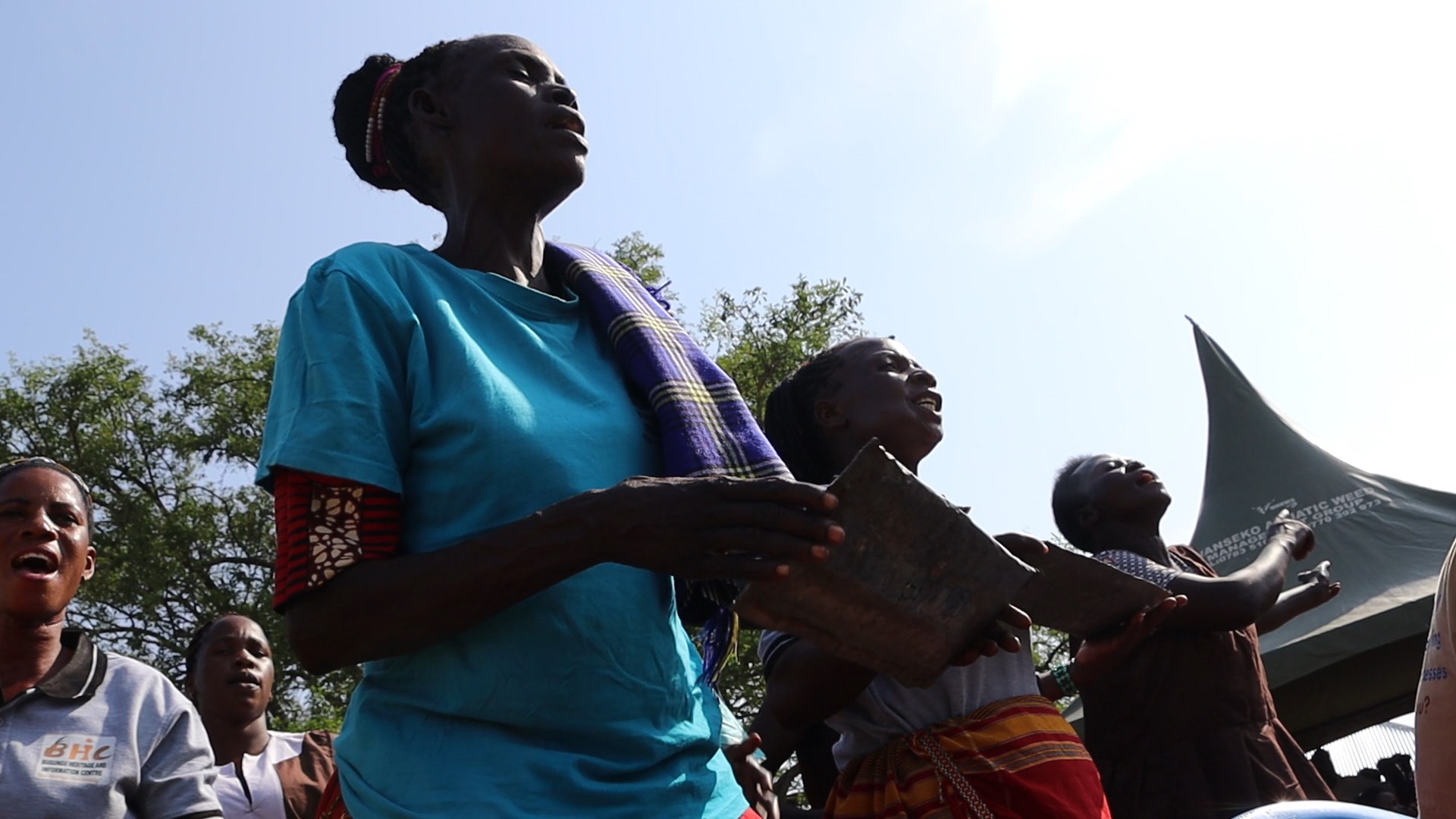
The Bugungu Cultural Troupe is founded on the principle that culture exists only if it is practised. For this reason, the group sings in Lugungu3, the language of the Bagungu community, classified by linguists as a minority language under significant pressure due to mass immigration and the widespread adoption of English and Swahili. In addition, the group uses traditional instruments such as drums and rattles, keeping alive a system of communication that is both aesthetic and deeply social. As Willson further explains:
«What makes the group unique is the fact that it uses music to address contemporary issues such as climate change, illiteracy, and human rights violations».
«The Bagungu have four musical genres, namely gwada, kaliba, muzenyo, and bikwele, and this troupe performs all of them». These musical genres are more than simple categories; they function as cultural frameworks in their own right: different ways of narrating collective life, linked to specific contexts ranging from rituals to work, celebration, and community relations. They are structures of meaning through which music can be understood as a map of Bagungu society.
Raymond Muhumuza, a patron4 of the troupe, highlights this social function: «Music promotes fundamental values such as hard work, respect, integrity, coexistence, and environmental protection».
«This message has encouraged coexistence among people from different racial, ethnic, and religious backgrounds who have come to our ancestral land attracted by opportunities linked to the discovery and exploitation of oil and gas5».
«More recently, we have also composed songs focused on environmental conservation and the issue of human-wildlife conflict, with particular attention to the damage caused by elephants coming from Murchison Falls National Park», Uganda’s largest and oldest protected area6. Climate change and oil drilling are pushing elephants beyond the boundaries of the park, as their historic migratory routes are disrupted, leading them to destroy up to 80% of a smallholder farmer’s harvest in a single night7.
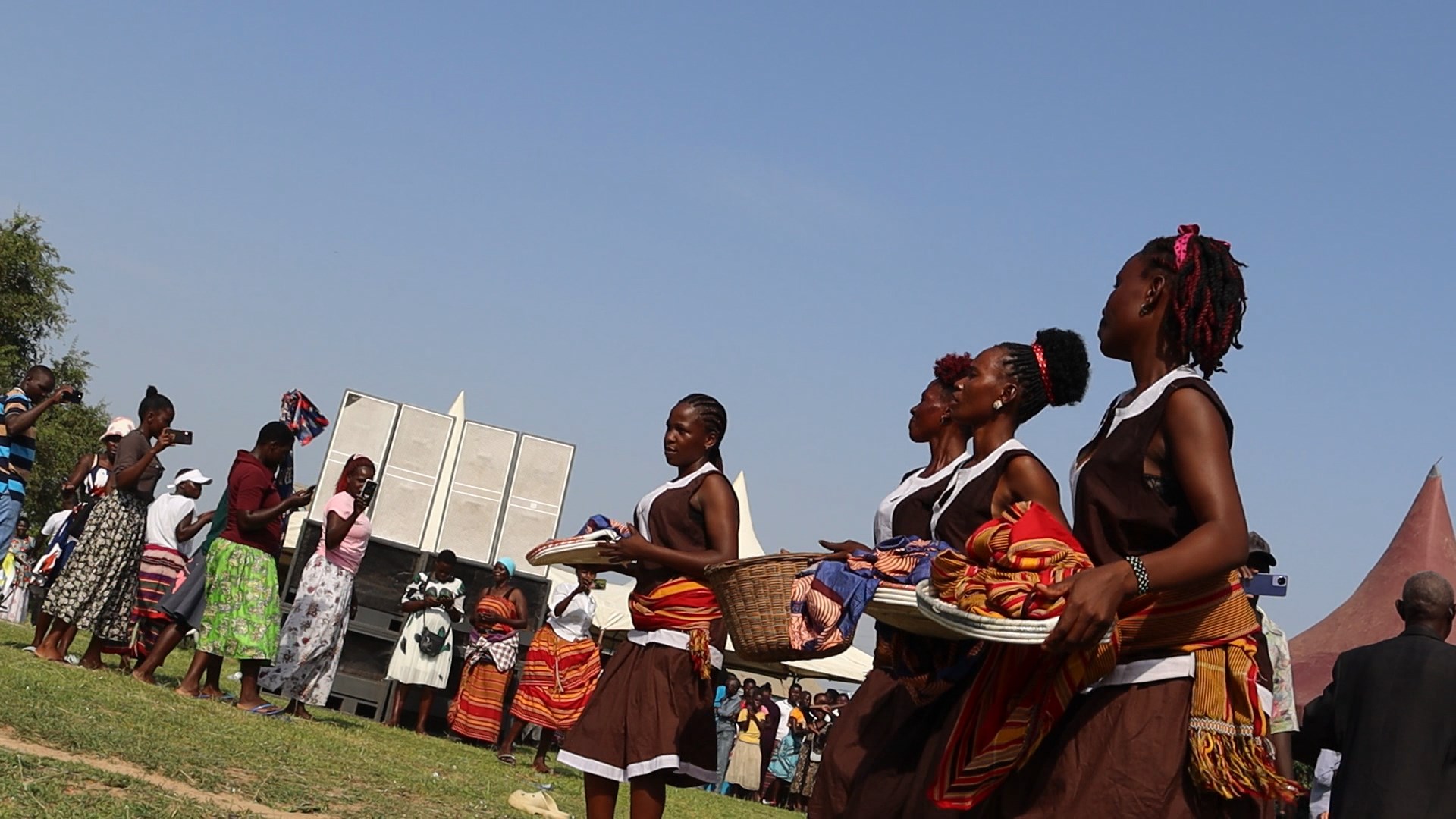
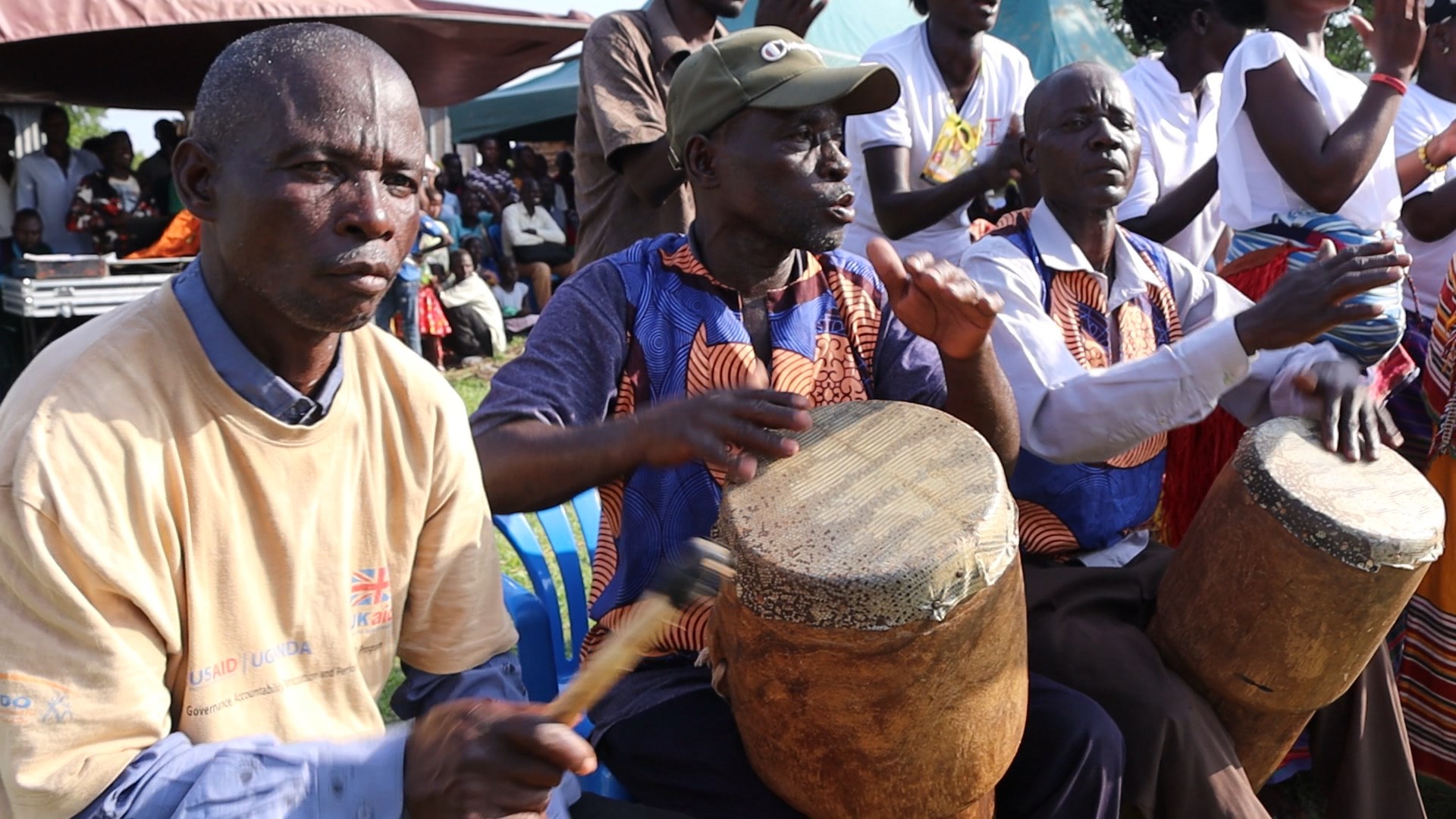
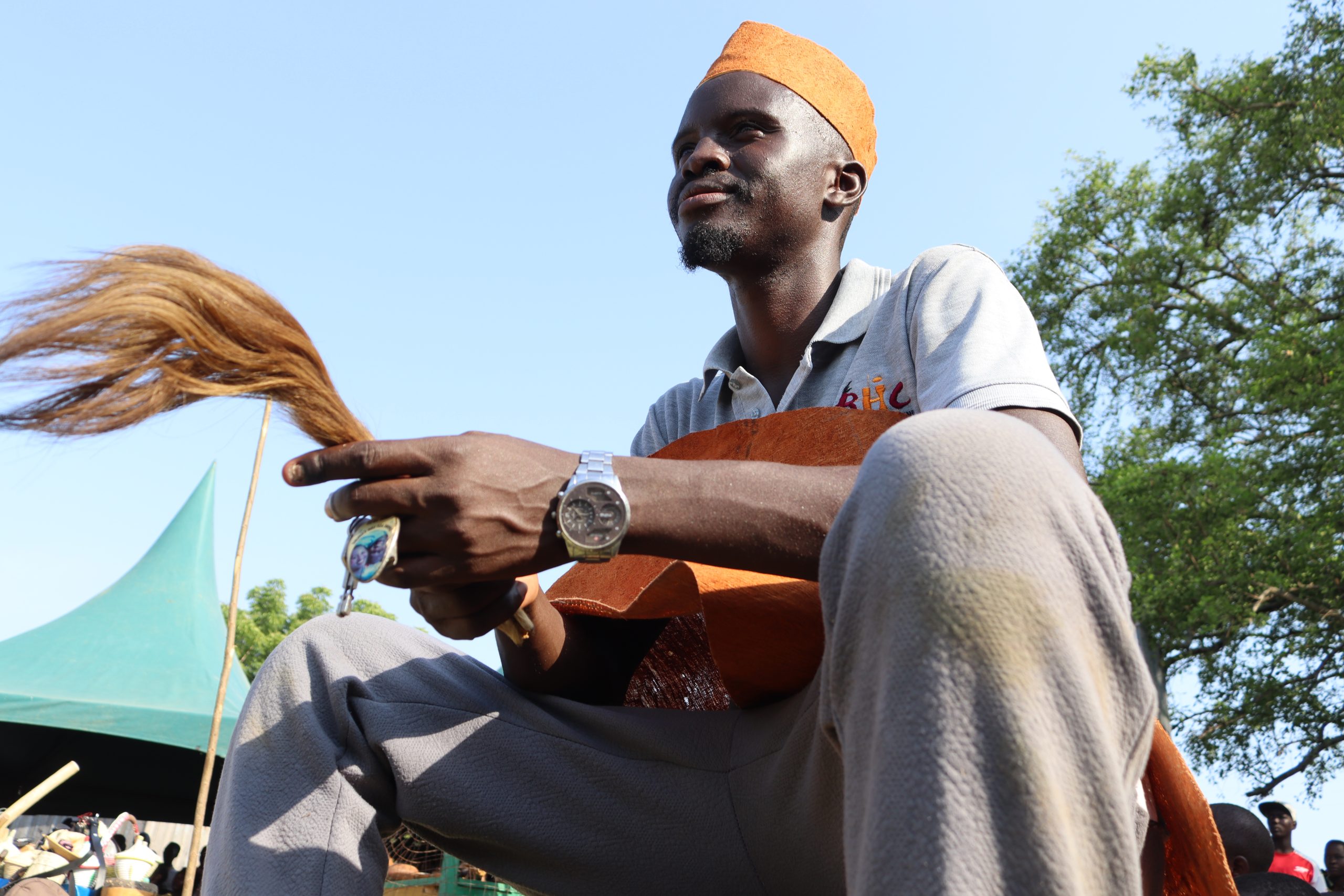
Raymond Muhumuza is the patron of the cultural troupe at the Bugungu Heritage and Information Centre (BHIC) in Uganda. A native of the Bagungu community in Buliisa, he actively supports efforts to promote his people’s cultural heritage. In this role, he supports the activities of the BHIC’s traditional dance and music troupe. He is also involved as an additional contact in the centre’s cultural heritage documentation projects.
The testimony of Milly Kyomugisha
One of the strongest features of the Bugungu Cultural Troupe is its intergenerational structure: young and older members work together in an ongoing process of transmission and learning. As Muhumuza explains: «The group is made up of members from different generations. This organisation has been essential in reviving our traditional music, which was on the verge of disappearing. This system has enabled the older generation to pass on its indigenous knowledge to younger generations within the group». This transmission takes place largely through the body and through sound, repetition, and performance. It is embodied learning, where knowledge becomes practice.
The testimony of Milly Kyomugisha, the lead singer, reveals how transformative this experience can also be on a personal level.
Milly Kyomugisha
Milly Kyomugisha is the lead singer of the cultural troupe at the Bugungu Heritage and Information Centre (BHIC) in Uganda. A native of the Bagungu community in Buliisa, she is the lead vocalist of the centre’s traditional music and dance group. She performs and promotes traditional Bagungu songs, actively contributing to the preservation and transmission of her community’s intangible cultural heritage in the Albertine Rift region.
Her account describes an internal economic system based on sharing: the group is hired for performances that generate income, part of which is distributed among its members. This creates a form of collective economy that supports everyday life.
Alongside this, Kyomugisha recounts the development of a shared savings culture, built through monthly contributions and the annual redistribution of resources. Yet what is most striking is the cultural transformation she has experienced. She learned traditional dances that were disappearing, such as kikwele, a hunting dance associated with hunters’ celebrations, and gwada, a courtship dance. She also learned how to play instruments ranging from the Ndingidi, a string instrument similar to a primitive violin, to the Ndere, a traditional flute. Through the group, she developed the ability to distinguish between different traditions, such as the Orunyege of the Banyoro and the Kalihwa of the Bagungu, acquiring a broader yet more layered cultural awareness.
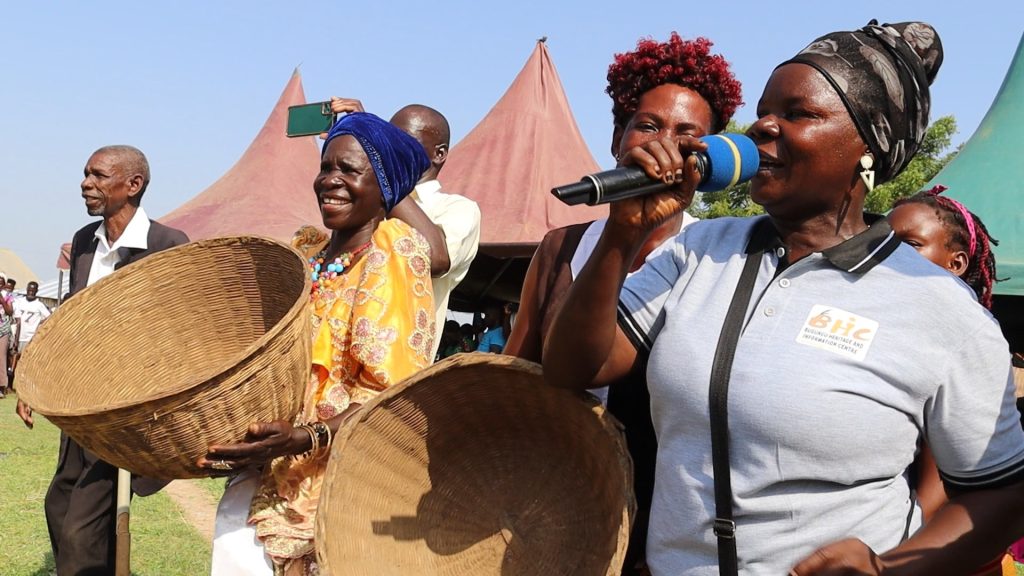
Her journey also involved encountering ritual and cultural objects such as the Kipindo kya Ngugu, a hippopotamus-hunting spear traditionally reserved for men, and the Kijugutu, a back cloth used in specific cultural contexts.

Cultural resistance between tradition and the future
The Bugungu Cultural Troupe operates on a scale that extends beyond the local, far removed from nostalgia and actively employing contemporary tools to expand its presence and ensure the continuity of Bagungu culture in the digital world. Willson explains:
«We produce audiovisual recordings of some of our activities and publish the videos on social media, particularly on TikTok and on other platforms such as YouTube and WhatsApp, which have been widely adopted by young people in our area». In this way, cultural heritage enters digital circuits where it can be seen, reinterpreted, and shared. Young people become exceptional mediators between tradition and contemporaneity, translating performance into new contexts without losing its original meaning.
The group is also connected to the Bugungu Heritage and Information Centre (BHIC), which coordinates its activities while preserving its artistic autonomy. This relationship helps maintain a balance between organisational structure and creative freedom.
Within this framework, culture transcends its function as a mere marker of identity and becomes a mechanism of cultural resistance. It represents an active response to the disappearance of minority languages, the erosion of oral heritage, and the cultural homogenisation driven by the pressures of the global extractive economy.

At the same time, this is not a rejection of modernity but a reworking of it. The musical practice of the Bagungu performs contemporary tensions. It speaks about the environment, human-wildlife conflict, and the social transformations linked to territorial development. It is a form of public thought expressed through sound.
The Bugungu Cultural Troupe demonstrates that cultural heritage is a living, embodied process8. It is a transgenerational practice that brings together education, economy, identity, and communication. It is a way of shaping the present without losing connection with the past.
This article was produced in collaboration with Nelson Byaruhanga.

- The Tilenga Project, operated by the multinational TotalEnergies in a joint venture with CNOOC and UNOC in the Lake Albert region (north-western Uganda), is a massive extraction scheme involving the drilling of 426 oil wells, over 130 of which are located within Murchison Falls National Park, a protected area of global importance. Official documentation from TotalEnergies outlines the scope of the project, details on land acquisitions and a map of the wells in the Buliisa district. See TotalEnergies. (2026, May 22). Tilenga and EACOP: key project progress Indicators. TotalEnergies.com. Mongabay’s international journalistic investigation documents in detail how the Tilenga Project’s oil infrastructure has altered the behaviour of elephants in Murchison Falls National Park, driving them to invade the villages of Buliisa. See Gyuse, T. (2024, July 30). Advocacy group links Uganda oil infrastructure to human-elephant conflict. Conservation News. ↩︎
- The Bagungu are a Bantu-speaking people living in north-western Uganda, on the shores of Lake Albert. The term “Bugungu”, on the other hand, refers to the geographical and historical territory in which this specific community lives. The distinction is based on the prefixes of the local language: “Ba-” refers to the people and “Bu-” to the land. In the singular, a member of this ethnic group is referred to as a Mugungu. See Consortium, I. (2025, February 14). The Bagungu People: Custodians of life in Uganda. ICCA Consortium. ↩︎
- Lagungu language https://www.lugungu.com/en ↩︎
- “Patron”: in Africa, this is a key figure within the artistic ecosystem who acts as a vital supporter and facilitator of cultural development, investing resources to ensure artists’ financial sustainability, enabling them to purchase materials and devote themselves entirely to their creative work. Through this support, the “patron” plays a crucial role in preserving local culture, documenting and keeping the country’s diverse narratives alive, and contributes to overall economic growth by stimulating job creation in the creative sector. See Charlene. (2025, September 4). Understanding What is Art Patronage in South Africa. Art-Online. ↩︎
- When Muhumuza speaks of people drawn by “oil and gas”, he is referring to the discovery of oil fields in the Lake Albert basin (where the Bagungu people live) and the construction of the EACOP (East African Crude Oil Pipeline) by TotalEnergies and China (CNOOC). This project is bringing over 10,000 workers and migrants to a region that was previously purely rural and pastoral. See Atine, J. A., Ayebare, C., Bogrand, A., Brodeur, C., Mbenna, D., Sellwood, S. A., & Twesigye, B. (2020). Empty promises down the line? A human rights impact assessment of the East African crude oil pipeline. ↩︎
- Murchison Falls National Park: https://www.murchisonfallsnationalpark.com/ ↩︎
- See Hill, J. F., Ochanda, C., Sarkar, D., & Chapman, C. (2025). Balancing boundaries: Elephant movements in the changing landscape around Murchison Falls National Park, Uganda. Pachyderm, 66, 111–127. ↩︎
- Traditional music: https://m.youtube.com/watch?v=2_EvMoSS1UI ↩︎

