Marta Abbà
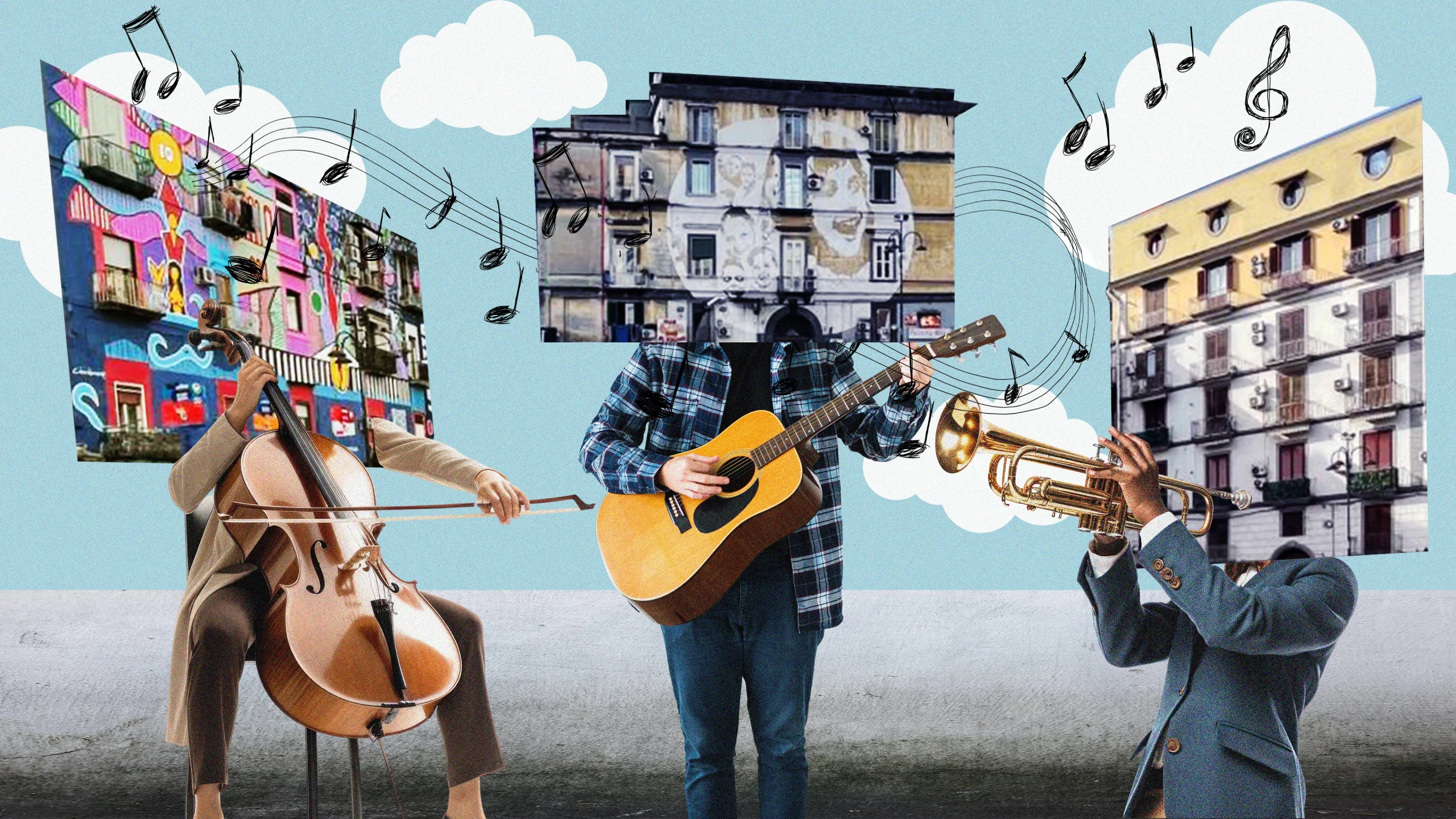
Sanitansamble brings together musical training and social impact, giving local form to the legacy of El Sistema in the heart of Rione Sanità.
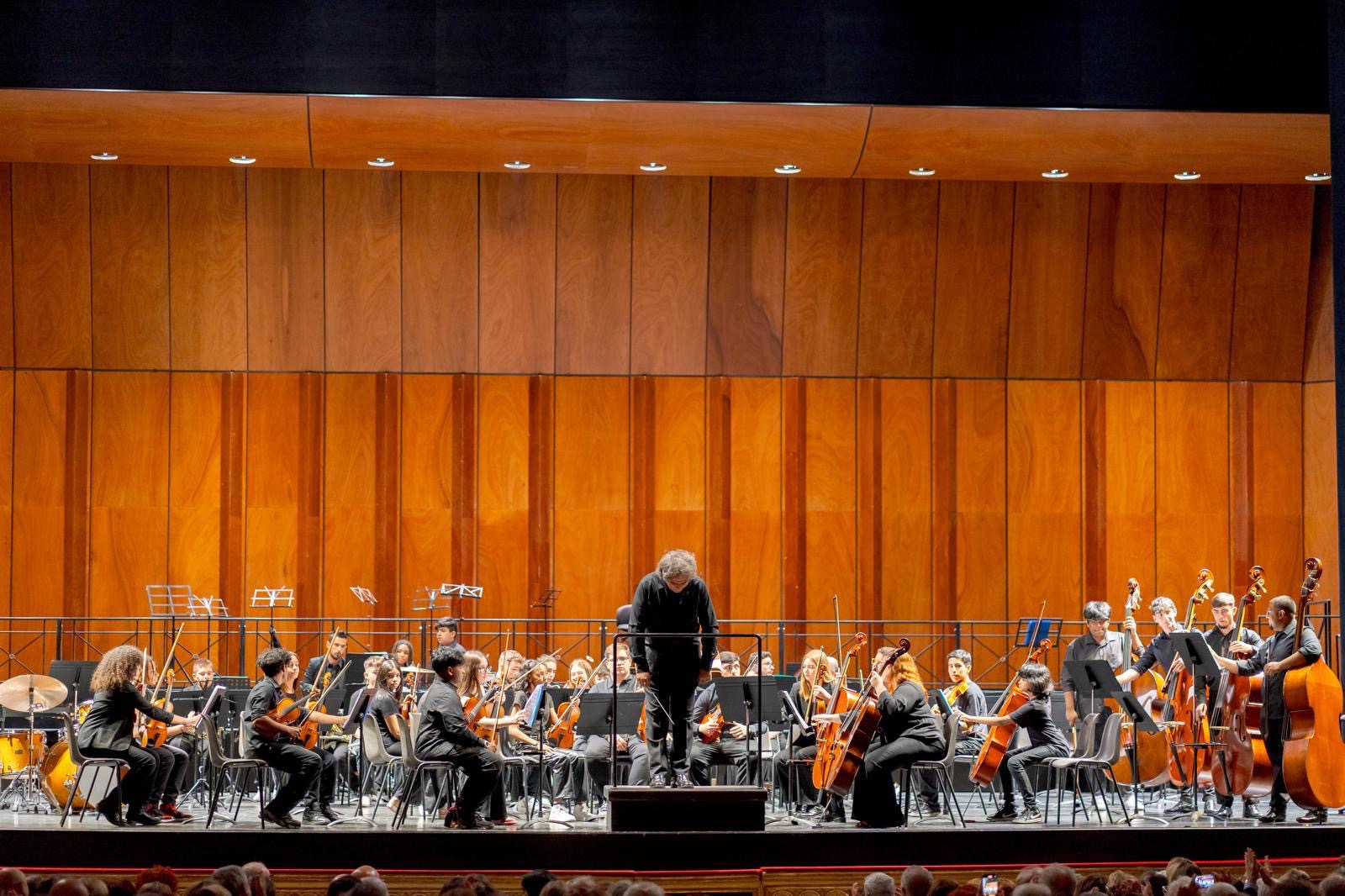
«The power of the project is visible every time you watch the orchestra: everyone in their place, in silence, ready to play the first note». In that suspension before the sound lies the essence of Sanitansamble: a collective energy built over time, a discipline born of relationships and a concrete possibility for transformation. To truly understand Sanitansamble, one must begin far away, in another latitude and another era. In the 1970s, El Sistema1 was founded in Venezuela, a project destined to radically change the relationship between music and society. José Antonio Abreu’s insight was both a political and cultural vision2 in which the orchestra becomes a space of citizenship and a place where young people learn to be together, to recognise one another and to build something greater than themselves. Over time, that model spread across the world, eventually reaching Rione Sanità in Naples.
Sara Sbriglia
Sara Sbriglia is a 33-year-old Italian violist and chemist. She was born and raised in the Rione Sanità of Naples, where she lived until 2024. She holds a degree in Chemistry and, since 2024, has been working at ARPA Toscana (Regional Environmental Protection Agency) in Florence, where she relocated for professional reasons. Music has accompanied much of her life: from the age of 16 until a few years ago, she was part of Sanitansamble and for a period she taught viola in the Piccola Orchestra of Forcella. Together with other members of the “older generation” of Sanitansamble, she sought to pass on to younger students the same values and teachings that had been given to them by their tutors. Today, while dedicated to her profession as an environmental chemist, she still holds on to the hope of one day returning to play and to be part of that world which shaped her.
The Sanitansamble orchestra
Sanitansamble was born in a space of transformation: in 2008, when it took shape in Rione Sanità of Naples, «it did not seem to introduce something foreign», recalls Paolo Sullo, a musician who collaborates as viola tutor for Sanitansamble in Naples, «but rather to reactivate a tradition that was already present».
Naples is historically a city of music, and Sanità is a district tht embodies an intense, layered expression of this identity, often told only through its fragilities. In this sense, the project sought to reinterpret its potential, grafting itself onto a living cultural memory and engaging with its ability to be both global and deeply local.
Unlike many educational experiences that use music as an accessory tool, in Sanitansamble the orchestra is built:
«It is not about having already trained young people play», Sullo explains, «but about training them within the orchestra».
This implies a precise choice: adopting a full symphonic structure, with strings, woodwinds, brass and percussion, and working on a repertoire rooted in tradition. A choice that demands commitment and responsibility. El Sistema itself is founded on the belief that one learns to play by practicing together from the very beginning, immediately immersed in the collective dimension: the individual grows within the group and through the group.
The orchestra thus becomes a complex system in which every part is necessary and there is no space for isolated individualism. Each person’s sound acquires meaning only within that of the others, according to a form of learning that passes through the body, listening and repetition. «It is something that gives you goosebumps», says Sara Sbriglia, a violist and chemist who was part of Sanitansamble from the age of 16 until a few years ago. «You feel a kind of magic being created». Or rather, something that escapes the purely didactic dimension: an emotional intensity born from the synchronisation of gestures and the shaping of sound. Over time, the project has adapted to generational changes without altering its structure. «The foundations have stayed the same», says Sullo, «but we have changed the repertoire, also for ourselves, so as not to repeat ourselves». Renewal, in fact, is not only for the young people, but also for the teachers, allowing them to avoid stagnation.
Digital offbeat
One of the most striking aspects of Sanitansamble concerns its relationship with technology.
Paolo Sullo
Paolo Sullo graduated with distinction in 2005 with a degree in Arts, Music and Performing Arts from the University of Rome Tor Vergata. He obtained diplomas in Violin, Viola and Composition from the San Pietro a Majella Conservatory in Naples, in Music Education from the Gesualdo da Venosa Conservatory in Potenza, and in Choral Music and Choral Conducting from the “Domenico Cimarosa” Conservatory in Avellino. In 2013, he was awarded a PhD in History, Science and Techniques of Music from the University of Rome Tor Vergata with a thesis entitled The Solfeggio Methods of the Eighteenth-Century Neapolitan School. As a musicologist, he has participated in numerous national and international conferences. The results of his research have been published in various academic journals, and numerous other contributions are currently in the process of being published. He has also edited the critical edition of “I sdegni per amore” by Domenico Cimarosa, as part of the National Edition of the Commedie per Musica by Domenico Cimarosa. He is currently a lecturer in History and Historiography of Music at the L. Refice State Conservatory of Music in Frosinone, and teaches Elements of Harmony and Counterpoint and History of 20th-Century Music at the University of Rome Tor Vergata.
As Sullo states, «the orchestral experience presupposes the other and transcends technology». This is not an ideological stance nor a rule imposed from outside; rather, it is a natural consequence of shared musical practice3. When young people enter the rehearsal space, their attention naturally shifts to what is happening around them. The mobile phone, though present, loses its centrality until it almost disappears from the horizon of experience. In this context, technology is not demonised, but brought back to its original function as support. It can be useful for listening to a piece on YouTube, practising with a metronome or recording a performance to review it for improvement. However, these tools remain marginal compared to the core of the orchestral experience.
«Technology supports individual learning», Sullo observes, «whereas here everything is built through relationships». From this perspective, the orchestra can be interpreted as a form of implicit resistance, a response to technology’s tendency to foster isolation and fragmented attention. Sanitansamble offers young people an increasingly rare experience: that of sustained concentration, authentic physical presence and real cooperation, where time is marked by the shared breath of music. As researcher Giovanni Conelli notes, «Young people seem to forget they even have a phone». It is a striking remark, because it describes a spontaneous transformation that, for a few hours each week, changes the way people are together.
Giovanni Conelli
Giovanni Conelli is a multi-instrumentalist and musicologist who graduated with honours from the University of Milan, with a research thesis on the use of contemporary art in contemporary opera. In 2017, he published an article with the University of Vienna as part of a research project on world music. During the 2024–2025 and 2025–2026 seasons of the Teatro San Carlo, he wrote critical essays on compositions by major classical composers. Conelli has also been awarded a PhD scholarship at the Academy of Fine Arts of Naples, where his research focuses on the application of the Abreu System in fragile urban areas of the city. His work has been presented in several Italian conservatoires, at Cardiff University, and is scheduled to be presented at King’s College London and the University of Cambridge.
The impact of the project
Looking at individual trajectories, it becomes clear that Sanitansamble is not a project aimed at producing professional musicians. Some do pursue that path, but many others follow different routes. What unites these stories is the impact of the experience.
«It gave me the opportunity to have experiences I would never otherwise have had», says Sara Sbriglia, who joined the project in 2008, later becoming a violist, performing in concerts and travelling. Above all, as she herself emphasises, it changed the way she saw her neighbourhood. «It allowed me to truly get to know people, beyond appearances». Her path is emblematic: after her musical experience, she pursued a scientific career, graduating in the pharmaceutical field. Yet she continues to recognise Sanitansamble as a defining moment. Not so much for having directly shaped her professional choice, but for having provided her with interpretative and relational tools useful for understanding reality. For those who take part, Sanitansamble becomes part of one’s identity. «It is an identity-defining fact», says Sullo. Crucial in this process has been the dimension of everyday life: weekly rehearsals, gradual work and the progressive construction of a collective sound have fostered the development of skills such as discipline, mutual listening and a shared sense of responsibility. A particularly emblematic episode was an encounter, during a rehearsal, with an internationally renowned artist, which led to a performance at the RAI studios. An experience that allowed all the young musicians to engage with high-level professional contexts, enhancing their awareness of their own potential and future opportunities.

Even after fifteen years of teaching, relationships with students continue over time, turning into lasting bonds. The way Sullo describes this experience is striking: not as a one-way act of generosity, but as an exchange. «It was not about taking something away from me to give it to them. It was a mutual exchange». This statement challenges a traditional and often stereotyped view of social intervention as a top-down act of “giving”, instead favouring the idea of an authentic encounter in which all those involved grow and enrich one another. From an academic perspective as well, the experience of Sanitansamble has sparked interest and stimulated in-depth reflection. Sullo himself is now engaged in a research project dedicated to these practices, demonstrating that their impact goes beyond the local context and feeds into a broader debate on cultural policies, music education and processes of social inclusion.
Paolo Acunzo
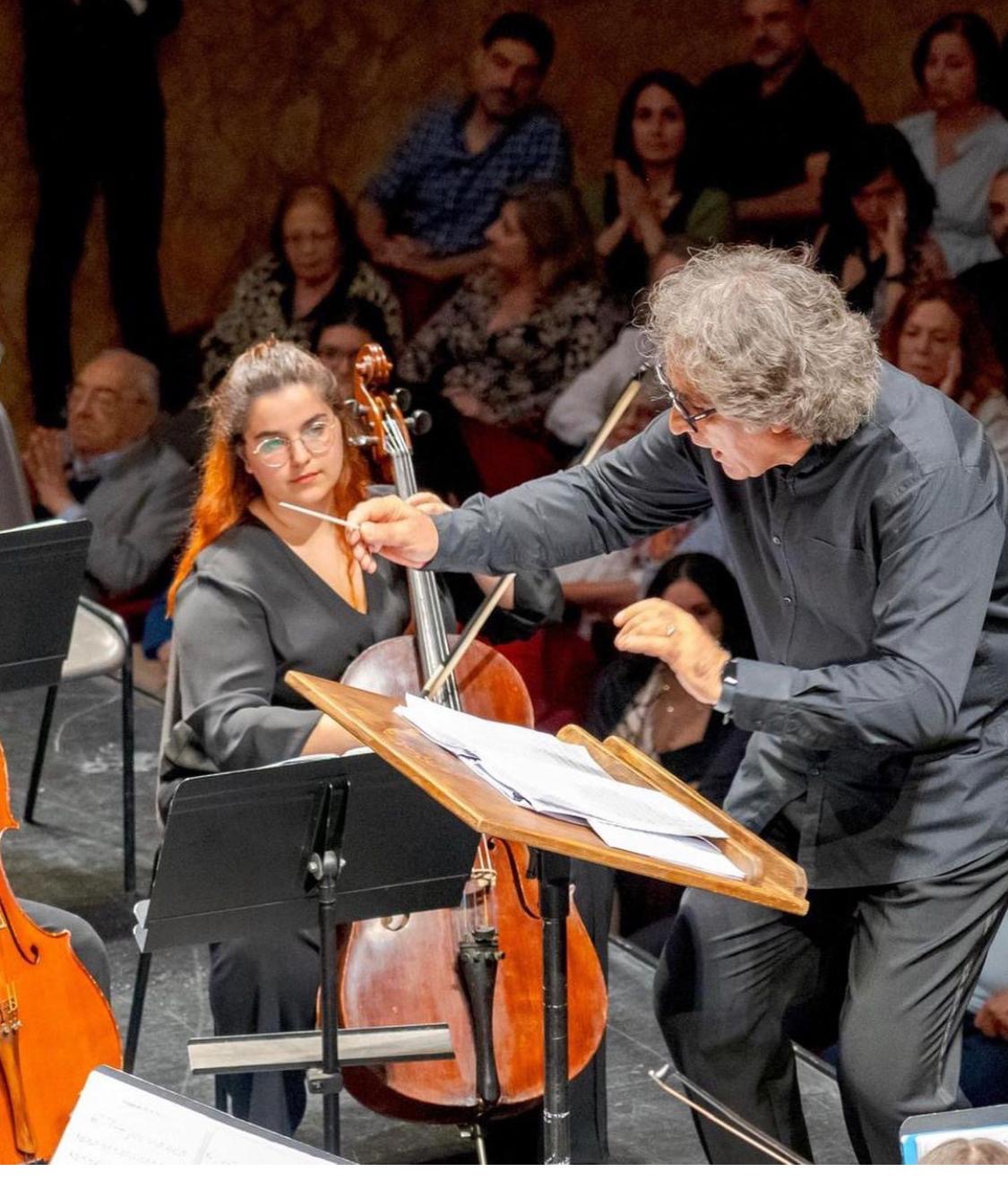
Paolo Acunzo is a Neapolitan conductor and musician who has been the artistic and musical director of Sanitansamble, the youth orchestra of the Rione Sanità in Naples, for over fifteen years. Born in Naples, he began studying the piano at the age of four and trained at the San Pietro a Majella Conservatoire, specialising in composition with Francesco Vizioli and in conducting with Zoltán Peskó, Moshe Atzmon and Ervin Acel. He has conducted over 300 international concerts and more than three hundred operas, collaborating with orchestras in Hungary, Romania, Ireland, Croatia and the United States, and is a leading expert in seventeenth- and eighteenth-century Neapolitan music. In 2008, he was invited by Maurizio Baratta to lead Sanitansamble. He also conducts the Musique Espérance Polyphonic Choir (a humanitarian NGO he founded in 1994) and the NoteLegali Choir of Libera, an organisation working against organised crime.
A fragile balance
Alongside its educational and artistic dimension, there is a structural issue that runs through the entire history of Sanitansamble: economic sustainability. «Since 2008, we have always been searching for funding», explains conductor Acunzo. The project has never benefited from stable public support. Resources mainly come from private donations: foundations, banks and citizens. It is a model that guarantees autonomy, but also exposes the project to constant precarity. Costs are significant: in addition to purchasing instruments, there is their maintenance, teachers’ fees, organisational expenses and insurance. «You cannot improvise an organisation like this», Sullo emphasises, and every activity is formalised and protected. This dimension often remains invisible, yet it is essential. Sanitansamble requires managerial as well as artistic skills, and its continuity over time is, in itself, an achievement. Perhaps because, as Sullo implicitly suggests, what it gives back to its context exceeds what it receives.
After nearly twenty years, Sanitansamble continues to exist as a dynamic balance: the young people change, the repertoire changes, external conditions change. But the core remains. An orchestra that offers a concrete alternative, a place where time is shared, mistakes are visible and the result — which lies not so much (or not only) in providing skills but in building a space in which young people can experience a sense of community — is created together4.
And so that initial image returns, with new clarity: young people seated, instruments in hand, waiting for the first note. The beginning of a piece and, each time, of a possibility.

- El Sistema https://www.britannica.com/topic/El-Sistema ↩︎
- The El Sistema educational model https://www.sistemaeurope.org/ ↩︎
- The musical and social impact of certain orchestras: Damasio, A., Disoteo, M., Ferrara, E., Ferrari, F., Fiorentino, C., Fresu, P., Gróh, I., Lombardo, P., López García, A., Marconi, L., Monarda, A., Rebaudengo, A., Salemi, L., Santini, G., Sbattella, L., Scafili, R., Scalfaro, A., Sullo, P., & Szekeres, M. (2017). Il pensiero musicale: le ragioni dell’emozione [Journal-article]. Musica Domani, XLVII(176), 5–100. https://www.musicadomani.it/wp-content/uploads/2020/11/MD_176.pdf ↩︎
- What playing music teaches us: Dumont, E., Syurina, E. V., Feron, F. J. M., & Van Hooren, S. (2017). Music Interventions and Child Development: A Critical review and Further directions. Frontiers in Psychology, 8, 1694. https://www.ncbi.nlm.nih.gov/pmc/articles/PMC5626863/ ↩︎