Marta Abbà
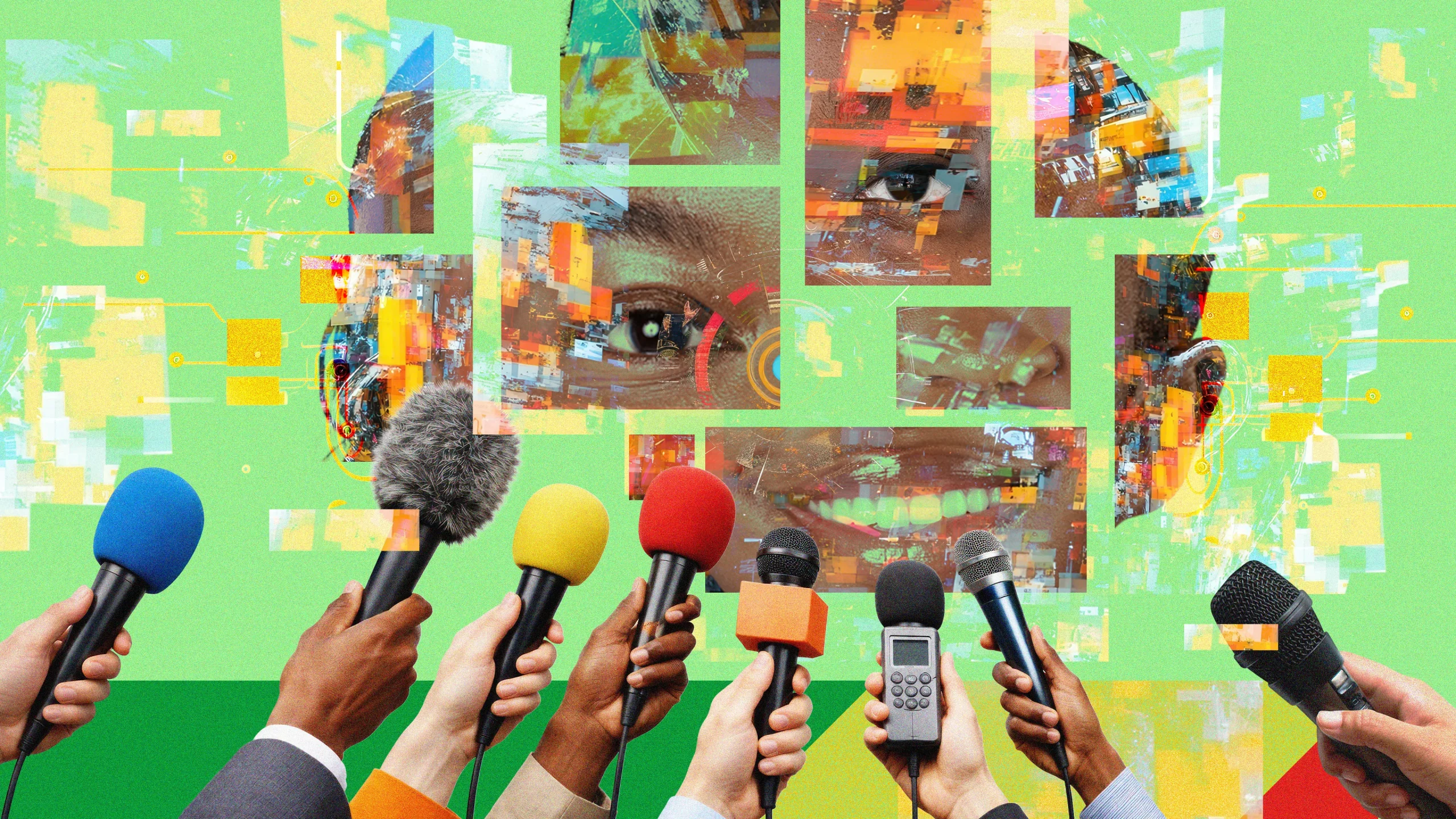
An Artificial Intelligence experiment applied to political debate in Congo-Brazzaville, investigating how new forms of digital narrative can influence youth participation, female representation, and the contemporary public sphere.
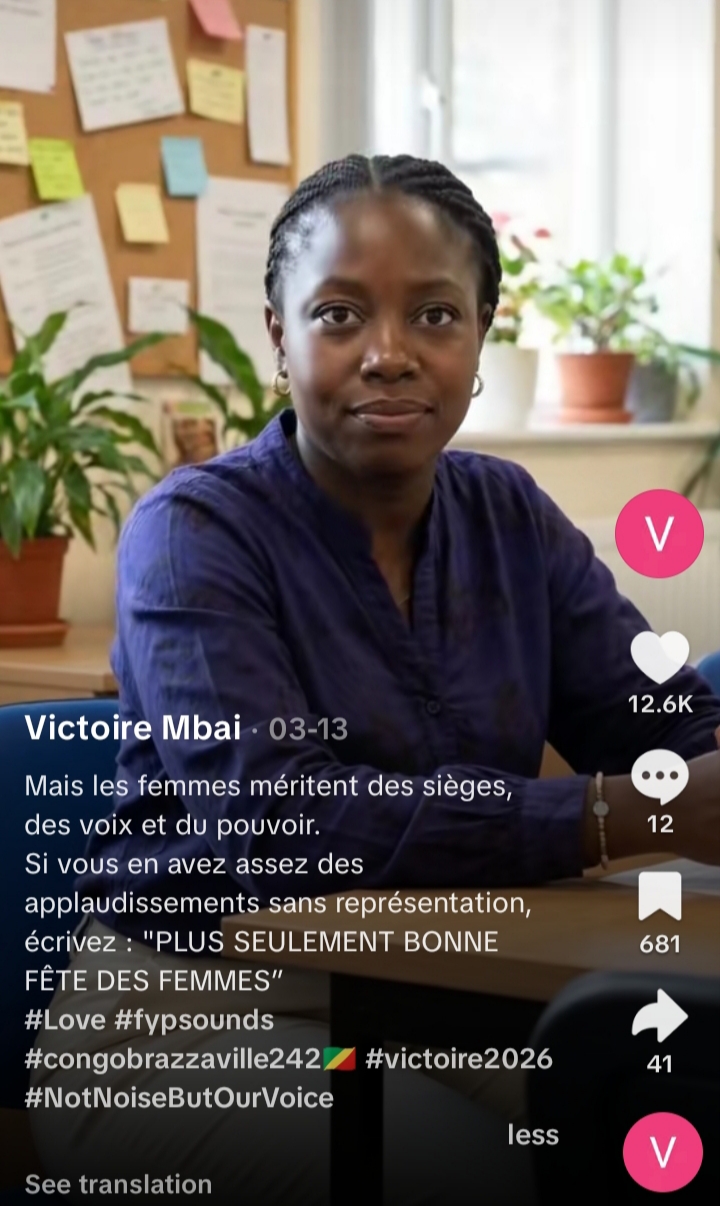
Victoire Mbai has an artificially generated face, a carefully scripted background, and a consistent presence on social media. She is a synthetic voice designed to step into the political debate in Congo-Brazzaville at a delicate electoral juncture, in a context where youth and female participation remains marginal. Behind this experiment is Olayinka Asaolu, Programme Assistant at Africa Strategy, who oversaw the project’s development alongside a group of Gen Z youngsters: «The idea came about whilst observing the electoral context in Cameroon and then in Congo-Brazzaville», Asaolu explains. «We realised that young people, especially women, were virtually absent from public debate, and we wondered how political participation could be turned into something real for those who currently lack a space to express it».
Victoire Mbai is, therefore, far from being an activist in the traditional sense, or indeed a political figure. She is a narrative construct designed to traverse the silence of the political sphere and deconstruct it.
Olayinka Asaolu
Olayinka Asaolu works as a Programme Assistant at Africa Strategy, where she contributes to development projects by handling stakeholder mapping and engagement, project proposal writing, and operational activity management. She graduated with top marks from the Federal University of Technology in Akure, Nigeria, where she earned a degree in Agricultural Engineering. She has over two years of experience in project management, process improvement, and research management. Her recent work on Artificial Intelligence applied to electoral processes reflects her conviction that climate change and governance are interconnected elements of a broader global polycrisis that cannot be addressed in isolation. Rather than focusing on a single issue, she advocates the need to address structural causes through innovative, integrated approaches.
Learn moreVisit africastrategy.org
La caratterizzazione di Victoire Mbai
Victoire Mbai was designed as a young Congolese woman who observes and reports on the reality around her, bringing to light what normally remains in the background. For this reason, during her characterisation process, the decision was taken not to have her assume the role of an authority or an “expert” speaking from above. On the one hand, the goal was to stimulate political debate; on the other, to avoid directly exposing real individuals to risks or pressures: located within this middle ground are all the decisions that transformed this artificial voice into a tool of mediation, enabling political discussion through everyday narrative made of fragments of ordinary life.
«We wanted to shift the conversation around youth political participation, especially amongst women, from something too risky to say openly into something that could be discussed, shared, and commented on online», Asaolu states.
The content published on social media by Victoire Mbai mostly stems from public transport, access to employment, urban life, or daily hardships, building the political significance of the project step by step. Here, politics is not explicitly declared, but allowed to emerge and be demonstrated through lived experience.
We recommend reading

Victoire Mbai’s development, however, was far from smooth: right from the start, the project encountered a series of technical and cultural constraints that profoundly shaped the final outcome. One of the main challenges concerned the representation of the local context. The initial intention was to directly involve young Congolese people in content writing, «but this process was not explored as deeply as we would have liked», Asaolu explains. And Artificial Intelligence cannot replace direct knowledge of the social context.
Compounding this was another decisive element: digital platforms. The project clashed with the policies of major social platforms at an advanced stage, after the content had already been produced. «We only learned about the restrictions on synthetic personas and political content when we tried to promote the content», Asaolu relates, and this forced the project to pivot. Certain content could not be promoted, while other pieces could not be amplified. The consequence was an adaptation of the communication strategy, which progressively steered Victoire towards more indirect formats: satire, daily storytelling, and cultural content. Explicit politics thus transformed into lateral politics, less direct, yet more pervasive.

Visibility on digital platforms
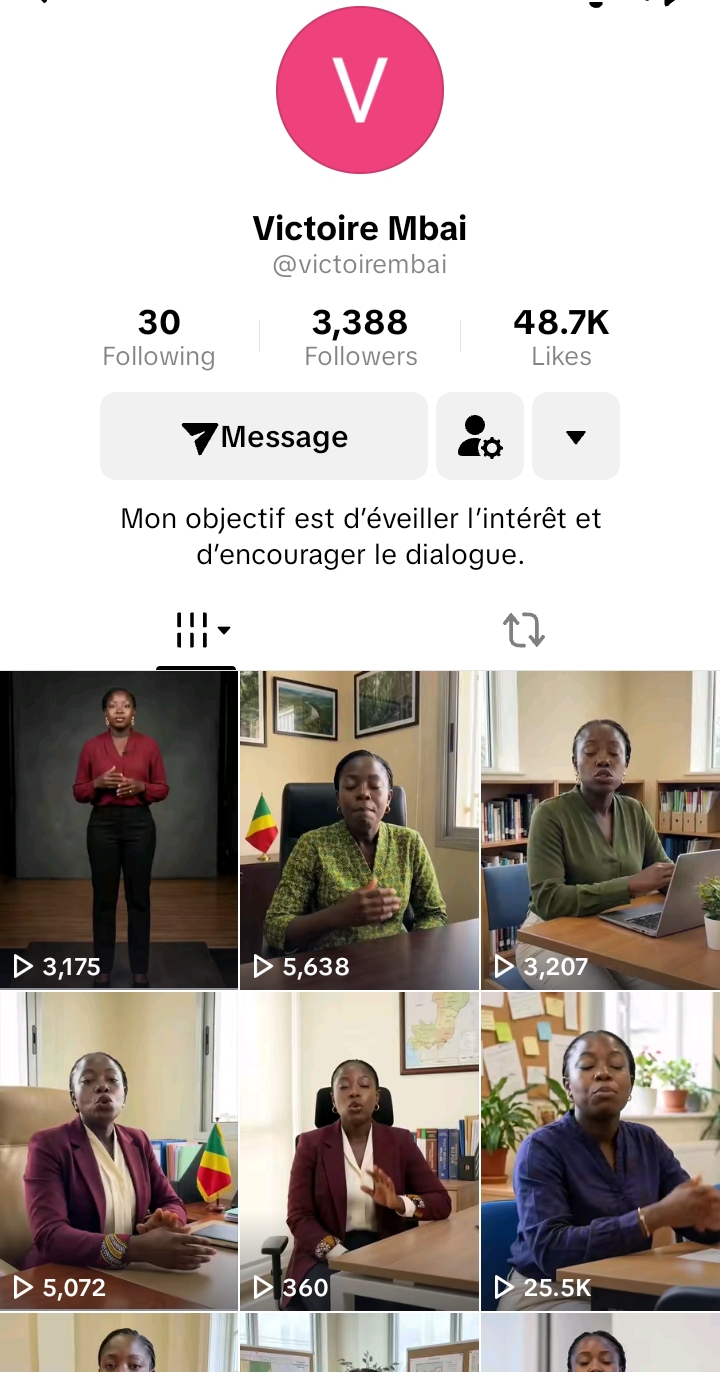
One of the most revealing aspects of the experiment concerns its relationship with platforms and algorithms. Despite tallying around 250,000 overall views, organic growth remained limited, and the vast majority of visibility was achieved through paid promotion. The project failed to trigger an autonomous viral loop because digital engagement depends heavily—and above all—on the conditions under which content is distributed.
Asaolu emphasizes that: «The first few minutes after publication are critical for content distribution. If engagement isn’t sparked immediately, the content tends to lose visibility». The mechanism is governed by algorithmic dynamics that determine what emerges and what disappears: several studies have demonstrated just how much this mechanism impacts the composition of the digital public sphere. In 2022, for instance, an experiment published in PNAS compared Twitter’s personalized feed with a purely chronological one, involving a control group of nearly two million active users. The findings revealed that the ranking system altered the visibility of political content unevenly. Subsequent research by Smitha Milli and colleagues, published in 2025, further observed that engagement-based ranking tended to amplify emotionally charged political content hostile toward opposing groups compared to a chronological feed, even when users reported not preferring such content. Interaction thus becomes the metric feeding further distribution, in a loop where whatever captures attention is rendered even more visible.
Despite these limitations, the Victoire Mbai project nonetheless sparked debate. In particular, content related to female representation and women’s political participation drew stronger reactions than other topics, indicating that even within an artificially mediated system, certain issues retain the power to capture and activate public attention. The project thus operates on two levels: on the one hand, the technical dimension of platforms; on the other, the social dimension of public response.
Outstanding issues
Victoire Mbai proves that an artificial voice can occupy the digital public sphere, generate debate, and keep certain political topics visible. Yet at the same time, she highlights the limits of this type of intervention.
Research published in PNAS in 2024 shows how ambivalent our relationship with an artificial voice can be. In the experiment, AI-generated responses made people feel more heard than those written by untrained human participants, largely owing to a greater ability to recognise and mirror emotions. However, when recipients were informed of the artificial origin of the message, their feeling of being heard diminished. The relationship with a synthetic voice depends, therefore, both on what it says and on what we know, or think we know, about its identity.
This question remains central to the project as well: what does participation mean when the voice intervening is not human? And furthermore: who bears responsibility for the narratives produced by a synthetic identity acting within the public space?
This project does not aim to resolve these questions, but rather to leave open the tension between technology, politics, and representation. As Asaolu states:
«The project does not claim to have solved the issue of youth political participation, but rather to have made it visible from a different angle».
Ultimately, Victoire Mbai is neither a fictional character nor a neutral tool, but an unstable form of presence, one that exists solely at the intersection where technology and politics meet.